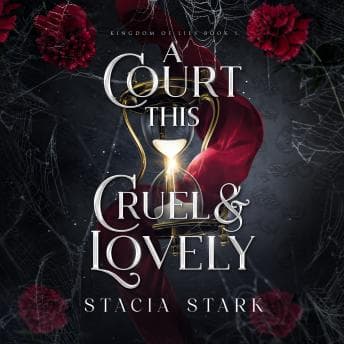
Look, I have a complicated relationship with romantasy. It's not my usual dark corner of the genre world, but when a book promises "cruel" in the title and features forbidden power that gets people burned alive? My interest is piqued. So there I was, 2 AM, Shirley curled on my chest, listening to A Court This Cruel and Lovely and trying to figure out why I felt so... split.
This book does something interesting with its horror-adjacent premise. Humans stripped of power at birth, corrupt magic users hunted and executed, dreams that might be prophecy or curse—Stacia Stark understands that dread works. The worldbuilding here has genuine teeth. When our protagonist discovers her forbidden abilities, there's actual weight to that terror. The stakes feel real because the consequences are brutal. Shirley Jackson walked so this author could run, at least in terms of building that slow-creeping sense of wrongness. Though honestly, It's in His Kiss does something similar with its own brand of tension—different genre entirely, but that same careful layering of unease.
But here's where it gets complicated.
A Tale of Two Narrators
Meg Sylvan delivers. She really does. Her voice has this quality—soothing but with an edge underneath—that works perfectly for a protagonist hiding dangerous secrets. When the emotional beats hit, she commits. The fear, the longing, the desperate bargaining with a man who left her to die? Sylvan sells every moment. I found myself genuinely invested in her delivery, especially during the quieter scenes where dread simmers just below the surface.
Tim Paige, though. This is where I have to be honest with you. His sections feel like they belong to a different audiobook entirely. There's a dryness to his delivery that clashes with the romantic tension the story is trying to build. When you're supposed to be falling for this mysterious mercenary with blazing green eyes and a cruel smile (my kind of character, honestly), you need the narrator to sell that dangerous allure. Instead, it lands... flat. Not terrible. Just disconnected. Like someone reading stage directions instead of inhabiting a character.
The dual POV structure means you're ping-ponging between these two experiences. Sylvan pulls you in, Paige pushes you slightly back out. It's disorienting in a way that undercuts the slow burn romance the book is building toward.
Fourteen Hours of Setup
That's a commitment. And this book knows it's the first in a series, which means it's doing a lot of groundwork. The slow burn isn't just romantic—it's everything. Plot revelations unfold gradually. Character relationships develop at a measured pace. The mysterious friends, the secrets, the kingdom-threatening revelations? They're all being carefully positioned for future books.
If you're here for immediate payoff, you're going to be frustrated. If you can settle into the rhythm—and I mean really settle, like committing to a long podcast series—there's satisfaction to be found. But I'll admit, around hour eight, I started wondering when the story would stop promising and start delivering. The setup is strong. The follow-through in this installment? More of a tease.
(My podcast listeners know I have patience for slow builds. The Haunting of Hill House doesn't rush its scares. But even I had moments where I thought "okay, we've established the tension, now DO something with it.")
The Tropes That Work, The Ones That Don't
The comparison to Throne of Glass and Fourth Wing makes sense, and I don't mean that as an insult. Stark is working within established tropes—enemies-to-lovers, hidden power, corrupt systems, morally gray love interests—but she's doing it with enough world-building specificity that it doesn't feel like pure imitation. The gods-taking-power premise is genuinely creepy. The fae as external threat adds layers. There's real thought here about power structures and what happens when institutions claim to protect while actually controlling.
The romance elements are present but restrained in this first book. If you're looking for spice, you'll need to continue the series. This is foundation-laying territory.
Content-wise: violence, trauma, abuse elements. It's not gratuitous, but it's there. The horror-adjacent reader in me appreciated that the book doesn't shy away from the darkness its premise implies. I had the opposite reaction to Black Beauty - Young Folks' Edition, which sanitized everything interesting about its source material.
Who This Is For (And Who Should Grab the Print Version)
If you love romantasy, can handle slow burns, and have patience for series openers that prioritize world-building over immediate resolution? Sylvan's narration makes this worth your time. Listen during tasks that keep your hands busy—the pacing actually works well when you're not laser-focused.
If you're particularly sensitive to narrator inconsistency, or if male POV sections are important to your enjoyment? Consider the print version instead. Paige isn't bad, exactly. He's just... not the right voice for this material. And in a 14-hour audiobook, that mismatch compounds.
Shirley's Unimpressed, But I'm Intrigued
I finished it. My cat remained skeptical. I was intrigued enough to want answers but frustrated enough to feel like I'd been left on a cliffhanger for 14 hours instead of at the end of one. The bones are good. The female narration is genuinely strong. But the full audio experience is uneven in ways that matter.
Wait for a sale, or use your streaming subscription. It's worth experiencing, but maybe not worth a full credit when half the narration leaves you slightly disconnected from the story it's trying to tell.