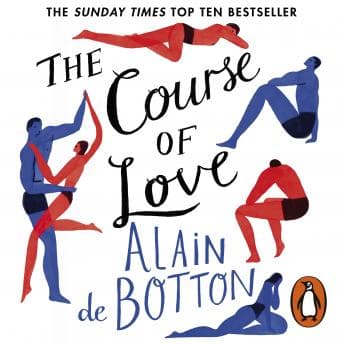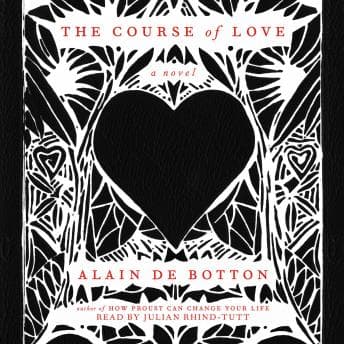

Denise and I were walking the lakefront last Saturday evening — one of those late spring Chicago nights where the air finally gives up being cold and just sits there, warm and still — and somewhere around Montrose Harbor, Alain de Botton described a scene where Rabih watches Kirsten loading the dishwasher and feels a surge of irritation so precise, so perfectly articulated, that I actually stopped walking. Denise asked if I was okay. I told her I was fine. I was not fine. I was being psychoanalyzed by a novel.
This is what The Course of Love does. It gets under your skin not through plot — there's barely any plot to speak of — but through recognition. Brutal, uncomfortable, sometimes hilarious recognition.
The Anti-Romance That Understands Romance Better Than Any Romance
Here's what de Botton is really doing, and I think this is what separates him from every other writer attempting the "realistic marriage novel": he's written a book that functions simultaneously as fiction and philosophical essay, and somehow neither mode cancels the other out. Rabih and Kirsten meet, fall in love in Edinburgh, marry, have two kids, fight about money and in-laws and who forgot to buy milk. Standard domestic territory. But between these scenes, de Botton drops these cool, almost clinical observations about what's actually happening psychologically — why we pick fights at 10 PM, why we mistake boredom for falling out of love, why the person who sulks is often the one who cares most desperately.
Now, I've heard the criticism. Some listeners find these philosophical interjections preachy. And I get it — there are moments where de Botton sounds less like a novelist and more like a very elegant therapist who charges $400 an hour. A passage about Rabih's petty resentment over Kirsten's friendship with a colleague will suddenly pivot into a two-minute meditation on the nature of jealousy in post-Romantic Western culture. If you're not in the mood for that, it'll grate.
But here's the thing — and this reminds me of what Hemingway said about writing being architecture, not interior decoration — de Botton isn't decorating. The philosophical asides ARE the architecture. Remove them and you have a pleasant but unremarkable domestic drama. Leave them in and you have something I'd genuinely assign to my AP Lit students if I thought they'd have the patience for it. (My students would hate this. I love it.)
Julian Rhind-Tutt Knows That Pause Is Punctuation
I came to this audiobook knowing Rhind-Tutt primarily as a screen actor — you might recognize him from British television — but the man has five AudioFile Earphones Awards, and after seven hours with him, I understand why. His voice has this quality I can only describe as intelligent warmth. Not warm like a hug. Warm like a good scotch — there's heat, but also complexity, and a little bit of bite.
What he does brilliantly here is manage the tonal shift between narrative and philosophy. When de Botton's narrator is describing Rabih and Kirsten's small humiliations — the way she rolls her eyes at a dinner party, the way he retreats into silent punishment after an argument — Rhind-Tutt brings a tenderness that prevents these moments from feeling merely clinical. Then when the text pivots to the essayistic voice, his delivery firms up just slightly. More measured. A touch more British RP crispness. It's subtle — he's not doing "voices" in the traditional sense — but the differentiation means your ear always knows where you are.
The prose deserves to be savored here. I listened at 1.0x, naturally, and I'd argue this is one of those audiobooks where speeding up would genuinely cost you something. De Botton writes sentences that need their full beat to land. There's a passage about the difference between loving someone and understanding them that hit me like a freight train at 11 PM while I was supposedly grading sophomore essays on Of Mice and Men. I had to set down my red pen.
Who This Is Really For (And Who Should Walk Away)
If you loved Essays in Love — de Botton's first novel from the mid-90s — this is its spiritual successor, except now the lovers are older, tireder, and carrying the weight of actual commitment instead of the fizzy uncertainty of new attraction. It's the grown-up version.
This book is for anyone in a long-term relationship who has ever thought, "Is this it?" and then felt guilty for thinking it. It's for people who find comfort in having their private marital frustrations named and examined rather than romanticized. It's NOT for anyone looking for story momentum. There's a brief mention of an extra-marital flirtation that provides some tension, but this isn't a book about what happens. It's a book about what things mean.
Skip it if you want narrative drive. Skip it if philosophical asides make you impatient. But if you're someone who thinks reading is partly about self-examination — and at seven hours, this is a modest commitment for a potentially significant payoff — this one is worth pausing the faculty meeting for. Madeline Miller does something similar with emotional excavation in Song of Achilles — it's a completely different world and register, but that same quality of forcing you to feel something you weren't prepared to feel is all over every chapter.
The Margin Note I'd Leave for My Students
This is why we still read — or listen to — books that refuse to give us the fairy tale. De Botton's argument, threaded quietly through every chapter, is that real love begins precisely where romantic comedies end. That the boring parts, the irritating parts, the parts where you want to scream because your partner has once again left their shoes in the middle of the hallway — those ARE love. Not obstacles to it.
I finished the last chapter back on the lakefront, three days after I started. Denise asked what I was listening to. I told her it was a novel about marriage. She asked if it was any good. I said it was uncomfortably accurate. She laughed. We kept walking.