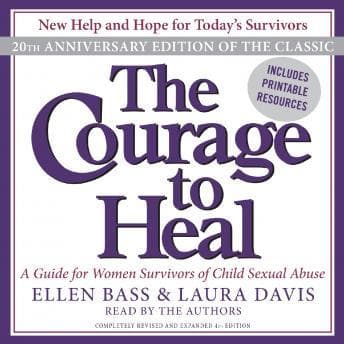

What does it actually mean to heal from something that happened before you had the language to describe it?
I've been sitting with that question for about a week now, since I finished the last hour of this 25-and-a-half-hour listen. I started it during a particularly ambitious dal makhani — the kind that requires three hours of simmering and periodic stirring — and ended up listening through several more cooking sessions, a few morning jogs where I forgot I was supposed to be tracking my pace, and one very late night where I just sat on my couch with the lights off and let Ellen Bass's voice fill the room.
This is not a casual listen. I want to be very clear about that upfront.
The Psychology Is Actually Sound (And That Surprised Me)
I came at this with my researcher brain fully activated, ready to flag every pop-psychology shortcut and oversimplified trauma model. I do this. It's a problem. My therapist would have thoughts about why I approach healing literature with a red pen in hand.
But here's what caught me off guard: the 20th anniversary edition incorporates contemporary research on trauma and the brain — the body-keeps-the-score territory — and does it without dumbing it down or turning it into Instagram-ready soundbites. Bass and Davis talk about the neurobiological underpinnings of trauma responses in ways that actually track with what I've read in the clinical literature. The sections on dissociation, body memory, and the stages of grief aren't just anecdotal hand-waving. There's a framework here, and it holds up.
The first-person survivor stories are where this book does its heaviest lifting. Hundreds of them, woven throughout, and they represent a genuinely diverse range of experiences — different ages at the time of abuse, different relationships to the abuser, different cultural backgrounds, different points in the healing process. Some of these women have been healing for over twenty years. I found myself asking: why does hearing someone else's specific, particular story create permission to examine your own? The research actually shows that narrative exposure — hearing others articulate experiences similar to yours — reduces shame and isolation more effectively than almost any cognitive intervention alone. This book is basically a 25-hour narrative exposure exercise, and whether the authors designed it that way consciously or intuitively, it works.
When the Authors Are the Narrators, You Hear Something Different
Let me talk about the audiobook-specific experience, because it matters enormously here. Bass and Davis narrate their own book, and the difference between hearing an author read their own work versus a professional narrator is — well, it's complicated. A trained narrator would probably have better pacing. Some listeners find this version slow, and I get it. At 25 hours, there are stretches where the measured, gentle cadence starts to feel like it's holding you underwater very carefully.
But. When Bass reads the sections about the healing stages, you can hear where she pauses slightly longer — not because the text requires it, but because she's sitting with the weight of what she wrote. When Davis reads survivor accounts, there's an inflection that comes from someone who has lived inside this material for decades, not someone performing empathy from a recording booth. One listener put it perfectly: you can hear their feeling of the words. That's not something you can coach.
I wouldn't listen at anything faster than 1x. Maybe even slower in places. This is not a book you optimize for efficiency.
Who This Is For (And Who Should Approach with Care)
This book is specifically for women survivors of child sexual abuse, and it doesn't pretend to be for everyone. That specificity is a strength. The authors are clear about their audience, and the practical suggestions — journaling exercises, meditation techniques, body-centered practices, guidance on confronting abusers or choosing not to — are designed for people actively doing the work of healing, ideally alongside a therapist.
If you're a clinician, this is worth the listen to understand what your clients might be reading. If you're a partner or family member of a survivor, there are sections specifically addressing your experience too.
If you're someone who needs this book, you probably already know. And if you've been putting it off — I understand. Twenty-five hours is a commitment that mirrors the commitment of healing itself. It's long. It's sometimes slow. It asks you to stay present when your instinct is to dissociate or intellectualize (hello, that's me).
Content warnings are serious here: detailed discussions of child sexual abuse, trauma responses, and emotional distress throughout. This is not background listening. This is sit-down-and-be-present listening.
The Case Study I Wasn't Expecting to Write
I study how stories shape identity. That's my whole thing. And what this book demonstrates — almost accidentally — is that healing from trauma is fundamentally a narrative act. You take the fragmented, dissociated, shame-soaked pieces of experience and you build a story you can live inside. Bass and Davis aren't just providing information. They're providing a narrative structure for experiences that resist structure.
Twenty-five hours later, standing in my kitchen at midnight with turmeric-stained fingers and my earbuds still in, I thought: this is what applied narrative psychology looks like when it's done with genuine care. My dissertation committee would never cite it. But they should.









