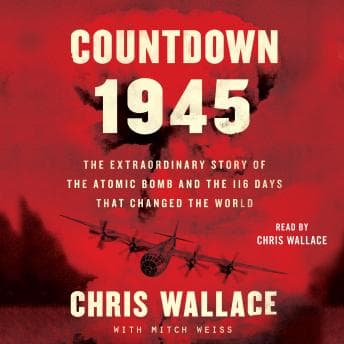

April 12, 1945. You're Harry Truman. You've been Vice President for 82 days, mostly drinking bourbon and playing poker because FDR didn't tell you squat. Then the phone rings. The President is dead. And oh, by the way, we have a secret weapon that can vaporize cities, and you have to decide whether to use it.
That's the setup. And frankly, it's terrifying.
I listened to Countdown 1945 on a long haul down to San Antonio for a site assessment. Ranger (my German Shepherd) was in the back, snoring through the physics explanations, but I was white-knuckling the steering wheel.
The Chain of Command in Chaos
Here's what gets me. Most history books read like after-action reports written by a staff officer who never left the wire. Dry. Dusty. Full of dates you don't care about.
Wallace writes this like a thriller. A ticking clock.
He doesn't just stick to the Oval Office. He puts you in the cockpit with Paul Tibbets (the pilot of the Enola Gay) and in the labs with Oppenheimer. He even tracks a ten-year-old girl in Hiroshima. That perspective shift? It hits hard. As someone who's had to operate in zones where civilians are mixed in with the bad guys, the decision matrix here is a nightmare.
The logistics alone—getting the "Little Boy" bomb across the Pacific without blowing up the ship? Stressful doesn't cover it. I found myself checking my own speedometer because the tension in the book was bleeding into my driving. (Don't tell the highway patrol.)
A Broadcaster in the Booth
I saw some reviews complaining about Chris Wallace reading his own book.
Usually, I agree. Authors are writers, not performers. They stumble, they swallow their words, they have zero breath control. But Wallace? The guy is a veteran broadcaster. He's been talking into microphones since before some of you were born.
His delivery is journalistic. Even-keeled. He's not doing character voices—thank God. If I heard a bad impression of Einstein, I would've driven off the road. He reads it like a very long, very intense news segment.
Does it lack the dramatic flair of a Ray Porter or a Scott Brick? Sure. But for a book about the mechanical, political, and scientific process of ending a war? It fits. It's precise. At 1.25x speed, he sounds like a frantic intel officer giving a briefing, which honestly adds to the vibe.
Mission Debrief
This isn't a book for people who want a soft, fuzzy story. It's about the brutal calculus of war.
Wallace doesn't preach. He lays out the facts—the projected casualties of a ground invasion vs. the horror of the bomb—and lets you sit with it. That same unflinching approach to hard truths shows up in Things That Matter, where Krauthammer doesn't shy away from the messy realities of politics and war. I've been in conflict zones. There are no good choices, only less bad ones. This book captures that gray area perfectly.
Who's this for? History buffs, military folks, anyone who wants to understand how the modern world was shaped in 116 days. Skip it if you need clear-cut heroes and villains—war doesn't work that way, and neither does this book.
It's a solid, heavy listen. Ranger might have slept through it, but I was wide awake.




![Steve Jobs [unabridged audiobook] audiobook cover](/_next/image?url=https%3A%2F%2Fcovers.audiobooks.com%2Fimages%2Fcovers%2Ffull%2F9788499923406.jpg&w=1920&q=75)