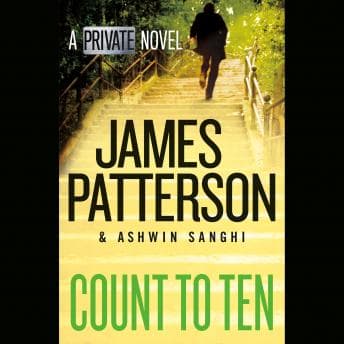

Three AM. The unit was quiet - too quiet, the kind of quiet that makes you knock on every wooden surface within reach. I had one patient sleeping peacefully, vitals stable, and about four hours of charting ahead of me. Perfect audiobook conditions. Count to Ten had been sitting in my queue for months, and a thriller set in Delhi with dissolved human remains in plastic barrels? That's exactly the kind of dark I needed to stay awake.
I wanted to love this one. I really did.
When the Crime Scene Is More Interesting Than the Investigation
Look, the premise grabbed me immediately. Plastic barrels. Dissolved remains. A house owned by the state government. As someone who's actually worked codes where we've found... let's just say unexpected things... I appreciate when thrillers go dark without flinching. Patterson and Sanghi don't shy away from the grim reality of what happens to bodies, and the political corruption angle layered on top? That's the kind of complexity that keeps me hitting play instead of checking my patient's O2 stats for the fifteenth time.
Santosh Wagh as a protagonist has potential. A former head of Private India, battling personal demons, pulled back into the game by Jack Morgan. Classic setup, but it works. The Delhi setting feels authentic - you can almost smell the city, feel the heat, sense the bureaucratic walls closing in. The authors clearly know the territory they're writing about, and the procedural elements ring true enough that I wasn't yelling at my dashboard about impossibilities. Chamber had that same authenticity in its legal procedural details, but with narration that actually let me sink into the story.
But here's where it falls apart for me.
The Voice Problem (And I Mean That Literally)
Sartaj Garewal has an AudioFile Earphones Award. I looked this up because I was genuinely confused. The man can project emotion - when Santosh is struggling with his past, when tension ratchets up during a confrontation, you feel it in the voice. That part works.
But the character differentiation? It's rough. In a thriller with multiple players - investigators, government officials, suspects - you need to know who's talking without constantly rewinding. I kept losing track during dialogue-heavy scenes, which is a problem when you're trying to follow a conspiracy. My brain was working overtime to figure out who said what instead of just absorbing the story.
I've listened to narrators who transform completely between characters. Garewal doesn't. He attempts it, sure, but the voices blur together in a way that made me zone out more than once. And when you're fighting to stay engaged at 4 AM, that's a death sentence for a thriller.
Seven Hours That Felt Longer
At seven hours, this should be a tight, punchy ride. The plot has all the ingredients - serial killer vibes, government cover-ups, a damaged protagonist with something to prove. But something about the narration issues combined with the structure made it drag. I caught myself checking how much time was left, which is never a good sign.
The investigation itself moves at a reasonable clip on paper. Clues drop, connections form, danger escalates. But when you're struggling to stay locked into the audio experience, even good pacing can't save you. I finished it - I always finish, it's a point of pride - but I couldn't tell you half the secondary characters' names if you asked.
Who Should Queue This Up (And Who Should Skip)
If you've read other Private novels and you're a completist? You'll probably listen regardless of what I say. Fair enough. If you're specifically interested in thrillers set in India with authentic political corruption themes, this delivers on that front.
But if you're new to the series, don't start here. And if you're an audiobook purist who needs clean character differentiation to stay engaged - especially for mysteries where tracking multiple suspects matters - this might frustrate you the way it frustrated me.
Carlos asked why I looked annoyed when I got home that morning. I told him my audiobook let me down. He nodded like he understood. (He didn't. He listens to sports podcasts. Different world.)
Charting My Final Notes
This is a competent thriller wrapped in a frustrating audio package. The bones are good - Patterson's pacing instincts combined with Sanghi's local knowledge creates something that should work. But "should" and "does" are different things. The narration doesn't ruin it completely, but it keeps the book from reaching its potential.
I'd say wait for a sale, or grab it from the library if you're curious. If you want something that actually earns that credit, Time for Mercy delivers the kind of courtroom tension that kept me glued through an entire shift. Count to Ten isn't bad enough to skip entirely, but it's not worth a full credit when there are tighter thrillers with better audio production out there. Save your money for something that'll keep you awake because you can't stop listening - not because you're straining to follow who's talking.









