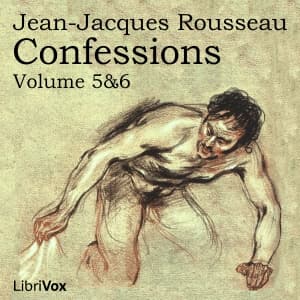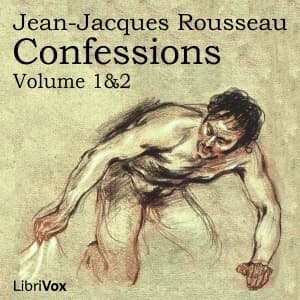

Rousseau invented the modern memoir. That's not hyperbole—the guy basically looked at centuries of autobiography and said "what if I actually told the truth about myself, including the embarrassing stuff?" And then he did. In 1782. Three hundred years before therapy culture made this normal.
I came to this expecting dense Enlightenment philosophy. What I got was a Swiss guy in his fifties writing about stealing ribbon and blaming it on a servant girl, about his weird relationship with a woman he called "Maman," about all the ways he failed and fumbled through his early years. It's confessional in a way that feels almost too modern. My parents would've called this "airing dirty laundry." Rousseau called it truth.
The Original Oversharer
Here's what business books get wrong about authenticity—they treat it like a strategy. "Be vulnerable to build trust." Rousseau wasn't being strategic. He was being compulsive. The man genuinely believed that if he showed you every shameful corner of his psyche, you'd understand him. And weirdly? It works.
At five hours, this is just volumes one and two—childhood and adolescence. The censored 1903 edition, which means some of the spicier content got trimmed. (What exactly got cut? I couldn't find specifics, but knowing Rousseau, probably something that would've made Victorian editors clutch their pearls.) Even sanitized, there's enough raw honesty here to make you uncomfortable. He describes his own masochistic tendencies. He admits to abandoning his children. He's not asking for forgiveness—he's just... telling you.
For a management consultant who's sat through countless "authentic leadership" workshops, this is refreshing and terrifying. Most CEOs I've worked with couldn't be this honest about what they had for lunch.
Martin Geeson Does the Heavy Lifting
LibriVox productions are hit or miss. You know this. Sometimes you get volunteers who sound like they're reading their grocery list. Geeson isn't that. His delivery is clean, clear, academic in the best sense. No dramatic flourishes, no attempts to "perform" Rousseau's anguish. Just steady, well-paced reading that lets the text breathe.
For a book this introspective—and honestly, this self-indulgent—that restraint is essential. You don't need a narrator adding emotional weight to passages where Rousseau is already doing the most. Geeson steps back and lets the 18th-century oversharing speak for itself. Every word pronounced correctly, which sounds like a low bar until you've suffered through audiobooks where narrators butcher French names.
I listened at 1.5x during a cross-country flight. Worked perfectly. The pacing is deliberate enough that speeding up doesn't lose anything.
Who This Is (and Isn't) For
If you're in business or self-help, you've probably encountered "radical transparency." Ray Dalio made it a thing. Brené Brown built an empire on vulnerability. Here's the thing—Rousseau did it first, and he did it without a TED talk or a book deal. Nietzsche pulled off something similar in Beyond Good and Evil—philosophical truth-telling that doesn't care if you're comfortable. Reading the source material is humbling.
But let's be real: this isn't for everyone. If you want actionable insights, skip it. If you want a quick listen, definitely skip it—even at five hours, this is dense, philosophical, and occasionally meandering. Rousseau wasn't trying to respect your time. He was trying to explain himself to posterity.
Best for: philosophy nerds, memoir enthusiasts, anyone who's ever wondered where the confessional autobiography came from. Students will love the clear narration—you can actually take notes while listening.
Skip if: you need practical takeaways, you're looking for entertainment, or you have zero patience for 18th-century pacing. Also skip if you want the complete, uncensored version—this 1903 edition has cuts.
Sample Before You Commit
Is this a must-listen? For the right person, absolutely. Rousseau's Confessions is one of those foundational texts that explains why modern memoir sounds the way it does. Geeson's narration is solid, the audio is clean, and at five hours for two volumes, it's digestible.
But I'm giving this a "sample first" verdict. Not because it's bad—it's genuinely important literature. But because the style is so specific, so unapologetically self-focused, that you'll know within fifteen minutes if you can handle it. Some people find Rousseau's self-examination profound. Others find it exhausting. I landed somewhere in the middle, impressed by his courage, occasionally wanting to tell him to get over himself. I had the same split reaction to Sergeant York and His People—admiring the honesty while sometimes wishing for a little more restraint.
My parents would've said: "Why is he telling everyone his business?" And honestly? That's the whole point.






![Steve Jobs [unabridged audiobook] audiobook cover](/_next/image?url=https%3A%2F%2Fcovers.audiobooks.com%2Fimages%2Fcovers%2Ffull%2F9788499923406.jpg&w=1920&q=75)