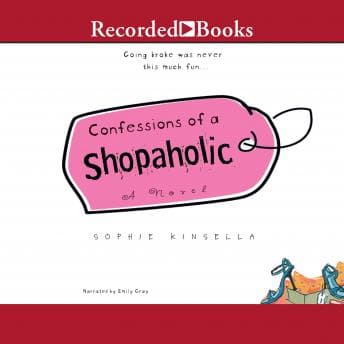

Can we talk about how infuriating Becky Bloomwood is? Because I need to get this off my chest before I say anything else.
I was walking the lakefront with Denise, trying to decompress after a particularly brutal day of parent-teacher conferences, and within the first hour I was muttering "Oh, come ON" at my earbuds. This woman is a financial journalist - a FINANCIAL JOURNALIST - who hides her bank statements in a drawer because looking at them gives her anxiety. She buys a scarf she doesn't need while owing thousands on credit cards. She constructs elaborate fantasies about becoming a "financial guru" while dodging calls from her bank.
And somehow, against every instinct I have as someone who teaches young people to think critically, I couldn't stop listening.
The Art of the Unreliable Rationalizer
This reminds me of what Hemingway said about writing one true sentence. Except Sophie Kinsella has done something almost perverse here - she's written hundreds of false sentences that reveal a deeper truth. Every time Becky convinces herself that this purchase is different, that this time the math will somehow work out, that she'll definitely return the thing she just bought (she won't), Kinsella is holding up a mirror to the human capacity for self-deception.
My students do this constantly. "I'll definitely study this weekend, Mr. Williams." "I read most of the chapters." "My dog ate my essay." (In 2024. The dog ate the digital file, apparently.) Becky Bloomwood is just the adult version, with higher stakes and better fashion sense. She reasons herself into ridiculous situations with the confidence of someone who genuinely believes their own nonsense.
The specificity is what elevates this beyond simple comedy. Kinsella doesn't just say Becky overspends - she shows us the exact mental gymnastics. The way Becky calculates that buying something on sale is actually saving money. The way she decides that investing in a "capsule wardrobe" (which somehow requires seventeen new items) is fiscally responsible. It's absurd. It's also exactly how people think.
Kinsella does this same thing in Undomestic Goddess — a protagonist running from reality with elaborate self-justifications — though the stakes there feel more desperate and less gleefully chaotic.
Emily Gray and the Tightrope Walk
Here's the thing about narrating a character like Becky: get it wrong, and she becomes unbearable. Too shrill, and you want to throw your phone in Lake Michigan. Too dim, and the comedy falls flat. Gray walks this line with real skill - there's a buoyancy to her performance that keeps Becky on the right side of sympathetic, even when she's making choices that would give any reasonable person hives.
Gray's delivery has this quality of genuine enthusiasm that mirrors Becky's own delusions. When Becky gets excited about a sale, you hear that excitement. When she's panicking about a bank letter, the panic feels real without becoming exhausting. It's performance as interpretation - Gray understands that Becky isn't stupid, she's just spectacularly good at lying to herself. There's a difference, and Gray finds it.
I listened at 1.0x - the author chose those words, and the comedic timing benefits from hearing them land properly. The prose deserves to breathe, even when that prose is describing the purchase of a completely unnecessary cashmere cardigan.
Who Should Clear Their Queue (And Who Should Keep Walking)
If you need your fiction to wrestle with the human condition in ways that would satisfy a graduate seminar, this isn't it. If you're looking for sentences you want to underline and return to, keep walking. But if you're stuck in Chicago traffic, or grading papers at an hour that should be illegal, or just need to remember that reading can be pure, uncomplicated fun - this works.
One warning: at nearly twelve hours, you're committing to an extended comedy of errors. The situations can feel repetitive if you're not in the mood. This is a marathon of retail disasters, not a sprint. Becky doesn't learn her lesson quickly. (Does she learn it at all? That would be telling.)
My students would love this. And I mean that as more of a compliment than I would have ten years ago.
There's a sequel — Christmas Shopaholic — and I'll be honest, after finishing this one on the lakefront I was already queuing it up before I got back to my car.
Worth Pausing the Budget Presentation For
I finished this book genuinely entertained, which is more than I can say for most things I consume while pretending to listen to Principal Martinez discuss enrollment projections. Kinsella understands something real about human nature - our infinite capacity for self-justification - and she packages it in comedy that doesn't pretend to be more than what it is.
Is it literature? No. But it's doing exactly what it set out to do, and doing it well. Sometimes that's its own kind of craft. Not everything needs to be Faulkner. Some things just need to make you laugh while you're walking off the stress of explaining, for the fifteenth time, why SparkNotes is not a substitute for actually reading the book.
Becky Bloomwood would definitely use SparkNotes. And somehow, I'd forgive her for it.