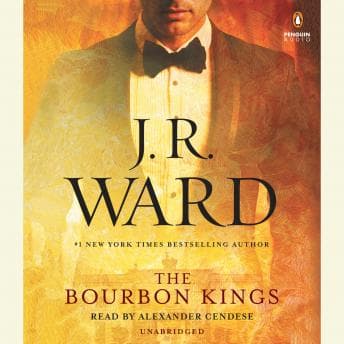

I'll be honest — I went into this one expecting to feel a certain kind of way about it, and I came out feeling... a different kind of way about it. Not better. Not worse. Just sideways.
Danielle Steel has sold nearly a billion books. A billion. That number haunts me when I'm trying to get 30 teenagers to care about The Great Gatsby. So when Complications showed up in my queue — six hours, a Paris hotel, intersecting lives on one fateful night — I figured it would be the literary equivalent of a warm croissant. Easy. Pleasant. Maybe a little flaky. I started it during a Sunday lakefront walk with Denise, who was listening to her own podcast about true crime, and we must have looked like the most disconnected married couple in Chicago, both wearing earbuds, both completely elsewhere.
The Grand Hotel Novel That Checks In But Never Unpacks
Here's what Steel is doing: she's working in the tradition of Arthur Hailey's Hotel or Vicki Baum's Grand Hotel — the ensemble piece where a single location becomes a pressure cooker for human drama. The Hotel Louis XVI reopens after four years of renovation, and we get a carousel of guests: the divorced art consultant testing the waters of new love, the suicidal man who ends up saving someone else, the couple blindsided by a medical emergency, the French politician whose secret meeting threatens everything. The anxious new manager, Olivier Bateau, and his steadier assistant Yvonne Philippe try to hold it all together.
It's a solid premise. I genuinely mean that. The problem is that Steel handles each storyline with the same emotional temperature — everything gets the same brisk, surface-level treatment. The suicidal guest and the art consultant's new romance carry roughly equal dramatic weight, which feels... wrong? One of these situations involves someone contemplating the end of their existence, and the other is a meet-cute in a Parisian lobby, and they read like adjacent magazine articles. My students would call this "mid." I'd call it a missed opportunity for the kind of tonal variation that makes ensemble fiction actually work.
At six hours and fifteen minutes, this is a quick listen. But quick and efficient aren't the same thing. Steel introduces so many characters that none of them get enough room to breathe. You're just starting to care about the couple facing the medical emergency when the narrative pivots to the politician, and by the time you circle back, you've lost that thread of emotional investment. It's like speed-dating with fictional people — pleasant enough in the moment, gone from your mind by the next morning.
The Action Movie Trailer Voice Problem
Now. Alexander Cendese. This is where things got interesting — and by interesting I mean I had to stop walking and just stand there on the lakefront processing what I was hearing.
Cendese is a clear, professional narrator. His enunciation is crisp. He doesn't attempt accents, which — for a novel set entirely in Paris with French characters — is actually a defensible choice. Bad French accents are worse than no accents. I'll give him that.
But here's the thing someone nailed perfectly in a review I came across: he sounds like the guy who does trailers for action movies. "In a world... where one hotel... holds all the secrets..." There's this constant undercurrent of dramatic gravity in his delivery that doesn't match the material. Steel writes in a clean, direct, almost journalistic prose style. Cendese reads it like every sentence might end with an explosion. The disconnect is strange. It's not bad narration in a technical sense — it's mismatched narration. Like putting a Hans Zimmer score over a Nora Ephron film.
I never connected with the characters emotionally, and I genuinely can't tell you how much of that is Steel's writing and how much is Cendese's delivery creating a wall between me and the people in this story. That ambiguity is itself a problem. When you can't separate the narrator from the material, something has gone wrong in the casting.
Who This Is For (And Who Should Keep Walking)
If you're a Steel loyalist — and there are roughly a billion reasons to believe those people exist — this is standard-issue. It's her doing what she does: clean prose, multiple storylines, glamorous setting, emotional situations resolved with forward momentum rather than deep introspection. You know what you're getting. The audiobook won't ruin it, but it won't elevate it either.
If you're looking for a great Paris-set ensemble novel in audio? Skip this and go find a good production of The Paris Wife or even Hailey's Hotel. I'd also point you toward The Sun Also Rises if Paris-as-pressure-cooker is what you're actually after — Hemingway earns every cobblestone. If you want Steel specifically, I suspect the print version lets you supply your own emotional pacing in a way that Cendese's trailer-voice delivery doesn't.
The Grade I'd Write in the Margin
This reminds me of what Hemingway said about prose being architecture — and this particular building has nice fixtures but the rooms are too small. Steel knows how to construct a story. She's been doing it longer than I've been teaching. But Complications promises complications and delivers... inconveniences. The stakes never feel as high as they should. The narrator adds an odd tonal mismatch that kept pulling me out of the world. At six hours, it's not a bad way to pass time — but "not bad" is a pretty thin endorsement from a guy who believes every book deserves your full attention.
Denise asked me what I was listening to when we got home. I said, "A novel set in a Paris hotel." She said, "Was it good?" And I said, "It was fine." And we both knew exactly what that meant.