
Principal Martinez was showing pie charts about next year's testing budget. I was listening to Dred Scott v. Sandford. One of us was learning something that mattered. I'll let you guess which.
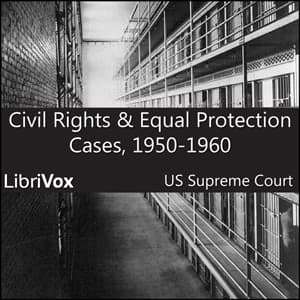
Twenty years teaching high school English in Chicago, and I've spent most of that time trying to explain to teenagers why these dusty constitutional arguments shaped the world they're inheriting. And here I am, finally listening to the actual decisions—not summaries, not textbook excerpts, the real thing—and I'm genuinely angry. Not at the audiobook. At how badly we've failed to make this material accessible for so long.
Because this? This is actually riveting. And I mean that.
Ninety-Two Years of Jurisprudence That Built and Broke a Nation
From 1856 to 1948. You know what that spans? Dred Scott—the decision where Justice Taney wrote that Black Americans "had no rights which the white man was bound to respect." Through Plessy v. Ferguson's "separate but equal" poison pill. Through Korematsu, which blessed Japanese internment during World War II. These aren't abstractions. These are the actual words that judges wrote to justify horror.
Kelli Robinson reads them straight. Her voice is measured, professional, deliberately neutral—which is exactly right. She doesn't editorialize. Doesn't add dramatic pauses for effect. Just delivers the language as the Court wrote it. And that restraint serves the material perfectly. When you hear Taney's opinion read aloud, you don't need theatrical emphasis. The cruelty is baked into every subordinate clause.
I found myself pausing the audio repeatedly. Not because I was lost, but because I needed to process. This is why we still read the classics, I tell my students. Because the primary sources don't lie. Like listening to Varieties of Religious Experience, there's something irreplaceable about hearing original testimonies without editorial interference.
Seven Hours and Forty-Three Minutes of Constitutional Reckoning
Let's talk about what this actually is. It's not a history lesson. There's no framing, no context, no scholar explaining what these cases meant in practice. It's just the decisions themselves, read chronologically. You're essentially watching the Fourteenth Amendment get interpreted, reinterpreted, and occasionally gutted over nearly a century.
The structure means there's no narrative arc. No protagonist. No resolution. Just the slow, grinding machinery of American jurisprudence wrestling with its original sin.
I listened at 1.0x—the justices chose those words—and rushing through constitutional law feels wrong. Like speed-reading Faulkner. You miss the architecture. At seven-plus hours, it's a commitment. Robinson's steady delivery helps. Her voice has a kind of judicial neutrality that lets the words carry their own weight. She doesn't try to perform the material. She presents it.
Who Needs This (And Who Should Run)
Law students need this. Teachers like me need this. Anyone who's ever argued about constitutional interpretation and realized they'd never actually read the cases they were citing—guilty—needs this.
But let's be realistic. This isn't recreational listening. My wife Denise walked the lakefront with me during the Plessy section and asked why I looked like I wanted to throw my phone into Lake Michigan. I was listening to Homer Plessy's humanity being legally negated. Not exactly escapism.
Skip this if you want analysis or historical background. You need to bring your own knowledge, or be willing to pause and research. Skip this if you're looking for a narrator who interprets the material—Robinson's approach is presentation, not performance.
Worth Every Minute I Ignored Those Pie Charts
I'm giving this a cautious recommendation because the material is essential and the execution is competent. You're not going to accidentally fall in love with Supreme Court opinions the way you might with Middlemarch. You're going to work through them because you understand their importance.
For me, that work was worth it. Hearing Korematsu—knowing it's never been formally overruled—while sitting in a school where I teach kids whose grandparents might have been in those camps? That's education. That's why the primary sources matter.
My students would hate this. I love it. But I love it the way I love vitamins—necessary, not delicious.