
What if the internet became so immersive that people started dying inside it—and nobody could figure out why?
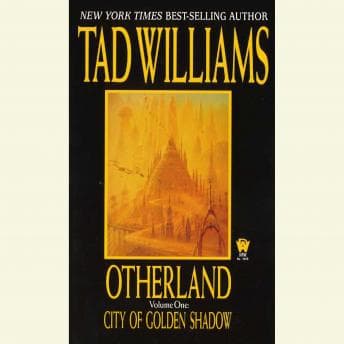
That's the question that kept me up until 3 AM on a Tuesday, thesis deadline be damned. I was supposed to be working on my procedural generation chapter, but instead I had my headphones in, staring at my ceiling, absolutely *consumed* by Tad Williams' fever dream of a virtual reality epic. My advisor would be disappointed. I regret nothing.
This Is What 1996 Thought The Future Would Look Like (And It's Glorious)
Look, I need you to understand something about Otherland. This book was written before Google existed. Before smartphones. Before anyone really knew what the internet would become. And yet Williams built a VR metaverse so detailed, so *lived-in*, that it puts most modern sci-fi to shame. We're talking about a world where virtual reality isn't just games and entertainment—it's woven into education, medicine, social interaction, everything. The magic system here isn't magic at all. It's technology so advanced and so thoroughly thought-through that it might as well be.
The world-building is *chef's kiss*. Williams doesn't just give you one virtual world—he gives you dozens. Egyptian mythology simulations. Martian colonies. Kitchen sink fantasy realms. And they're all connected by this sinister conspiracy involving children falling into unexplained comas after VR exposure. It's Sanderson-level construction, except instead of hard magic systems, you get hard science fiction extrapolation. Theft of Swords pulls off that same trick with its fantasy systems—meticulously constructed worlds that reward close attention.
George Newbern Doing The Heavy Lifting
Here's where I need to give credit where it's due. This book has an absolutely *massive* cast. We're talking South African Bushman mystics, Australian teachers, American hackers, and a whole cabal of mysterious villains who may or may not be immortal. Newbern handles all of it. His !Xabbu—the Bushman character—has this gentle, musical quality that makes the philosophical moments land. His various antagonists drip with menace without going full cartoon villain.
The accent work is genuinely impressive. Indian characters, Spanish characters, British characters—they all sound distinct. Are some of them a little similar? Sure, when you've got this many people to voice, some overlap is inevitable. But Newbern never loses track of who's speaking, which in a 28-hour audiobook with this many POV characters is basically a superpower.
The Pacing Problem (Or: Yes, It's Slow, And That's The Point)
Okay, I need to address the elephant in the room. Some people find this book slow. And honestly? They're not wrong. This is not a book where stuff happens every chapter. This is a book where Williams is laying foundation. Building infrastructure. Establishing a world so complex that it needs four books to explore properly.
If you don't like info-dumps, this isn't for you (but you're wrong). Williams takes his time introducing each POV character, letting you settle into their world before yanking the rug out. It's a slow burn in the truest sense—you're investing now for payoff later. The ending doesn't wrap things up neatly because this is book one of four. You're signing up for a commitment here. Shift does something similar—it's the middle book of a trilogy that refuses to give you easy answers, trusting you to stay invested.
(My D&D group would love this, by the way. The way Williams constructs his virtual worlds is basically a campaign setting design clinic. I've already stolen three ideas for my next session.)
The Conspiracy That Actually Feels Dangerous
What sells this book for me is the threat. There's this group called The Grail Brotherhood—wealthy, powerful, operating in shadows—and Williams makes them feel genuinely terrifying. Not because they're mustache-twirling evil, but because they're *plausible*. Rich people using technology to transcend human limitations while the rest of us suffer the consequences? That's not science fiction anymore. That's Tuesday.
The children falling into comas, the mysterious golden city that keeps appearing in VR spaces, the sense that something massive and malevolent is happening just beneath the surface of everyday life—it all builds this atmosphere of creeping dread that kept me listening way past when I should've been sleeping.
Who Should Queue This Up (And Who Should Run Away)
This is for dedicated listening only. You cannot half-pay-attention to this book while doing dishes. You will miss critical worldbuilding and then be confused for the next three hours. I'm talking focus time—the kind where you sit down with headphones and actually *engage*.
If you want fast-paced action and immediate gratification, skip this. If you need your sci-fi to be snappy and modern, this 1996 prose style might feel dated. But if you're the kind of person who reads Tolkien appendices for fun, who appreciates when an author takes the time to make a world feel *real*, who doesn't mind investing 28 hours knowing there are three more books after this? You've found your next obsession.
Roll For Initiative On Your Credit
This is a commitment. A big, ambitious, sometimes slow commitment. But Williams delivers something genuinely special here—a vision of virtual reality that feels prophetic, a conspiracy that feels urgent, and a cast of characters worth following across four massive books. Newbern's narration carries the weight admirably. My thesis can wait another week.