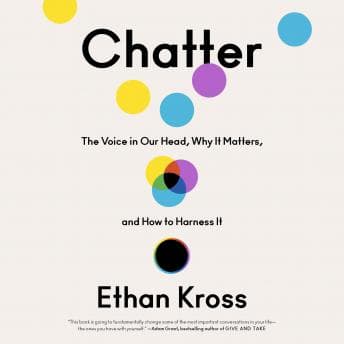

Look, I'll be honest - I went into this one skeptical. Another self-help book about "managing your inner voice"? I've read (listened to) approximately 47 books that promise to fix my brain, and most of them could've been Medium posts. Kybalion was one of those - way too abstract to actually use. But Chatter actually surprised me.
The premise is simple: that voice in your head? The one that won't shut up at 2 AM when you're debugging a production outage? It's not inherently bad. It's just... miscalibrated. Kross, who runs the Emotion & Self Control Lab at Michigan, spends about six hours explaining why we spiral and - more importantly - what actually works to stop it.
Why Author-Narrated Science Books Hit Different
Here's the thing about Ethan Kross reading his own book: he sounds like a professor who actually likes teaching. Calm, clear, the kind of voice that makes you feel smarter just by listening. No dramatic narrator trying to make psychological research sound like a thriller. Just a guy explaining his life's work with genuine enthusiasm.
The pacing is... academic. I'm not gonna sugarcoat it. There were moments on my morning commute where I had to rewind because my 6 AM brain wandered off during a study explanation. But honestly? That's on me. Kross does the work to make dense research accessible - he weaves in stories about a pitcher who suddenly couldn't pitch, a Harvard student living a double life as a spy. Real examples that stick.
One thing that bugged some listeners: the transitions to heavier content can feel abrupt. You're cruising along learning about "distanced self-talk" (basically talking to yourself in third person - turns out it works) and then suddenly we're in darker territory without much warning. Didn't bother me personally, but if you're listening while half-asleep, it can be jarring.
The Actual Useful Bits (Because That's Why We're Here)
Okay, the ROI on this audiobook is solid. Here's what I actually use now:
Distanced self-talk. Instead of "I'm so stressed about this deployment," you go "Sarah is stressed about this deployment." Sounds ridiculous. Works anyway. I've used it before three different on-call escalations and my heart rate genuinely stayed lower.
The "fly on the wall" technique. When you're replaying an embarrassing moment for the 400th time, zoom out. Imagine you're watching it happen to someone else. Your brain processes it differently.
Nature exposure. Even looking at trees helps. Which explains why I feel slightly less insane after walking through the Caltrain station's sad little planted area.
The book does feel padded in places - some stories go on longer than they need to, and you can tell Kross is trying to hit a page count. A few listeners called it "chaff" and honestly, fair. But at 5 hours 45 minutes, it's not egregious. I finished it in maybe four commutes.
Queue It If You're a Chronic Overthinker, Skip If You Want Entertainment
This is basically cognitive behavioral therapy techniques but for people who'd never call it that. If you're the type who reads productivity books and actually implements things (hi, that's me), you'll get value here. If you want entertainment or high-energy motivation, look elsewhere - this is too measured for that.
Perfect for: train, walking, any commute where you can zone in. I listened at 1.25x, which felt right. Kross speaks clearly enough that you could probably push to 1.5x, but some of the research explanations benefit from normal speed.
The production is clean - no weird audio issues, no background noise. Just a psychologist in a recording booth, telling you how to stop being your own worst enemy.
Sarah's Final Commit
Yeah, I'd recommend it. It's not life-changing in the way the marketing wants you to believe, but it's genuinely useful. I've recommended it to three coworkers who also have the "replaying every awkward Slack message at 3 AM" problem. Two of them finished it. One said it helped. That's a pretty good hit rate for self-help.
The inner critic doesn't go away. But now I have actual techniques that work, backed by someone who spent decades studying this stuff. And Kross reading it himself? It just lands better than some random narrator would've made it.
Bottom Line: Worth your commute. Especially if your brain won't shut up.








![Steve Jobs [unabridged audiobook] audiobook cover](/_next/image?url=https%3A%2F%2Fcovers.audiobooks.com%2Fimages%2Fcovers%2Ffull%2F9788499923406.jpg&w=1920&q=75)
