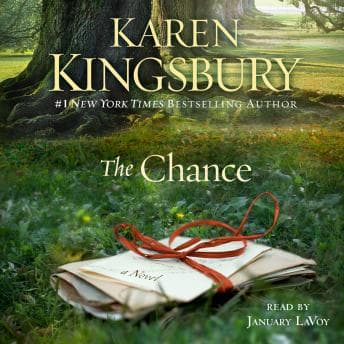

I'll admit it: I almost skipped this one. Christian fiction and I have a complicated relationship—I grew up in a household where Left Behind was considered literature, and my graduate school years were spent actively running from anything with an inspirational label. But Denise has been on a Karen Kingsbury kick lately, and when she handed me her earbuds during a particularly long lakefront walk, I figured I'd give it twenty minutes.
Nine hours later, I'm sitting here at 11 PM, papers ungraded, wondering when exactly I became the kind of person who cries over a rusty metal box buried under a Georgia oak tree.
The Time Capsule That Actually Works
Here's what Kingsbury understands that a lot of literary fiction forgets: childhood friendship carries a specific weight. The setup is almost painfully simple—Ellie and Nolan, kids in Georgia, bury letters under their favorite tree with plans to return in eleven years. 2013, specifically, because Nolan's time-traveling books say that's when "all the mysteries of the world will be understood." (My students would roll their eyes so hard at this. I found it oddly touching.)
But the simplicity is the point. One Plus One works the same way—stripping away complexity to find the emotional truth underneath. By the time we meet adult Ellie—single mom, faith shattered, scraping by in a tired apartment—and adult Nolan—NBA star carrying grief like a second skin after losing his father—that buried box becomes something more than plot device. It becomes the physical manifestation of who they were before life happened to them.
This reminds me of what Hemingway said about writing one true sentence. Kingsbury's prose isn't Hemingway—let's be clear about that—but she writes true sentences about loss. About the specific loneliness of success. About how grief doesn't diminish; it just changes shape.
January LaVoy Gets Southern Right
I'm picky about Southern accents in audiobooks. Grew up spending summers with my grandmother in Alabama, and nothing pulls me out of a story faster than a narrator who learned "Southern" from watching Steel Magnolias once. LaVoy doesn't do that. Her Georgia characters sound like actual people from Georgia—the vowels stretch naturally, the rhythm feels lived-in rather than performed.
What impressed me more: her male voices actually sound like men. Nolan's voice carries this weight, this controlled grief that athletes often develop when they're taught to perform through pain. She differentiates him from other male characters without resorting to cartoon bass. It's subtle work. The kind of narration that disappears into the story rather than demanding you notice it.
The emotional moments—and there are several that hit harder than I expected—land because LaVoy trusts the silence. No rushing through the reunion scene under that oak tree. No overselling the tears.
The Predictability Problem (And Why It Doesn't Quite Matter)
Look, I'm not going to pretend this book surprised me. You know where it's going by hour two. Ellie will find her way back to faith. Nolan will find his way back to her. The oak tree will witness their reunion. If you've read any Kingsbury, you know the formula.
But here's the thing about predictability in certain kinds of fiction: sometimes we're not reading for the destination. We're reading for the specific way the author walks us there. The side characters from The Bridge showing up with their own ongoing story. The specific details of Nolan's grief—how his father was his coach, how that loss created both his drive and his isolation. The way Ellie's faith didn't leave in a dramatic crisis but eroded slowly, the way faith usually does.
My students would hate this. They want twists. They want subversion. They're seventeen and think predictability is weakness.
I'm forty-seven and I think there's courage in writing a story that says: yes, love can heal this. Yes, faith can return. Yes, the people we were as children still exist somewhere inside us, waiting. Booked operates in that same space—stories that aren't trying to subvert anything, just deliver on their emotional promises.
Who This Is Actually For
If you need your fiction to challenge your worldview, skip this. If Christian themes make you uncomfortable, this isn't the book to test those waters—faith is woven through every major plot point. If you want literary complexity, Kingsbury isn't your author.
But if you're the person who sometimes needs a story that believes in redemption? If you've ever lost someone and wondered if you'd ever feel whole again? If you have a rusty box of your own somewhere—literal or metaphorical—full of letters to a person you used to be? This one's worth the nine hours.
Worth Pausing the Faculty Meeting For
I finished this walking home from school yesterday, the late afternoon light hitting the lake just right, and I had to stop on the path for a minute. Not because the ending surprised me—it didn't. But because Kingsbury earned that ending. She walked me through enough genuine grief, enough specific loss, that when the healing came, it felt like something I'd witnessed rather than something I'd been told about.
Is it great literature? No. But it's honest storytelling, performed by a narrator who understands that sometimes the best thing you can do is get out of the way and let the words breathe.
Principal Martinez, if you're reading this: I was definitely paying attention in yesterday's meeting. (I wasn't. I was listening to the reunion scene. It was worth it.)