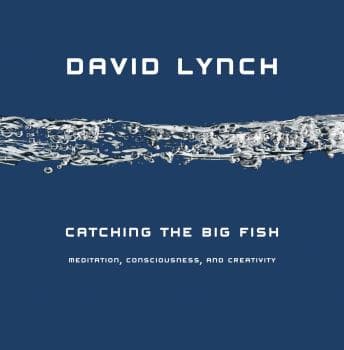

Look, I'll be honest - I started this audiobook expecting to roll my eyes. David Lynch talking about meditation? Sounded like Hollywood woo-woo packaged for people who think buying crystals counts as a personality. I was wrong. Not completely wrong, but wrong enough that I finished the whole thing in one sitting during a flight to Chicago.
Here's the thing about Catching the Big Fish: it's 1 hour and 48 minutes. That's it. In a world where business books pad 30 minutes of insight into 12-hour marathons, Lynch delivers his entire creative philosophy before you've finished your in-flight snack. My 2.0x speed wasn't even necessary. The man respects your time.
The Midwestern Mystic in Your Ears
Lynch narrating his own work is... disarming. There's this Midwestern earnestness that shouldn't work coming from the guy who made Eraserhead. He sounds like your neighbor explaining why he really loves his tomato garden, except the tomatoes are ideas about consciousness and the garden is Transcendental Meditation. It's weird. It works.
Some people call his delivery monotone. I get it - there's no dramatic range here, no vocal fireworks. But that misses the point. The guy's talking about stillness and diving deep into consciousness. You want him to sound like a morning radio host? The steadiness IS the message. It put me in this oddly calm headspace, which is not my default setting. Jenny would've been impressed.
What My Parents Would've Called "Thinking Too Much"
Okay, here's where I have to be real. The content is thin. Like, really thin. Lynch talks about meditation (a lot), shares some quick stories about his films, and offers these little fortune-cookie insights about creativity. "Ideas are like fish" - that's literally the core metaphor. If you want tactical frameworks or step-by-step processes, this ain't it.
But - and this is a big but - there's something here that most business books miss entirely. Lynch isn't selling you a system. He's describing a practice. The difference matters. My parents didn't have a "framework" for running their dry cleaning business. They showed up, they paid attention, they did the work. Lynch is basically saying the same thing about creativity: go quiet, pay attention, ideas come.
Is that worth a book? Debatable. Is it worth under two hours of your life? Yeah, probably.
The TM Elephant in the Room
I should mention - this is basically a Transcendental Meditation advertisement. Lynch doesn't hide it. He credits TM for everything good in his creative life and runs a whole foundation promoting it. If that bothers you, you'll spend half the audiobook annoyed.
Me? I don't practice TM. I'm skeptical of anything that requires a paid certification to learn. That same skepticism kicked in hard when I read Golden Key: Modern Alchemy to Unlock Infinite Abundance—another book promising transformation through a specific practice. But I can separate the delivery mechanism from the underlying insight. Lynch is saying: create space for stillness, and ideas surface. Whether you do that through TM, morning runs, or staring at a wall - the principle holds. Breaking the Habit of Being Yourself goes deeper into the neuroscience behind why this works, though it's heavier on the woo-woo scale than Lynch. I've seen it work with founders who take their best ideas from the shower, not the strategy session.
Would I Hit Play Again?
Honestly? Maybe. It's the kind of thing I could see revisiting when I'm burned out and need a reset. Not for the information - I got that the first time - but for the vibe. Lynch's voice is weirdly therapeutic. Like a creative director ASMR.
The bottom line: this isn't a business book. It's not really a self-help book either. It's more like spending two hours with an artist who's figured something out and wants to share it without making a whole production about it. For founders and creatives drowning in productivity hacks and optimization frameworks, that simplicity might be exactly what you need.
Skip if you want actionable steps. Listen if you're tired of actionable steps and want someone to remind you that creativity isn't a process to be optimized - it's a fish to be caught. (Yes, I'm using his metaphor. It's annoyingly sticky.)
Jenny would say I'm being too generous. Jenny might be right. But I didn't hate it, and for a book about meditation from a filmmaker, that's higher praise than it sounds.