
The 6AM Brain Rewiring Experiment
Okay, so here's the thing. I started this audiobook at 6:17 AM on a Tuesday, packed into a Caltrain car that smelled vaguely of someone's breakfast burrito, and by the time I got to Mountain View I was genuinely questioning whether my entire personality was just... a habit. Like, a series of neurological loops I'd been running since college. Which is either profound or deeply unsettling, depending on how much coffee you've had.
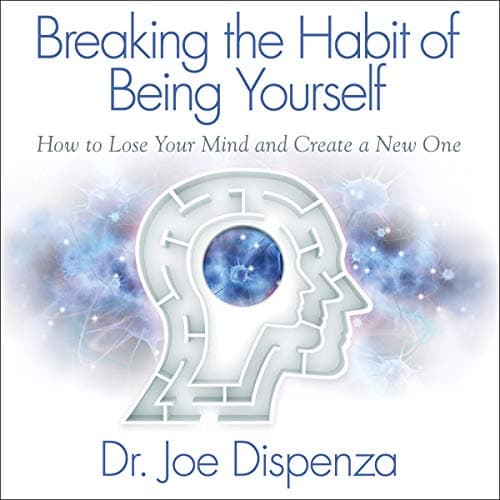
Dr. Joe Dispenza's Breaking the Habit of Being Yourself is basically neuroplasticity meets meditation meets quantum physics, wrapped in a self-help package. And look, I'm a distributed systems engineer - I'm inherently skeptical of anything that mentions "quantum" outside of actual physics papers. But Dispenza does something clever here: he front-loads the science before asking you to buy into the woo-woo stuff. The first several hours are legitimately interesting explanations of how neural pathways form, why we default to the same emotional states, and how our brains literally become addicted to familiar feelings. Even negative ones. (Which, honestly, explains a lot about my relationship with on-call stress.)
The ROI on this audiobook is... complicated. Let me explain.
Adam Boyce: Steady But Not Sleepy
Adam Boyce narrates this, and he's got this steady, authoritative voice that works really well for the science-heavy sections. He handles terms like "neuroplasticity" and "prefrontal cortex" without making you feel like you're back in a lecture hall. The pacing is consistent - measured, even - which I appreciated at 6 AM when my brain was still booting up.
But here's where it gets tricky. The book has meditation sections. Actual guided meditations. And Boyce doesn't really shift gears for those. He's using the same "here's how your amygdala works" voice for "now close your eyes and feel your body dissolving into infinite possibility." It's... jarring? Like having your manager lead a yoga class. Technically competent, but the vibe is off.
Some listeners apparently find his accent distracting - I didn't personally have that issue, but I also listen to British true crime podcasts for fun, so my tolerance is high. Your mileage may vary.
The Science Actually Holds Up (Mostly)
I was pleasantly surprised by how much of the neuroscience content checks out. Dispenza explains how thoughts create neural pathways, how emotions become chemical addictions in the body, and why change is so hard - it's not just willpower, it's literally fighting your own biology. As someone who debugs systems for a living, I appreciated the mechanistic approach. Your brain is basically running legacy code, and you need to consciously rewrite it.
The quantum physics stuff? Ehhh. It's the weakest link. He makes some leaps from "observer effect in quantum mechanics" to "your thoughts create your reality" that made me squint. It's not wrong exactly, but it's definitely in the "could've been a blog post" territory of scientific rigor. I found myself mentally flagging those sections as "interesting metaphor, not peer-reviewed."
What actually landed for me was the practical framework. Dispenza breaks down the meditation practice into specific steps: becoming aware of your habitual thoughts, disconnecting your body's emotional addiction to those thoughts, and then intentionally creating new mental states. It's systematic. Almost like... refactoring your own consciousness? (Kevin would roll his eyes at that metaphor, but he's not wrong that I relate everything to code.)
The Commute-Worthiness Problem
Here's my honest assessment: this is a weird audiobook for commuting.
The explanatory chapters? Perfect for the train. I finished those in about 4 commutes, totally engaged, occasionally nodding along like a weirdo. But then you hit the meditation sections, and suddenly you're supposed to close your eyes and visualize your future self while some guy next to you is loudly discussing his stock portfolio. Not ideal.
I ended up doing a hybrid approach - listened to the teaching content during commutes, then did the actual meditation exercises at home before bed. Which worked, but it means this isn't a true "one and done" commute listen. There's a supplemental PDF with visual aids too, which obviously you can't use while driving or standing on a train.
Perfect for: bedtime (meditation sections), commute (teaching sections), weekend deep-dive. Skip for: gym, anything requiring split attention.
Who Should Listen (And Who Should Skip)
This is for you if: you're interested in the science behind habit change, you're open to meditation but want it explained mechanically rather than spiritually, or you've read other self-help books and found them too fluffy. Dispenza gives you the why before the how, which I really appreciated.
Skip this if: you want pure science without any spiritual framework, you're impatient with repetition (he does hammer certain points home repeatedly), or you need a dynamic narrator to stay engaged. Girl, Stop Apologizing had a similar repetition issue, though it leaned way more motivational and way less neuroscience-heavy. Adam Boyce is good, but he's not Ray Porter. (Then again, who is.)
I finished this in about 7 commutes plus some evening sessions, running at 1.5x for the teaching content and 1x for meditations. At almost 11 hours, it's a commitment. But unlike a lot of self-help audiobooks that could've been a blog post, this one actually earns its length. The science foundation is solid, the practical framework is usable, and even if you're skeptical of the quantum stuff (hi, me), there's enough actionable content to justify the time.
Bottom Line: Worth your commute for the neuroscience. Worth your evenings for the meditations. Just don't try to do both simultaneously unless you want to miss your stop while visualizing your ideal future self. Ask me how I know.