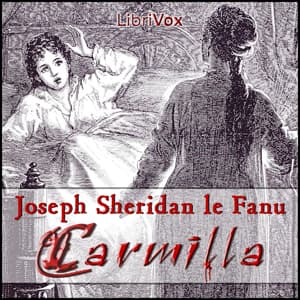

I was making dal makhani at 10 PM on a Tuesday—don't ask why, insomnia makes you do strange things—when I realized I'd been standing at the stove for twenty minutes, wooden spoon frozen mid-stir, completely absorbed in a vampire story written 150 years ago. That's the thing about Carmilla. It sneaks up on you.
Le Fanu wrote this in 1872. Twenty-five years before Stoker gave us Dracula. And honestly? The psychology here is more interesting. Stoker gave us a monster. Le Fanu gave us a case study in desire, repression, and the way we invite danger into our lives while telling ourselves we're just being polite.
The Psychology of Wanting What Destroys You
Laura, our narrator, is a fascinating subject. She's isolated, lonely, raised in a remote castle by an overprotective father. When Carmilla literally crashes into her life—carriage accident, beautiful stranger, mysterious circumstances—Laura doesn't run. She leans in. And here's what makes this compelling from a psychological standpoint: Laura knows something is wrong. She feels drained. She has nightmares. She watches her friend die of the same symptoms she's developing.
And she still can't pull away.
This is textbook trauma bonding before we had the term. The push-pull dynamic between Laura and Carmilla—the intensity, the jealousy, the moments of tenderness followed by something predatory—it reads like a clinical description of an abusive relationship wrapped in Gothic lace. Le Fanu understood human nature in ways that still hold up. The research shows that isolation makes us vulnerable to exactly this kind of attachment. Laura never stood a chance.
(My therapist would have thoughts about Laura's father, too. Just saying.)
Elizabeth Klett Finds the Fever-Dream Frequency
Here's the thing about narrating Victorian Gothic fiction: you can go full melodrama and make it campy, or you can play it too straight and make it boring. Klett finds this middle ground that just works. Her voice has this mellow, almost dreamy quality that matches the fever-dream logic of the story. You're listening and you're not quite sure if what's happening is real or if Laura's already under Carmilla's spell.
The character differentiation is solid—you can tell who's speaking without effort—but what really impressed me was the pacing. At just over three hours, this could've felt rushed or dragged. It doesn't. Klett knows when to let a moment breathe and when to push forward. The atmospheric tension builds without ever becoming exhausting.
Some listeners felt the relationship between Laura and Carmilla needed more development, and I get that. But I wonder if that's less about Klett's performance and more about Le Fanu's Victorian restraint. He's writing about queer desire in 1872. Everything is subtext. The erotic undertones are there—pretty explicitly, actually—but they're filtered through Laura's confusion and denial. Klett plays that ambiguity well. She doesn't oversell the romance or undersell the horror.
Why This Still Matters (A Brief Academic Tangent)
I teach my students that vampire fiction is never really about vampires. It's about whatever a culture is most anxious about. Dracula was about foreign invasion, sexuality, the New Woman. But Carmilla? Carmilla is about the thing inside the house. The danger that looks like friendship. The love that consumes. Silent Woman explores similar territory—the threat that wears a familiar face, the horror of not recognizing danger until it's already inside.
Le Fanu was Irish, writing during British colonialism, and there's a whole paper I could write about the vampire as colonizer—but I'll spare you. (You're welcome.) What matters for listeners is that this story has layers. You can enjoy it as a spooky Gothic tale, or you can dig into what it's really saying about power, desire, and the stories we tell ourselves to avoid seeing the truth.
Laura exhibits classic denial patterns. She rationalizes. She minimizes. I saw the same psychological pattern in The Mystery of Mary—characters ignoring red flags because acknowledging them would mean confronting uncomfortable truths. She focuses on Carmilla's beauty and charm while ignoring the bodies piling up around her. It's uncomfortable to read because it's recognizable. We've all been Laura at some point—maybe not with a vampire, but with someone or something we knew was bad for us.
Who Gets Bitten (And Who Should Run)
Best for: late-night listening when you want something atmospheric but not jump-scare scary. Fans of classic literature who want an accessible entry point. Anyone interested in the origins of vampire fiction. And—this is specific—anyone who's ever stayed too long in a relationship that wasn't good for them. You'll recognize something here.
Skip if: you want action, explicit content, or modern vampire tropes. This is slow, subtle, and Victorian. The horror is psychological, not visceral.
The Real Monster Was the Invitation We Extended Along the Way
Would I listen again? Yes. It's short enough to revisit, and Klett's narration makes it easy listening despite the heavy themes. The production is clean, no weird audio issues, nothing distracting.
I finished the dal makhani eventually. It was fine. But I kept thinking about Laura, alone in that castle, knowing something was wrong and choosing not to see it. That's the real horror, isn't it? Not the monster. The invitation.