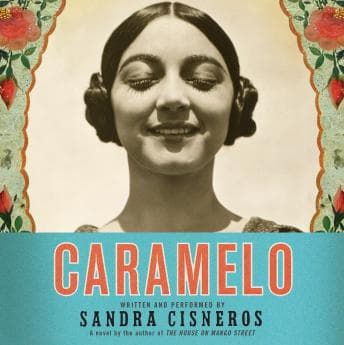

People told me this book meanders. That it doesn't go anywhere. And I'm sitting in my driveway at 8:17 AM after a twelve-hour shift where I lost a patient in Trauma Bay 2, listening to Sandra Cisneros describe how Lala's grandmother earned the nickname "the Awful Grandmother" — and I'm laughing so hard my neighbor thinks I've finally cracked.
So yeah. Let's talk about who's right.
Sixteen Hours of Someone Else's Familia When You Need a Break From Your Own
Here's the thing about Caramelo — it's not a novel with a plot engine driving you from chapter to chapter. It's a family. And families don't have plot engines. They have arguments about who gets the front seat on the drive from Chicago to Mexico City. They have seven kids crammed into station wagons with no air conditioning. They have grandmothers who weaponize guilt like it's a surgical instrument.
As someone who grew up eldest of five in a Filipina household, I felt this book in my bones. The way Lala sits at family gatherings absorbing stories she's too young to fully understand but old enough to remember? That's every holiday at my Tita's house. The "healthy lies" that get passed down generation to generation until nobody remembers what actually happened — my family has those too. We just call them "what really happened in 1987" depending on which aunt you ask.
Cisneros moves between Mexico City and Chicago and San Antonio like my family moves between Tagalog and English — mid-sentence, no warning, keep up or don't. The Spanish isn't translated for you, and it shouldn't be. You either know what "Ay, qué barbaridad" means from context, or you learn. This is not a book that holds your hand. It assumes you're smart enough to sit at the grown-ups' table.
The Author Is the Narrator and That Changes Everything
I've listened to enough author-narrated audiobooks to know they're a gamble. Some writers can write but can't read aloud to save their lives. Cisneros? She reads this like she's telling you the story at her kitchen table after everyone else has gone to bed. There's this intimacy — she'll shift into the Awful Grandmother's bitter, clipped tone and you can practically see the old woman's pursed lips. Then she'll croon the birthday songs Lala and her brothers sing to their father and your chest gets tight.
She's not doing voices the way a professional narrator would. There's no full cast, no dramatic range of accents. What she gives you instead is authenticity. Her bilingual cadence — the way English and Spanish weave through each other naturally — that's something a hired narrator couldn't replicate without it feeling performative. This is her family, fictionalized or not. You can hear it.
Now. Almost sixteen hours. That's a commitment. And I won't lie — there are stretches in the middle where the generational history goes deep, where Cisneros is building the architecture of this family's past in Mexico, and if you're not locked in, your mind will drift. I caught myself charting on autopilot during one section about the grandmother's youth and had to rewind. This book demands your attention. It's not background listening. It's not workout fuel. It's a sit-down-and-pay-attention kind of experience.
When the Medicine Isn't the Point But the Diagnosis Still Fits
I don't come to books like this for medical accuracy — but I come as someone who understands family pathology. And Cisneros nails it. The way the Awful Grandmother's bitterness isn't just meanness but grief calcified into something sharp and permanent? I've seen that in patients' families. The way secrets rot a family from the inside while everyone smiles for the camera? I've charted around those secrets in patient histories for fifteen years. Two Truths and a Lie works that same territory — the way family mythology calcifies into something everyone agrees to call the truth — though it lands lighter than Cisneros does here.
The caramelo rebozo itself — this striped shawl that carries the family's history — works because it's physical. It's something you can touch. In a family where truth shifts depending on who's telling the story, that shawl is the one thing that stays constant. Cisneros keeps bringing you back to it, and by the end, it means something heavy.
Carlos asked why I was crying in the car. I blamed allergies. It's March in Phoenix. He bought it.
Who Needs This and Who Should Probably Skip It
If you grew up in an immigrant family — any immigrant family — this book will hit different. The code-switching, the guilt, the fierce love tangled up with fierce disappointment, the feeling of belonging to two countries and neither one completely. My mom would love this (she still thinks I should've been a doctor), even though it's a Mexican-American story, because that specific immigrant-family frequency is universal.
If you need a tight plot, a murder, a twist at the end — this is not your book. Go listen to a Tana French. No judgment.
But if you've got a long drive or a quiet night shift and you want to feel like someone just handed you their family photo album and said let me tell you about these people — night shift approved. Just give it your full attention. It earned that.