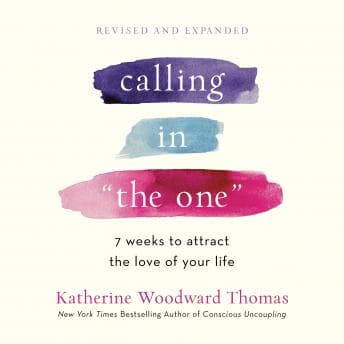

Quick Verdict: A sixteen-hour structured program that actually makes you do the work—journal exercises, meditations, daily practices. Thomas narrates with therapeutic warmth that occasionally veers condescending. Skip if you want quick dating tips; commit if you're ready for genuine self-examination about your relationship patterns.
"You cannot manifest what you're not willing to become." Thomas drops this line early, and it's the thesis statement for everything that follows. Most Law of Attraction content promises that visualization alone will deliver results. This audiobook calls that bluff and hands you a forty-nine-day homework assignment instead.
Listener reception splits predictably. The fans describe it as "transformational" and praise how Thomas's voice "creates a safe space to dive in and do the work." The skeptics find it "fluffy" and "woo-woo," with one noting that "the many quotes from people get obnoxious." Both camps are correct. Your response depends entirely on your tolerance for spiritual frameworks wrapped around legitimate therapeutic techniques.
I listened during evening commutes, and the pacing matched that reflective headspace well. Thomas narrates her own work with the calm authority of someone who's guided thousands of clients through these exercises. When she walks you through visualizations about examining childhood attachment patterns, her delivery feels less like a lecture and more like a therapy session you're eavesdropping on. Wired for Love digs into similar attachment territory, though with more neuroscience and less manifestation language. The emotional weight she brings to client stories—people who transformed their relationship trajectories—lands harder in audio than it would on the page.
But that therapeutic warmth has a failure mode. There's a particular cadence Thomas slips into, emphasizing words as if you might not quite grasp the concept otherwise. One listener nailed it: "The narrator sounds condescending at times, just the way she says things rather than the actual content." It's subtle. Some won't notice. Others will find it pulling them out of the experience every twenty minutes.
The System Under the Spirituality
The program structure is impressively systematic. Seven weeks, daily lessons, corresponding practices—it's basically a relationship bootcamp formatted as an audiobook. Thomas draws on her credentials as a licensed marriage and family therapist, and the exercises often feel grounded in cognitive behavioral techniques. She asks you to trace limiting beliefs back to their origins, examine how childhood dynamics shaped your expectations, identify the unconscious patterns sabotaging your connections. This is legitimate self-development work dressed in manifestation language.
Here's the practical problem: the journal exercises don't translate well to pure audio consumption. You'll need to pause constantly, and several listeners recommend having a physical copy alongside. "I recommend having a physical copy to read along with the audiobook" appears in multiple reviews—and they're right. Trying to complete a structured forty-nine-day program through audio alone requires more workarounds than it should. The meditations work beautifully in audio—close your eyes, follow her guidance, actually do the visualization. If you want pure guided practice without the journal homework, Practical Guide to Self-Hypnosis delivers that in a much tighter package. The written exercises? You're either pulling over to take notes or trying to hold prompts in working memory while driving.
The spiritual content sits in a middle zone. More grounded than pure esoteric philosophy but less clinical than straight psychology. Thomas quotes various teachers and thinkers throughout, and these inclusions feel hit-or-miss. Some add genuine insight. Others read as filler that pads an already substantial runtime. At sixteen hours, this isn't optimized for efficiency—it's optimized for depth. If you want a system you can implement over lunch breaks, the pacing will feel like wading through honey.
Production quality is clean—no audio artifacts, no jarring transitions. Thomas signals chapter breaks clearly enough that you won't lose your place, which matters given the structured daily format.
Who This Works For (And Who It Won't)
Commit to this if you're already comfortable with therapeutic approaches to personal growth. If you've done therapy, engaged with meditation practices, or worked through other introspective self-help, Thomas's framework will feel accessible. The exercises might actually surface something useful about why your relationship patterns look the way they do.
Skip if you want tactical dating advice, can't stomach spiritual language, or need results faster than a seven-week program can deliver. The sixteen-hour runtime will feel punishing if you're not bought into the premise.
Run a Diagnostic First
Sample the first hour before committing. Thomas's voice and approach will either create that "safe space for introspection" listeners praise or trigger the condescension alarm immediately. You'll know which camp you're in before the first week's exercises begin.