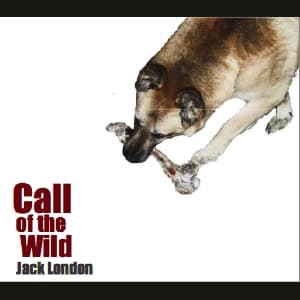

Ranger had surgery last week - torn ACL, poor guy - and I've been sleeping downstairs on the couch next to his crate so he doesn't whine himself hoarse. Three in the morning, wide awake, dog snoring, and I figured a short audiobook might knock me out. Three hours and twenty-four minutes of Jack London seemed about right. Didn't knock me out. Not even close.
Let me cut to the chase: the story is brilliant. The audiobook production is free, and you get what you pay for.
Buck Would've Made a Damn Good Soldier
Here's what civilians miss about this book - it's not a dog story. It's a story about what happens when civilization's rules get stripped away and you have to figure out who you actually are underneath all that domesticated comfort. Buck gets ripped out of a California judge's estate and thrown into the Yukon during the gold rush, and London doesn't sugarcoat any of it. The "man in the red sweater" beating Buck into submission with a club in the opening chapters? That's not cruelty for shock value. That's a lesson in power dynamics I've watched play out in every theater I've served in.
London gets something right that most adventure writers butcher: violence has consequences and purpose. When Buck fights Spitz for dominance of the sled team, it's not some Hollywood showdown. It's calculated, patient, and when it comes, it's brutal and final. Buck doesn't just win - he orchestrates the whole pack turning against Spitz first. That's not instinct. That's tactics. I've briefed operations with less strategic thinking. I saw echoes of that same cold-blooded maneuvering in Shield Breaker, where the power struggles hit with similar weight.
And the John Thornton chapters near the end - the loyalty Buck feels, the genuine bond between man and dog - I'm sitting there on my couch at 0400 with my hand through the crate door resting on Ranger's side, and yeah. London understood something about the relationship between a man and his dog that goes past sentimentality into something harder and truer.
The LibriVox Problem
Now here's where I have to be honest. LibriVox is a volunteer operation - free recordings of public domain books - and I respect the mission. Making classics accessible to everyone? That's a worthy cause. But this particular recording has the same issue most LibriVox projects have: inconsistency. Different chapters get different volunteer readers, and the quality swings wildly. One chapter you'll get someone with a steady, dignified read that matches London's prose. Next chapter, different voice, different energy, different recording quality. It's like watching a relay race where the runners can't agree on the pace.
The narration runs slow. Even at 1.25x - my standard operating speed - some sections dragged. London's prose is dense and muscular, built for a narrator who can punch through it with some authority. A few of the volunteers read it like they're narrating a nature documentary, which sucks the urgency right out of scenes that should have your pulse up. When Buck is starving on the trail or fighting for his life, I don't want "stately and dignified." I want someone who sounds like they understand what desperation feels like.
No sound effects, no music, no production value beyond a voice and a microphone of varying quality. For a free audiobook, that's expected. But it does mean this version competes poorly against professional recordings.
Who This Is Actually For
If you've never read Call of the Wild and you're broke or just want to sample it before committing to a paid version - this works. It's free, it's accessible, and the story underneath is powerful enough to survive imperfect delivery. London wrote sentences that hit like rifle shots even when read by amateurs.
But if you're an audiobook person who cares about narration - and if you're reading reviews on this site, you probably are - you'll likely want to track down a professional recording. The book deserves it. At only three and a half hours, it's not a big credit commitment.
If you've ever worked with dogs, served in conditions where comfort was a distant memory, or wondered what's left of you when everything civilized gets stripped away - the story itself is mandatory reading. Period.
Ranger's Debrief
The book is a five-star piece of American literature operating inside a two-and-a-half-star audio package. I'm splitting the difference because the source material carries it further than the production deserves. Worth streaming for free on a sleepless night with your injured dog? Absolutely. Worth a credit when better versions exist? Negative. Borrow this one, and if London gets his hooks in you - and he will - go buy a proper recording.
Ranger slept through the whole thing, but he's on painkillers. I'll count that as a qualified endorsement.