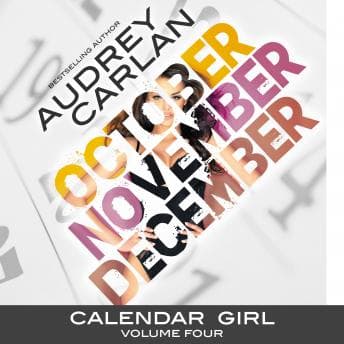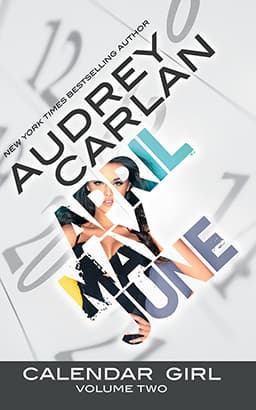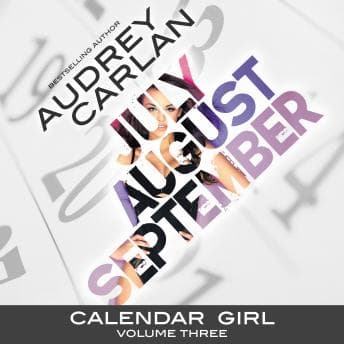

"Taking risks in life and love could give her all that she ever needed and more."
I heard that line somewhere around hour three, driving home after a brutal shift where we lost a twenty-three-year-old to a motorcycle accident. Carlos was already asleep. The kids wouldn't be up for hours. And there I was, crying in my Honda Civic at 4 AM, listening to Mia Saunders figure out her messy life while I tried to process my own.
Look, Calendar Girl isn't highbrow literature. I know that. You know that. Audrey Carlan knows that. But sometimes you need a book that feels like eating pan de sal with butter at midnight—comforting, a little indulgent, and exactly what your soul ordered.
When the Trauma Hits Different
Mia's still dealing with the fallout from June's events when Volume Three opens, and honestly? The way she processes trauma while still having to show up and do her job—serving as a seductress in Anton Santiago's music video, no less—felt uncomfortably real. Not the music video part, obviously. But the "something terrible happened and I still have to function" part? That I understand. That's every night shift after a bad code. Paris Rose gave me that same kind of emotional escape when I needed it—different setting, same relief.
The July storyline with Anton is pure escapism, and I'm not apologizing for enjoying it. Hip hop artist, Miami heat, the whole fantasy package. But what got me was how Carlan weaves in Mia's vulnerability beneath all the sexy bravado. She's performing seduction while internally falling apart. I've watched patients do the same thing—smile for their families while their labs tell a different story.
Summer Morton Deserves a Raise
Here's the thing about this series—it could easily become a blur of interchangeable male love interests and exotic locations. Summer Morton doesn't let that happen. She gives Anton this smooth, confident energy that's completely different from Maxwell Cunningham's Texas drawl in August. You can close your eyes (not recommended while driving, learned that the hard way) and know exactly who's speaking.
The emotional delivery is where Morton really earns her paycheck. When Mia's world implodes in September—back in Vegas, watching the people she loves fight battles she can't fix—Morton's voice cracks in all the right places. I was pulling into my driveway and just... sat there. Engine off. Crying. Carlos found me twenty minutes later and asked if someone died at work. I blamed allergies. He didn't believe me.
The Texas Twist I Didn't See Coming
August's storyline—Mia pretending to be the long-lost sister of oil tycoon Maxwell Cunningham—sounds like standard romance novel fare. And it is, mostly. But there's this reveal about Mia's past that genuinely surprised me. Carlan plants seeds early in the series that bloom here, and as someone who's been following along since Volume One, it felt earned rather than manufactured.
The family secrets angle hit close to home. As the eldest of five, the one who went to college first, the one who became a nurse instead of a doctor (sorry, Mom)—I know something about family expectations and hidden histories. My lola had stories she took to her grave. Every Filipino family does. Watching Mia navigate her own family revelations felt personal in a way I wasn't expecting from my guilty pleasure romance series.
Who Needs This (And Who Should Skip)
If you need medical accuracy, look elsewhere. If you want literary fiction that'll impress your book club, this ain't it. But if you're a night shift worker who needs eleven hours of emotional escapism that doesn't require brain cells you've already spent on patient care? If you want a narrator who makes you forget you're listening to fiction? If you need to cry about something that isn't real for once? This is your book.
Skip it if: You're going to judge the spicy content. You need a standalone. You haven't listened to Volumes One and Two (the callbacks won't land).
Post-Shift Orders
I've listened to all three volumes now during my post-shift drives, and Volume Three is the strongest. The storylines connect better, the emotional stakes are higher, and Morton has fully settled into Mia's voice. Is it perfect? No. Some of the dialogue is cheesy. Some of the men are too perfect. But I'm a trauma nurse—I see enough imperfect men in my ER. Let me have my fantasy.
My mom asked what I've been listening to lately. I told her it was a series about a woman navigating complicated family dynamics and career challenges. Technically true. She doesn't need the details.
Carlos asked why I keep crying in the car. I told him it's the audiobooks. He said, "Maybe listen to something happier?"
He doesn't get it. Sometimes you need to cry about fiction so you don't cry about the twenty-three-year-old on the motorcycle. Sometimes you need Mia Saunders and her messy, beautiful, impossible life to remind you that taking risks—in love, in family, in everything—is worth it.
Even at 4 AM. Especially at 4 AM.