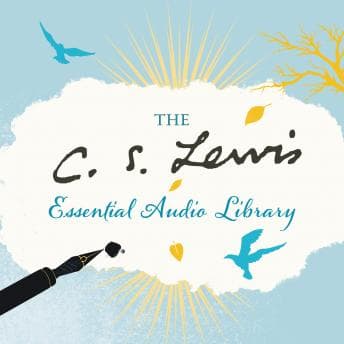

Thirty-nine hours of C.S. Lewis. That's what I committed to. And look, I don't do this lightly—my time is literally billable, and I spent the equivalent of a full work week with a dead Oxford don in my ears.
Worth it? Mostly. But we need to talk about the execution.
The ROI Calculation on 39 Hours
Here's the thing about Lewis that business books could learn from: the man respected your intelligence while making complex ideas accessible. Mere Christianity alone is basically a masterclass in logical argumentation. I've sat through McKinsey presentations with worse structure. Lewis builds his case like a lawyer who actually wants you to understand, not just submit.
The Screwtape Letters though—that's the one that hit different. A senior demon writing management memos to his nephew about corrupting a human soul? It's satire, but it's also weirdly applicable to organizational psychology. The way Screwtape talks about exploiting human weaknesses, keeping people distracted with small irritations so they never address the big stuff—I've seen that playbook at three different companies. The narrator (Joss Ackland, I think? The indexing is a nightmare, more on that) absolutely nails the smug, bureaucratic evil. Perfect casting.
A Grief Observed is narrated by Douglas Gresham—Lewis's actual stepson. That's not a gimmick. You can hear it. When Lewis writes about losing his wife, and her son reads those words... it's uncomfortable in the best way. Healing the Shame That Binds You gets at that same discomfort—the kind that actually moves you forward instead of just making you squirm. My parents never talked about grief. Korean immigrant thing, maybe. You just work through it. This book made me understand why that approach has costs.
The Navigation Disaster
Okay, I have to address this because it genuinely affected my experience. Whoever designed the chapter structure for this collection should be fired. Hundreds of chapters crammed into one continuous file. No clear breaks between books. I'm listening at 2.0x trying to finish The Problem of Pain during a client call prep, and suddenly I'm in Miracles with zero warning.
This is basic UX. My parents' dry cleaning business had better organizational systems. You want people to engage with nine different philosophical works? Let them navigate. I ended up keeping notes on my phone with approximate timestamps. That's absurd for a premium audiobook collection.
Why the British Voices Actually Matter
The narrators—Julian Rhind-Tutt, Joss Ackland, James Simmons, Douglas Gresham—they all bring something essential. Lewis was an Oxford intellectual, and hearing these works in proper British accents with those thoughtful pauses for reflection... it matters. These aren't beach reads. They're meant to be absorbed.
I found myself stopping my 2.0x habit for certain passages. That almost never happens. When Lewis is building an argument in Mere Christianity or exploring the nature of miracles, you want the space to follow his logic. The narrators understood that.
Jenny asked why I was listening to "church stuff" (her words) for two weeks straight. I told her it was professional development. She didn't buy it, but she's also the one who noticed I'd been less cynical about client calls. The 5 Love Languages had a similar effect on how I showed up at home—practical frameworks matter, even when they sound cheesy. Make of that what you will.
The Buy/Skip Decision
If you're interested in Lewis beyond Narnia, this is the collection. The Weight of Glory alone is worth it for anyone who thinks about meaning and purpose—and honestly, that should be everyone making business decisions. The Abolition of Man is basically a warning about what happens when you optimize for efficiency without values. (Looking at you, every tech company I've consulted for.)
But—and this is important—if you need clean organization, buy the books separately. The navigation issue isn't minor. It's genuinely frustrating, and for a 39-hour commitment, that friction adds up.
Listen if: You want contemplative material for long flights or mindless data processing tasks. Skip if: You need to jump between books based on mood or project—the navigation is broken.
My parents would've appreciated Lewis. He writes like someone who actually worked for his beliefs, not someone who inherited them. That's increasingly rare.