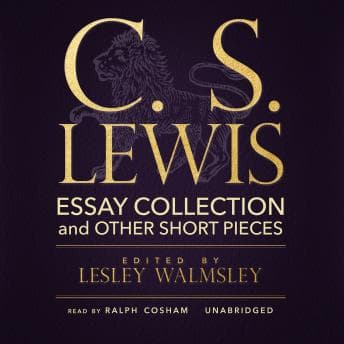

Thirty-nine hours of C.S. Lewis essays. That's what I committed to. And honestly? I'd do it again.
Look, I'm not a theologian. I'm a trauma nurse who spends most nights elbow-deep in the very real, very messy business of keeping people alive. But there's something about Lewis's writing that hits different at 3 AM when the unit goes quiet and you're doing charting that could wait but won't because your brain needs something to chew on besides the code you ran two hours ago.
When Your Dashboard Becomes a Philosophy Seminar
I listened to this over about six weeks of post-shift drives. Geoffrey Howard—and I'll be honest, I didn't know he was also Ralph Cosham until I looked it up—has this British delivery that's clear without being stuffy. The man won an Audie Award for mystery narration, which seems random for a Lewis collection, but it actually makes sense. He reads these essays like he's letting you in on something important, not lecturing you about it.
The collection is massive. We're talking theology, ethics, literary criticism, random thoughts on everything from miracles to why fairy tales matter. Some essays are three minutes. Some are forty-five. The variety kept me from zoning out on I-10 at 7 AM, which—trust me—is a real concern when you've been awake for fourteen hours.
The Medical Mind Finds Its People
Here's what surprised me. Lewis writes about faith and reason in a way that makes sense to someone who's trained to think in evidence and outcomes. He doesn't ask you to turn off your brain. He asks you to use it harder. As someone who's actually worked a code and had to explain to families that we did everything we could, I appreciated his essays on suffering. He doesn't offer easy answers. He offers honest ones.
There's an essay on the nature of pain that made me pull over into a Circle K parking lot and just... sit there. Brothers Karamazov did that to me once too—different kind of suffering, same gut punch. Carlos asked why I was crying in the car. I blamed allergies. It wasn't allergies.
The literary criticism essays—and there are a lot of them—might lose some listeners. I'm not an English major. But Lewis writes about storytelling in a way that made me understand why I love the books I love. Why certain narratives stick with you. He'd probably have interesting things to say about Alice's Adventures in Wonderland and why nonsense stories matter as much as serious ones. Why we need fiction at all. Night shift approved, honestly. These are the thoughts you have at 4 AM when the monitors are stable and you're wondering what any of this means.
Who Needs This (And Who Should Run)
This is not background listening. I tried once, folding laundry while the kids were at school. Completely missed an entire essay on ethics because I was matching socks. This requires actual brain engagement.
Perfect for: Long commutes, dedicated listening time, anyone who wants to think harder about faith without feeling talked down to. My mom would love this (she still thinks I should've been a doctor), but she'd need the physical book because she doesn't do audiobooks.
Skip if: You want something light. You're looking for entertainment. You need plot. This is intellectual nourishment, not a thriller. I yelled at my dashboard during this one exactly zero times because there's no medicine to get wrong—just ideas to wrestle with.
The production is clean. Single narrator, no music, no effects. Just Howard's voice and Lewis's words. For nearly forty hours, that's exactly right. Anything else would be distracting.
Worth Every Post-Shift Mile
I've recommended this to exactly three people: my priest, my book club friend who's going through a divorce, and a new grad nurse who asked me how I handle the hard cases. Different reasons, same book. That's the thing about Lewis—he meets you where you are.
Is it worth a credit? At this length, absolutely. You're getting what would be multiple books' worth of content. I've already started my second listen, picking essays at random based on what kind of shift I had. Bad trauma night? The essay on suffering. Good save? Something about joy. It's become part of my decompression ritual.
Perfect for that post-shift decompression. Just maybe not when you're trying to fold laundry.