
"The power of the N.I.C.E. is already almost irresistible" — and somewhere around hour 6, on a Wednesday morning Caltrain that smelled like burnt coffee and regret, I realized Lewis wasn't writing about a fictional technocratic institute. He was writing about every Silicon Valley all-hands I've ever sat through.
Let me back up.
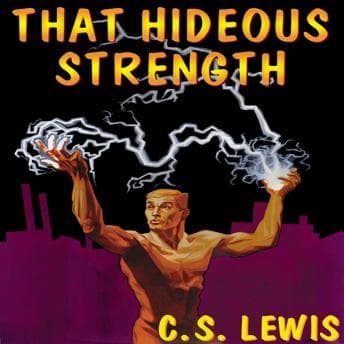
C.S. Lewis Wrote a Tech Dystopia in 1945 and Nobody Warned Me
TL;DR: Worth your commute, but with caveats. This is basically Brave New World but for people who want Arthurian legend mixed into their institutional horror. The institutional dread here is a different flavor than Science the Mind, which I reviewed recently and found similarly unsettling in its framing of human cognition as something to be managed and optimized rather than understood. The N.I.C.E. — the National Institute of Co-ordinated Experiments — is a government-backed organization that talks about human optimization and societal reconditioning while doing genuinely monstrous things behind closed doors. If you've ever read a company values statement that made your skin crawl, Lewis got there first.
The first half is a slow-burn domestic drama. Mark Studdock, a young academic desperate for status, gets recruited by the N.I.C.E. and keeps telling himself he's just networking, just getting his foot in the door, just playing the game. Meanwhile his wife Jane is having prophetic dreams she doesn't understand and drifting toward Ransom's little community of resisters at St. Anne's. Lewis spends a LOT of time on the Studdock marriage — the way two people can live in the same house and speak entirely different languages. It's uncomfortable in a way that feels more like literary fiction than sci-fi, and I'll be honest, at 6AM surrounded by commuters, I had to rewind a few sections because the domestic tension requires more attention than my pre-coffee brain wanted to give it.
But then Merlin wakes up. Literally. And the book pivots hard.
When Merlin Shows Up, The Pacing Goes from Academic Politics to Cosmic Showdown
Here's where opinions split and I get why some people bounce off this one. The first two Ransom books — Out of the Silent Planet and Perelandra — are tighter, weirder, more alien. That Hideous Strength is set entirely on Earth, and Lewis is doing something ambitious: he's writing a campus novel, a marriage novel, a bureaucratic satire, AND an apocalyptic fantasy. Sometimes that works brilliantly. The scenes inside N.I.C.E. headquarters, where characters like the terrifyingly pragmatic Frost and the oleaginous Wither operate — those read like the best kind of institutional horror. Wither in particular is chilling because he never says anything directly. He speaks entirely in corporate non-answers. (I have worked with this man. We all have.)
But the pacing. Oh, the pacing. This is 14 hours and 15 minutes, and you feel it. The middle third drags — Mark's repeated cycle of almost-leaving-but-not-quite gets repetitive, and Lewis's theological arguments, while interesting on paper, don't always translate to dynamic audio listening. I bumped my speed to 1.5x for those stretches and it helped considerably.
The ending is polarizing and I understand why some listeners feel cheated. Lewis goes full Old Testament — there's a banquet scene that turns into divine judgment with animals running loose through the N.I.C.E. headquarters, and it's either cathartic or absurd depending on your tolerance for Lewis's worldview taking the wheel completely. I landed somewhere in the middle. It's wild, it's vivid, but it wraps up a bit too neatly for a book that spent 10 hours showing you how messy human compromise is.
Geoffrey Howard's Oxbridge Accent Is Basically the Only Narrator Voice This Book Could Have
Howard is good here — genuinely good. His Wither is this drifting, vaguely pleasant murmur that perfectly captures a man who has hollowed himself out. His Mark sounds appropriately anxious and self-justifying. Jane gets a quieter, more measured delivery that distinguishes her sections clearly. The Oxbridge accent fits the 1940s English university setting so naturally that you forget you're listening to a performance. No sound effects, no music, just clean single-narrator work. Howard won Audies for other projects and you can hear why — the character differentiation is strong enough that I never got confused about who was speaking, even in group scenes.
That said, this isn't a Ray Porter-level "I would listen to this person read tax code" situation. Howard is excellent but workmanlike. The performance serves the text; it doesn't elevate weak sections.
Who Gets the ROI Here (And Who Should Bail)
Perfect for: Anyone who finished the first two Ransom books and needs closure. People who like institutional horror — the banality-of-evil-in-committee-meetings flavor. Readers who want their sci-fi with heavy philosophical underpinning. Skip for: Anyone who hasn't read the trilogy — you'll be lost. Listeners who need fast pacing. Anyone who wants their cosmic battles without Christian theology, because Lewis is not subtle about it here.
The ROI on this audiobook is... complicated. It's a 14-hour commitment with a 9-hour payoff. The ideas are genuinely prescient — Lewis predicting technocratic overreach and institutional capture of academia in 1945 is kind of staggering — but the execution is uneven. I finished it across about 5 commutes and a late-night insomnia session, and I'm glad I did. But I wouldn't've blamed past-me for putting it down around hour 8.
The Commit Message: "fix: closes trilogy arc, known pacing issues in middle third"
This is the weakest book in the Ransom Trilogy but it's still C.S. Lewis operating at a level most authors can't touch. The N.I.C.E. sections alone are worth the listen — they're eerily relevant and genuinely unsettling. Just know what you're getting into: this is a slow, dense, philosophically heavy 14 hours with a narrator who handles it well and a final act that goes completely off the rails in either the best or worst way depending on your disposition. I respect it more than I enjoyed every minute of it, and sometimes that's enough.