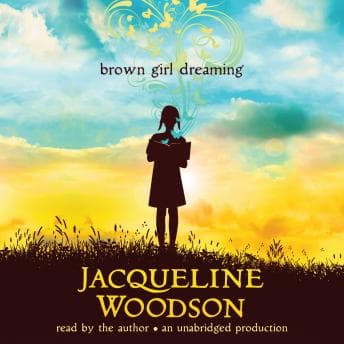

I was making dal from my mother's recipe—the one she still insists I get wrong every time—when Jacqueline Woodson's voice started threading through my kitchen. Something about the rhythm of stirring and the rhythm of her verse-memoir synced up in a way I wasn't expecting. By the time the cumin hit the oil, I was crying. Not the pretty kind.
This is a fascinating case study in how memory actually works. Not linear. Not neat. But sensory and fragmented and achingly specific.
The Psychology of Porch Swings and Crickets
Woodson writes in verse, which sounds like it should feel precious or affected. It doesn't. The research actually shows that autobiographical memory is stored in exactly these kinds of sensory snapshots—the creak of a grandfather's porch swing, the sound of crickets in South Carolina summer heat, the particular loneliness of being a child caught between two homes. What makes this work compelling is how Woodson trusts the fragments to carry meaning without over-explaining them.
The protagonist—young Jackie—exhibits classic identity formation patterns. She's navigating what psychologists call "bicultural stress," existing between the Jim Crow South and New York City, between the remnants of segregation and the rising tide of Civil Rights. But Woodson never frames it academically. She just shows you a child noticing things. Wondering things. Feeling the weight of choices she's too young to fully understand.
At under four hours, this isn't a commitment. It's more like a long meditation.
When the Author IS the Narrator
Here's where it gets interesting. Woodson reads her own work, and my therapist would have thoughts about why that matters so much here. There's no performance happening. No attempt to "do voices" or dramatize. She reads it straight through, almost conversationally, with this warm, wistful quality that sounds exactly like someone telling you about their childhood while you're both sitting on that porch swing.
Some listeners found the pacing slow—a few mentioned bumping speed to 1.25x or even 1.5x. I get it. Her cadence is deliberate, dreamy. If you're used to thrillers or fast-paced fiction, this will feel like walking through honey. But psychologically, this doesn't track as a flaw to me. The slowness IS the point. Memory doesn't rush. Childhood doesn't rush. You're supposed to sit in these moments.
That said, if you're listening during a commute and need something to keep you alert through traffic? Maybe not this one. This demands your attention in a different way—not plot-driven tension, but emotional presence.
What Lingers After the Last Line
I found myself asking: why does this story about one specific Black girl growing up in the 1960s and 70s feel so universal? The answer, I think, is that Woodson understands something fundamental about human nature. We all carry the loneliness of not quite belonging somewhere. We all have homes we're only halfway in.
The poems about her struggle with reading—this future National Book Award winner who couldn't decode words easily as a child—hit particularly hard. There's a moment where she describes the gap between the stories in her head and her ability to get them onto paper. The research on learning differences shows this disconnect is incredibly common in creative kids. But knowing that academically is different from hearing it in her voice, quiet and undefended.
The emotional highlights land because they're earned. No manipulation. No swelling music (the production is clean and simple—just her voice). Just truth, delivered with the kind of vulnerability that takes decades to access.
Who This Is Really For (And Who Should Skip It)
Parents wanting to share something meaningful with kids about race and history—yes, absolutely. But also adults who want to remember what it felt like to be a child trying to make sense of a complicated world. Anyone studying memoir or poetry. Anyone who, like me, sometimes needs to be reminded that the small moments are the ones that shape us.
Skip this if you need plot. Skip this if slow pacing genuinely frustrates you even at increased speed. Skip this if you want your audiobooks to be background noise while you do something else.
Case Study: Closed
I finished the dal. It was fine—Maa would've had notes. But I sat at my kitchen table for a while after the audiobook ended, thinking about my own childhood. The way my parents' stories of India mixed with my New Jersey reality. The way I was always translating between worlds. That same sense of navigating between realities—though in a completely different register—shows up in Raven Boys (The Raven Cycle, Book 1), where Blue Sargent is constantly code-switching between her psychic family and the prep school boys she befriends.
Woodson gave me that. Four hours of someone else's specific memories, and I walked away understanding my own a little better. That's what good memoir does. That's what good psychology does too, honestly. Shows you someone else's interior life and somehow illuminates your own.