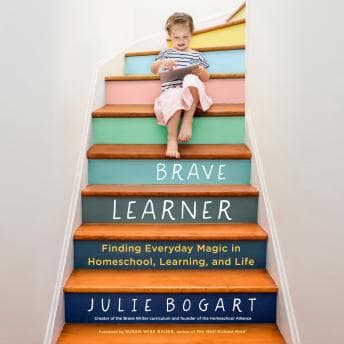

I was grading a stack of sophomore essays on The Great Gatsby at 11:47 PM—the kind where they all somehow discovered the same three SparkNotes quotes—when I decided I needed something that would remind me why I got into education in the first place. Denise had gone to bed hours ago. The coffee was cold. And Julie Bogart's voice came through my headphones like a colleague sitting across from me at a faculty meeting, except she was actually saying things worth hearing.
Here's the thing about The Brave Learner that caught me off guard: I'm not a homeschooling parent. My students file into Room 214 every morning whether they want to or not. But Bogart isn't really writing about homeschooling. She's writing about what happens when we stop treating learning like a checklist and start treating it like breathing.
The Teacher Becomes the Student (Reluctantly)
Bogart has this concept she calls "enchantment"—and before you roll your eyes the way I did initially, hear me out. She's not talking about fairy dust and Pinterest boards. She's talking about that moment when a kid follows a curiosity down a rabbit hole and you have the wisdom to not redirect them back to the worksheet. Jeff Hobbs captures exactly what happens when that spark gets extinguished by a system that never learned to nurture it in The Short and Tragic Life of Robert Peace—a book I couldn't stop thinking about for weeks after I finished it. I've killed that spark in students before. More times than I'd like to admit. When a sophomore wants to talk about the homoerotic subtext in Gatsby and I steer them back to the green light because that's what's on the test? That's the opposite of enchantment.
The book is dense. I won't pretend otherwise. At ten hours, it's packed with frameworks and philosophies and practical suggestions that sometimes pile up like ungraded papers on my desk. Some listeners found it overwhelming, and I understand why—this isn't background listening material. You need to be present. But Bogart structures it well enough that I could pause, think about what she'd said, and return without losing the thread.
When the Author Reads Their Own Work
Julie Bogart narrating her own book is the right call here. There's a warmth in her delivery that feels earned—she homeschooled five kids for seventeen years, and you can hear that experience in her voice. Not the polished warmth of a professional narrator performing compassion, but the real thing. The kind of encouragement that comes from someone who has definitely cried in a bathroom after a hard day of trying to teach fractions.
She doesn't do voices or dramatic readings. This is straightforward narration—no music, no sound effects, just Bogart talking to you like you're both tired parents at a coffee shop. And honestly? That's exactly what this content needs. Any production flourishes would feel like putting a bow on a therapy session.
The pacing is deliberate. Some might call it slow. I'd call it intentional. Bogart wants you to sit with ideas before she moves on. At 1.0x speed (yes, I'm that person), it felt like a long conversation with a mentor. If you're a 1.5x listener, you might lose some of the contemplative quality she's going for.
What Hemingway Would've Said About Curriculum
This reminds me of what Hemingway said about writing—that the most essential gift for a good writer is a built-in, shock-proof crap detector. Bogart is essentially arguing that kids come with that detector pre-installed, and our job is to stop disabling it with busywork and arbitrary standards.
She talks about "brave learning"—the willingness to try things you might fail at, to model curiosity for your children instead of pretending you have all the answers. As someone who stands in front of teenagers pretending to be an authority on literature every day, this hit different. My students don't need me to know everything. They need me to be interested in finding out.
(Principal Martinez, if you're reading this, I'm definitely applying these insights to my classroom practice and not just using them to justify why I let that one kid write his essay about video game lore.)
Who This Is Actually For (And Who Should Skip It)
Homeschooling parents, obviously—but also traditional classroom teachers who've forgotten why they started teaching. Parents who feel like they're failing because their kid won't sit still for worksheets. Anyone who's ever said "I'm just not a math person" and then passed that limitation on to their children.
Skip it if you want a step-by-step curriculum guide. This isn't that. Skip it if you need something for background listening while doing dishes—you'll miss too much.
Class Dismissed (But the Good Kind)
I finished this audiobook at 1:23 AM, long after those Gatsby essays were graded. Denise found me the next morning making notes about how to restructure my approach to teaching poetry. She asked if I was okay. I told her I'd just spent ten hours being gently reminded that learning should feel like discovery, not compliance.
My students would probably hate this. Too much talking about feelings and not enough concrete answers. But that's exactly why I loved it. The ideas here deserve to be sat with, even when—especially when—they're challenging everything you thought you knew about education.