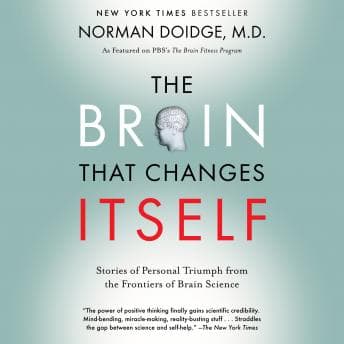

I started this one at 5:47 AM on a Tuesday, wedged between a guy manspreading into my seat and someone's giant backpack. Not ideal conditions for learning about brain science, right? Wrong. Three stops in, I'd completely forgotten I was on the Caltrain.
Bottom Line: Worth your commute. This is basically a debugging manual for your brain, except instead of distributed systems, you're learning how neurons can literally rewire themselves after damage that doctors said was permanent.
The Science Actually Holds Up
Look, I've listened to a lot of pop-science books that promise revolutionary ideas and deliver warmed-over TED talks. This isn't that. Norman Doidge is a psychiatrist who actually did the legwork—traveling around to meet researchers and patients, collecting case studies that sound like they should be science fiction but aren't.
The woman born with half a brain? Real. The blind people learning to "see" through their tongues? Real, and way weirder than I'm making it sound. There's this researcher who basically invented a device that lets blind people perceive their environment through tactile feedback on their tongue, and by the end of the training, their brains are processing it like vision. Not "kind of like" vision. Actually like vision.
What I appreciated as someone who spends her days thinking about systems architecture: Doidge explains the mechanisms. He doesn't just say "the brain is plastic!" and call it a day. He gets into competitive plasticity, how neurons that fire together wire together (yes, that phrase is in here, but he earned it), and why this means both good and bad habits get literally carved into your neural pathways.
Jim Bond Does the Job
I couldn't find much about Jim Bond online beyond this audiobook, but here's what I can tell you from 11+ hours with his voice in my head: he's clear, professional, and stays out of the way. This isn't a Ray Porter situation where the narrator elevates the material to art. But honestly? For dense science content, that's fine. Maybe even preferable.
Bond reads like a really good lecturer—the kind who knows the material cold and respects your intelligence enough not to overdramatize. The pacing is steady without being monotonous. I never had to rewind because I zoned out, which at 6 AM on a packed train is saying something.
One thing: if you're expecting dramatic voice acting for the patient stories, you won't get it. Bond keeps a consistent tone throughout, which some people might find a bit flat for the more emotional case studies. Personally, I thought it worked—the stories are moving enough on their own without someone trying to make me cry.
Where It Gets Heavy
Fair warning: some of these cases involve serious trauma. There's a chapter on phantom limb pain that gets into some dark territory. Another section discusses how the brain's plasticity can work against us—addiction, chronic pain, obsessive thought patterns all getting reinforced through the same mechanisms that allow recovery.
This is where the book really clicked for me. It's not just "yay, brains can heal!" It's a more honest look at how the same flexibility that lets stroke patients relearn speech also lets bad patterns get deeply, stubbornly embedded. As someone who's spent way too many hours debugging code that worked fine until it didn't, this made intuitive sense. The system's adaptability is also its vulnerability. Beyond Good and Evil explores a similar paradox—how the same mechanisms that enable human progress can become our greatest constraints.
The book is from 2007, so some of the research is older now. But the core concepts have held up—I checked. Neuroplasticity isn't fringe science anymore; it's basically the foundation of modern rehabilitation medicine. Doidge was early to the party, and his explanations are still some of the clearest I've encountered.
Who Should Queue This Up (And Who Shouldn't)
Perfect for: anyone curious about how your brain actually works, especially during commutes or gym sessions where you want something that rewards attention. Skip if: you need something to fall asleep to—it's too engaging, and the case studies will keep you awake thinking.
The ROI on this audiobook is high. It's dense enough that you're learning something, but accessible enough that you don't need a neuroscience background. I finished it in about 8 commutes, and I've already recommended it to three coworkers.
Would I listen again? Probably not cover to cover, but I've already gone back to the chapters on stroke recovery and learning disorders. The case studies stick with you.
Sarah's System Check
If you're dealing with any kind of neurological issue—or have a family member who is—this book is genuinely hopeful without being naive. It's not promising miracles. It's showing you the science behind why recovery is possible, and that's way more useful than empty optimism.








![Steve Jobs [unabridged audiobook] audiobook cover](/_next/image?url=https%3A%2F%2Fcovers.audiobooks.com%2Fimages%2Fcovers%2Ffull%2F9788499923406.jpg&w=1920&q=75)