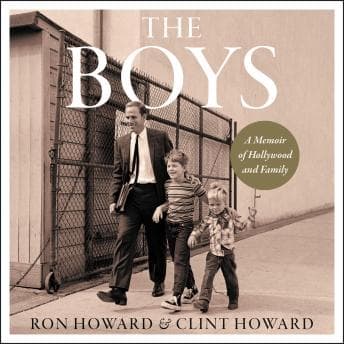

Bottom line: This is the rare celebrity memoir that actually earns its 13-hour runtime. And I say that as someone who typically rage-quits celebrity books by hour three.
I started this on a red-eye back from a client engagement in Chicago - couldn't sleep, figured I'd knock out a few chapters. Finished it three days later while meal-prepping for the week. Jenny walked in on me tearing up over chicken breasts. We don't talk about that either.
What My Parents Would Recognize
Here's the thing that got me: Rance and Jean Howard remind me so much of my own parents it's almost uncomfortable. Korean dry cleaners in Koreatown, Oklahoma actors in Hollywood - different dreams, same hustle. The Howards moved their entire lives to California so their kids could have a shot. Rance gave up his own acting ambitions to become his sons' manager, teacher, moral compass. My dad gave up whatever dreams he had to press other people's shirts for forty years.
Ron and Clint don't romanticize this. They're clear-eyed about what their parents sacrificed and what it cost. When Clint talks about his dad coaching him through auditions, teaching him to treat every crew member with respect - that's not Hollywood PR. That's immigrant parent energy. That's "we came here with nothing and we will not waste this opportunity" energy.
The difference? The Howards figured out how to protect their kids from the machine while still letting them work inside it. Benjamin Franklin: Made in America tells a similar story about a parent who understood when to push and when to protect—Franklin's father steered him away from the sea and toward a trade that could actually sustain him. Most stage parents become the problem. Rance and Jean became the solution. I've seen enough startup founders destroy their families chasing success. The Howards built a family while chasing success. That's the real story here.
The Dual Narration Actually Works (Shocking, I Know)
I've listened to enough co-authored business books to know that dual narration usually means "twice the padding, half the insight." Not here. Ron and Clint announce their names when switching perspectives, which sounds clunky on paper but works beautifully in practice. You always know whose memory you're in.
Ron's voice carries that Midwestern warmth you'd expect - steady, measured, the successful older brother who made it look easy. Clint's got more gravel, more edge. He's the one who'll tell you about the addiction struggles, the career dry spells, the times he wondered if being "Ron Howard's brother" was all he'd ever be. Their perspectives complement rather than compete.
Bryce Dallas Howard narrates the introduction, which is a nice touch - three generations of Howards, one audiobook. The production is clean, no audio issues, though I'd have loved some archival clips from the actual shows. Missed opportunity there.
Where It Falls Short (Because Nothing's Perfect)
Look, I get it. The book is called "The Boys" and it's about their childhood. But when you're 10 hours in and still haven't really gotten to Ron's directing career or Clint's fascinating run as Hollywood's go-to weird guy, you start checking the remaining runtime.
The childhood stuff is gold - behind-the-scenes from The Andy Griffith Show, Clint's Star Trek appearance in "The Corbomite Maneuver" (he was the creepy alien kid, and yes, he has stories), the chaos of filming Gentle Ben with an actual bear. But the later years get compressed. I wanted more Apollo 13 stories. More about how Ron went from Richie Cunningham to Oscar-winning director. The book teases these transitions without really delivering on them.
My 2.0x speed couldn't save the occasional slow stretch through yet another TV production anecdote. Skip to chapter 5? Not quite. But maybe 1.25x through some of the middle sections.
Who Gets Their Money's Worth (And Who Doesn't)
If you grew up watching Happy Days or The Andy Griffith Show, this is pure nostalgia fuel. If you're interested in how Hollywood actually worked in the 60s and 70s - before social media, before helicopter parenting became the norm - this is a fascinating time capsule.
But here's who I'd really recommend it to: anyone trying to build something while raising a family. The Howards figured out how to stay married, raise functional kids, and navigate an industry designed to destroy all of the above. That's not nothing. That's everything.
Parents who work too much? Listen to this. Siblings who've drifted apart? Listen to this. Anyone who thinks success requires sacrificing your family? Definitely listen to this. Skip it if you're here for Ron's directing years or want a Hollywood tell-all with scandal - this isn't that book.
The Consulting Verdict
I've read dozens of business books about "work-life balance" written by people who clearly have neither. Gambler: Secrets from a Life at Risk is another memoir that sneaks in wisdom without trying—Billy Walters built an empire while staying married to the same woman for decades, which in Vegas might be more impressive than the billions. This is a Hollywood memoir that accidentally delivers better life advice than most self-help books on my shelf.
The ROI calculation: 13 hours for a deep dive into how to not screw up your kids while pursuing ambitious goals. Plus genuine entertainment value and zero corporate jargon. My parents never got a TED talk about their approach to family. The Howards wrote a book about theirs. Both approaches worked.
Jenny would say I'm being sentimental. Jenny is right. Worth the credit.




![Steve Jobs [unabridged audiobook] audiobook cover](/_next/image?url=https%3A%2F%2Fcovers.audiobooks.com%2Fimages%2Fcovers%2Ffull%2F9788499923406.jpg&w=1920&q=75)