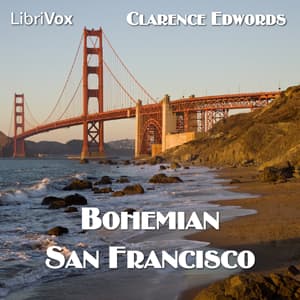

I was up at 2 AM last Tuesday, couldn't sleep, scrolling through free audiobooks because sometimes that's just where life finds you. Frida was doing that thing where she kneads my stomach like bread dough, Diego was judging me from the bookshelf, and I stumbled onto this weird little gem from 1914 about San Francisco restaurants. Four and a half hours later, the sun was coming up and I was genuinely emotional about oyster cocktails and the 1906 earthquake. Not the reaction I expected.
A Love Letter Written in Butter and Garlic
So here's the thing about Bohemian San Francisco - it's not really a cookbook, and it's not really a memoir, and it's definitely not what I'd normally pick up. But Clarence Edwords was this doctor-journalist-foodie who basically wandered around pre-earthquake San Francisco documenting every restaurant, every chef, every perfect meal he could find. And the way he writes about food? It's the same way I write about romance novels. Pure, unfiltered devotion.
His descriptions of the old produce markets - the colors, the sounds, the vendors calling out - made me think of my abuela taking me through the mercado in San Antonio when I was little. She'd squeeze every avocado like she was interviewing it for a job. Edwords has that same reverent obsession with ingredients. When he talks about restaurants that burned in 1906, there's this quiet grief underneath the words. These places aren't just gone, they're mourned. He remembers exactly what the crab tasted like at Coppa's, exactly how the French chef at Maison Tortoni prepared his sauces. That kind of sensory memory? It's love. It's absolutely love.
LibriVox Volunteers: The Potluck Approach
Okay, let's be honest about the narration situation. This is LibriVox, which means you're getting a rotating cast of volunteers, and the quality is... varied. Some readers clearly recorded in what sounds like a closet (respect), others have that slightly too-close-to-the-mic thing happening. There's no consistency in tone or pacing between chapters.
But weirdly? It kind of works for this book. Each chapter is basically a standalone essay about a different restaurant or cuisine, so having different voices feels less jarring than it would in a novel. It's like a bunch of people sitting around a dinner table, each telling their favorite food story. Not polished, but authentic. I wouldn't call the narration good exactly, but I also didn't hate it. It's free, it's earnest, and nobody's phoning it in.
Why Did This Make Me Cry Though
I wasn't expecting to get emotional about a 110-year-old food guide, but here we are. There's this moment where Edwords describes walking through the ruins after the earthquake, looking for the restaurants he loved. They're just... gone. Reduced to rubble. And he writes about it with such quiet devastation.
It hit me that this book was his way of holding onto something that couldn't be saved any other way. Every recipe he collected, every conversation with a chef, every detailed description of how to properly prepare a sand dab - it was all an act of memory-keeping. My abuela used to do the same thing, writing down recipes in her cramped handwriting, making sure the mole recipe survived even if she didn't.
This book felt like sitting in someone's kitchen while they tell you about the world they lost.
The Recipes Are Wild
I have to mention the actual recipes because some of them are genuinely unhinged by modern standards. Calf's head? Sure. Sweetbreads prepared seventeen different ways? Absolutely. There's a whole section on how to properly cook terrapin that made me google "do people still eat turtles" at 4 AM (answer: complicated). But there's also beautiful stuff about sourdough bread, about the Italian fishermen bringing in fresh catch, about Mexican and Chinese and French influences all colliding in one city's food scene.
For a book from 1914, it's surprisingly progressive about celebrating immigrant cuisines. Edwords doesn't treat any food tradition as lesser - he's just hungry and curious and grateful.
Who Should Listen (And Who Should Skip)
If you're looking for a romance audiobook, this ain't it. If you need something to keep you awake on a road trip, definitely not. But if you're the kind of person who watches food documentaries to relax, if you've ever cried reading your grandmother's recipe cards, if you want something cozy and meandering that doesn't demand anything from you - this is a perfect 2 AM companion. Skip it if you need consistent production quality or if historical food writing sounds like homework. But if you can vibe with the LibriVox energy and you're in the mood for something unexpectedly tender, give it a chance. It's free. What do you have to lose except a few hours and possibly your emotional stability?
Abuela Would Have Loved the Tamale Chapter
I'm not going to pretend this is a must-listen. It's niche, it's old, the audio quality is what it is. But there's something beautiful about hearing someone from 1914 talk about food the way I talk about books - with complete, unironic devotion. Edwords understood that meals are memories, that recipes are love letters, that sometimes the only way to keep something alive is to write it down before it disappears.
My heart. MY HEART. Last Black Unicorn gave me that same gut-punch of someone holding onto their world through storytelling—Tiffany Haddish writing down her grandmother's lessons before they disappeared into foster care chaos.









![Steve Jobs [unabridged audiobook] audiobook cover](/_next/image?url=https%3A%2F%2Fcovers.audiobooks.com%2Fimages%2Fcovers%2Ffull%2F9788499923406.jpg&w=1920&q=75)