
Look, I'll be honest - I picked this up because I needed something cozy for my evening walks along the lakefront with Denise. We've been doing this thing where we share earbuds and listen together, and after a brutal week of grading sophomore essays on The Great Gatsby (no, Tyler, the green light is not "just a lamp"), I needed something that wouldn't require me to think too hard.
Nora Roberts delivered exactly that. And I mean that as a compliment.
The Ghost in the Garden (And Why It Works)
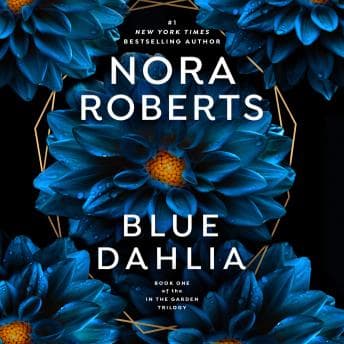
Here's what surprised me: Blue Dahlia isn't just a romance. There's this whole gothic layer with the Harper Bride - a ghost who wanders Harper House singing lullabies. It's not scary, exactly. More... atmospheric. Like the house itself is a character with secrets. Roberts threads the paranormal elements through what could've been a straightforward widow-finds-love story, and it gives everything this extra dimension.
Stella Rothchild is our protagonist - a young widow with two boys, trying to rebuild her life in Tennessee. She's practical, organized, maybe a little too buttoned-up. And then there's Logan Kitridge, the landscaper who's basically the human equivalent of a challenge. He's gruff. He's honest to a fault. He's exactly the kind of character who would annoy me in real life but works perfectly in fiction.
The romance is slow-burn in the best way. Roberts understands that tension comes from restraint, not from rushing people into bed. (My students would roll their eyes at me for that observation. They're wrong.)
Susie Breck's Voice in My Head
Okay, so here's where it gets complicated. Susie Breck won an Audie Award - not for this book, but still, the woman has credentials. Her narration is... competent? Warm? She differentiates the characters well enough that I never lost track of who was speaking, which matters more than you'd think in a book with this many women having conversations about gardening and ghosts.
But I've seen some listeners call her work here "workmanlike," and I can't entirely disagree. There's a steadiness to her delivery that serves the story without ever really elevating it. She's not doing what, say, a great Shakespeare performer does - finding the music in the language, making you hear rhythms you'd miss on the page. She's reading clearly and professionally.
For some listeners, that's exactly right. For others (and I found myself in this camp occasionally), you want a little more... spark? Especially in the romantic scenes. Breck handles the Southern setting fine, and her male voices are adequate - not distracting, which is honestly a win for romance audiobooks. But "adequate" and "transcendent" are different things.
One thing I genuinely appreciated: her pacing during the ghost scenes. She understood the pause. She let the eeriness breathe. That's not nothing.
The Gardening Thing (Yes, Really)
I need to address this because it comes up in every review: there's a lot of gardening in this book. Like, a lot. Stella manages a nursery called In the Garden, and Roberts clearly did her research. If you're not into detailed descriptions of plant varieties and landscaping decisions, parts of this will drag.
Personally? I found it oddly soothing. There's something about listening to someone describe the proper way to arrange perennials while you're walking past Lake Michigan at sunset. It's meditative. But I can see how it would drive some people crazy.
The ending felt a bit abrupt to me - this is clearly book one of a trilogy, and Roberts doesn't wrap everything up neatly. I had a similar experience with Perfect Hope, another Roberts book where she lets the story breathe across multiple installments. The Harper Bride mystery continues. Some threads dangle. If you need complete resolution, you're signing up for all three books.
Who Should Press Play (And Who Should Keep Walking)
This is a cozy listen. Full stop. If you want something that'll keep you company during a commute or while doing dishes, something that won't demand your full attention but will reward it when you give it - Blue Dahlia delivers. Skip it if you need dynamic, theatrical narration or can't handle slow pacing; Breck's style is steady rather than dramatic, and the gardening details will test your patience.
Roberts fans already know what they're getting. She's written over 200 novels for a reason: she understands pacing, she creates likable characters, and she knows exactly how much tension to build before the payoff. That same careful tension-building shows up in Little Fires Everywhere, though in a completely different genre. Is this high literature? No. But neither is most of what I assign my students, and at least this doesn't put anyone to sleep.
Mr. Williams Gives His Grade
Denise liked it. She said it reminded her of sitting on her grandmother's porch in Memphis. That's probably the best endorsement I can give.