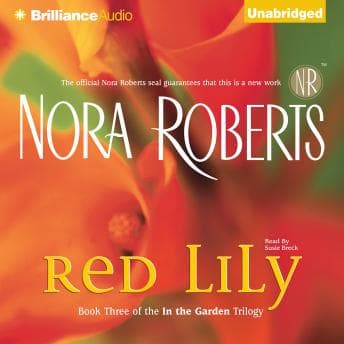

Nora Roberts knows exactly what she's doing. Twenty years of teaching has made me skeptical of most genre fiction—I've read too many student essays praising books that don't deserve it. But Roberts? She's earned her spot on the bestseller lists, and this trilogy closer reminded me why.
I finished Red Lily while grading a stack of sophomore essays on The Great Gatsby. The irony of toggling between Fitzgerald's doomed romance and a ghost story set in a Memphis mansion wasn't lost on me. Both are about the past refusing to stay buried. Both are about wanting something you're afraid to reach for. Roberts just adds a nursery business and better communication between her leads. (Gatsby could've used that.)
The Harper Bride Finally Gets Her Story
The supernatural thread running through this trilogy has always been its secret weapon. The Harper Bride—this ghostly presence who's been singing lullabies and causing trouble for three books—finally comes into focus here. Hayley Phillips, our protagonist, isn't just falling for Harper Grafton (yes, his name is Harper, he lives at Harper House, it's a whole thing). She's also becoming increasingly entangled with this spirit in ways that blur the line between possession and shared trauma.
What Roberts does well—and what my literature students would benefit from studying—is layering. The romance plot serves the mystery. The mystery illuminates the romance. Hayley's fear of disrupting her found family by pursuing Harper mirrors the Bride's own story of love gone wrong. It's not Faulkner, but it's structurally sound in ways that matter.
The slow burn works here because the stakes feel real. Hayley's got a kid. She's built a life at this nursery. Harper is her boss's son. That grounded approach to supernatural romance reminded me of Raven Boys, where the magic never overshadows the very real personal stakes. Every romance trope that could feel tired instead feels weighted with actual consequence.
Susie Breck's Southern Accents Are the Real Deal
Here's where I need to talk about the narration, because honestly? Breck is the reason this audiobook elevated beyond a pleasant commute listen.
Her Southern accents are the real deal. I've got colleagues from Tennessee, Georgia, Arkansas—Breck nails the distinctions. This isn't a generic "y'all" situation. She's doing actual regional work, and as someone who teaches kids to pay attention to voice and dialect in literature, I noticed. The way she ages her voice for different characters, the emotional shifts when the Harper Bride's presence creeps into scenes—it's performance, not just reading.
The pacing is tight. Roberts writes suspense well, but Breck's timing makes it land. She handles the spooky moments without tipping into melodrama. The romantic scenes get warmth without becoming saccharine. It's a balance that requires real skill.
I listened at my usual 1.0x because—and my students mock me for this—the narrator chose those pauses for a reason. Breck's pauses are punctuation. Speed this up and you lose half the atmosphere.
The Erotic Elephant in the Room
Look, I should mention—this is a Nora Roberts romance. There's heat here. Not gratuitous, but definitely present. If you're listening during faculty meetings like I may or may not have been, maybe stick to the ghost investigation chapters when Principal Martinez walks by.
The erotic content serves the story rather than interrupting it. Hayley and Harper's physical relationship tracks with their emotional one. Roberts has been doing this long enough to understand that intimacy on the page (or in the ear) needs to mean something. It does here.
Who Should Listen (And Who Should Start Elsewhere)
If you've listened to Blue Dahlia and Black Rose, you need this conclusion. The trilogy works as a unit, and leaving the Harper Bride's mystery unsolved would be like stopping The Sound and the Fury before the Dilsey section. (Okay, that's a stretch. But you get my point.)
If you're new to Roberts, this isn't a bad entry point, but you'll miss context. The found family dynamics—Roz, Stella, Hayley, their men, their kids—have been building for two books. Starting here is like walking into my classroom mid-semester. You can catch up, but why would you?
Skip this if ghost stories aren't your thing, or if you need constant action. This is character-driven. The supernatural elements are woven through, not dominating. And if erotic content bothers you, Roberts doesn't fade to black. Promise gave me that same satisfaction—a story that knows exactly what it wants to be and executes it well.
Would I Assign This? No. Would I Recommend It? Absolutely.
Not everything needs to be canonical literature. Sometimes you need a well-crafted story with characters you root for, a mystery that pays off, and a narrator who understands that reading aloud is an art form.
Denise and I finished this on our lakefront walks. She asked if we could start the trilogy over. That's the highest compliment a book can get in our house—the desire to return to it.
My students would probably hate this. Too slow, too romantic, not enough explosions. But they're seventeen. They'll learn.