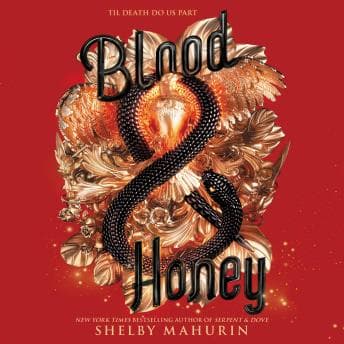

"Until death do they part."
That line hit different around 2 AM when I was supposed to be debugging my procedural dungeon generator but instead found myself completely sucked into Lou and Reid's increasingly chaotic situation. My thesis advisor would be disappointed. I am not.
Look, I came into Blood & Honey with expectations calibrated by Serpent & Dove—witches, witch hunters, forbidden romance, the whole enemies-to-lovers setup that's basically catnip for anyone who's ever run a campaign where the paladin falls for the warlock. And while this sequel delivers on the emotional stakes, it's got some serious middle-book syndrome that even the best character work can't fully mask.
The Magic System Gets Darker (And I'm Here For It)
Mahurin leans hard into the cost of magic here, and as someone who will literally pause audiobooks to explain Sanderson's laws to my roommate (he's stopped asking), I appreciated the escalation. Lou's desperation pushes her toward darker paths, and the book doesn't shy away from showing how that affects everyone around her. It's not quite Sanderson-level systematic magic, but the emotional logic tracks—power has a price, and Lou's tab is coming due.
The progression from "fugitives on the run" to "making increasingly questionable alliances" kept me engaged through most of the 14-hour runtime. Most. There are stretches—particularly in the middle—where the plot kind of... wanders? Like a party that forgot what quest they're on. You're waiting for the next encounter and instead you're getting extended camping scenes. That same "wandering in circles" feeling plagued parts of Battle of the Labyrinth, though at least Percy had literal mazes as an excuse.
But then Act III hits and suddenly you're sobbing into your keyboard at 3 AM wondering how you got here. Shelby Mahurin knows how to twist the knife, and when she decides to do it, she twists it good.
A Tale of Two Narrators (Literally)
Okay, here's where things get complicated. Saskia Maarleveld as Lou? Really great. She captures Lou's desperation and snark with this energy that just works. When Lou's making terrible decisions, you hear it in her voice—that edge of "I know this is stupid but I'm doing it anyway."
Holter Graham as Reid? This is where my D&D group would have a heated discussion. Some folks swear his performance is brilliant. Others—and I'm leaning this way—find his character voices... a lot. Like, scratchy, straining, occasionally mumbling a lot. There were moments where I genuinely couldn't parse what was being said, and not in a "mysterious prophecy" way, more in a "did my earbuds glitch?" way.
The weird thing is that when Graham's doing straight narration, he's fine. It's the character voices—especially when he's voicing female characters—that made me wince. Picture your DM doing a voice that's so over-the-top that everyone at the table just kind of looks at their dice uncomfortably. That energy.
The dual narration concept is solid in theory. In practice, it's like rolling with advantage and disadvantage at the same time—they kind of cancel out to "okay, I guess."
Who's Rolling Initiative On This One?
If you devoured Serpent & Dove and need to know what happens next—yeah, you're gonna listen to this regardless of what I say. The emotional payoffs in the back half are worth the slower middle sections, and Maarleveld's Lou is genuinely compelling.
But if you're new to the series or if narrator quality is a deal-breaker for you, maybe wait for a sale. The Graham situation is polarizing enough that I can't promise you won't spend hours being distracted by voice choices instead of following the plot. Skip this one if pacing issues make you ragequit—the middle third will test your patience.
Also, heads up: violence, language, and some spicy content. Not quite "fade to black" territory. My mom would be scandalized. (Hi Mom, I'm still working on my thesis, I promise.)
Worth Burning a Spell Slot?
Blood & Honey is a frustrating audiobook because the bones are good. The character work is genuinely strong, the emotional beats land hard when they land, and the darker turn in Lou's magic use creates real tension. But the pacing issues and the narrator lottery make it hard to recommend at full credit price.
It's a middle book that feels like a middle book—necessary setup for what I assume is a big finale in Gods & Monsters, but not quite standing on its own. If you're already invested in the series, you'll push through the slower bits and probably cry during Act III like I did. If you're on the fence, this isn't the book to convert you.
Now if you'll excuse me, I have a thesis to continue ignoring.