
"The truth will get out. It has to. That's what we do."
Somewhere around hour twelve, that line hit me like a crit on a natural 20. I was knee-deep in thesis avoidance—had my laptop open to a blank document labeled "Chapter 4 Draft" while Georgia Mason's clone grappled with questions of identity and consciousness that my procedural generation research will never touch. Dr. Patel would be disappointed. I regret nothing.
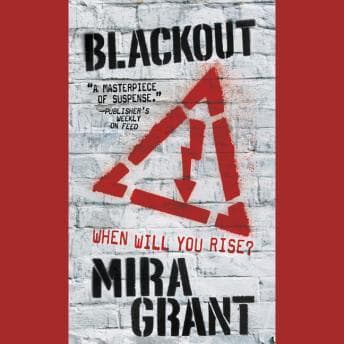
Mira Grant—Seanan McGuire's zombie-journalism alter ego—pulls off something genuinely difficult here. This is the third book in a trilogy where the main character died in book one, got cloned in book two, and now has to figure out if she's really *her* while also exposing a government conspiracy involving weaponized viruses and, yes, zombie bears. That's a lot of narrative plates to spin. The magic system here isn't magic at all—it's virology and media ethics and the terrifying question of what makes you *you*. It's Sanderson-level world-building, except instead of allomancy, you get Kellis-Amberlee amplification cycles and blood testing protocols. Prophecy of the Seven has that same commitment to elaborate systems—though its magic feels less grounded in science and more in ancient prophecy.
The Dual-Narrator Gambit
So here's the thing about the audio production: they switched male narrators between books. Michael Goldstrom takes over for the Shaun chapters, and I'll be honest—it took me about an hour to stop mentally comparing him to the previous guy. But once I stopped fighting it? Goldstrom absolutely earns his spot. His Shaun has this raw, barely-holding-it-together energy that fits perfectly for a character who's been talking to his dead sister's voice in his head for two books.
Paula Christensen handles Georgia's POV chapters, and she's doing something really clever with the clone-Georgia voice. There's this slight hesitation, this questioning quality underneath even her most confident moments. When Georgia has to confront whether her memories are really hers or just data uploaded into meat, Christensen doesn't oversell it. She lets the uncertainty breathe.
The handoffs between narrators are clean—no jarring audio quality shifts, no weird volume differences. Hachette Audio did their job. No music, no sound effects, just two narrators trading chapters. For a book this plot-dense, that's probably the right call. You don't need a dramatic sting when a character gets deliberately infected. The writing handles that just fine.
When The Conspiracy Gets Conspiratorial
I'm going to level with you: around hour fourteen, when all the plot threads start converging, things get... complicated. Not in a bad way, necessarily. But if you've been half-listening while doing something else, you're going to be lost. There's a moment where the rogue CDC faction's motivations finally click into place, and I had to pause and just sit with it for a minute.
Some listeners apparently found this confusing. I get it. Grant doesn't hold your hand. She assumes you've been paying attention for the previous two books and thirty-something hours of audio. If you haven't—if you're jumping in here—you're gonna have a bad time. This is absolutely a "you must be this tall to ride" situation.
But if you've been following along? The payoff is satisfying. The progression from scrappy bloggers to genuine threats to a corrupt system feels earned. And that scene where Georgia gets deliberately infected while making her final blog entry, with Shaun having to—yeah. Yeah. My D&D group would be absolutely wrecked by that moment. It's the kind of character death that respects both the character and the audience. That emotional gut-punch reminds me of key moments in Harry Plotter and The Chamber of Serpents—though that book plays its drama more for laughs than tears.
The Middle Child Syndrome
Look, I'll say what other reviewers are dancing around: this is better than Deadline but not quite as tight as Feed. The first book had a laser focus—follow the campaign, uncover the conspiracy, survive. Blackout has more balls in the air. The clone identity stuff, the government faction stuff, the "can we actually fix anything or just expose it" stuff. Sometimes it juggles beautifully. Sometimes you can see the author sweating.
But honestly? A slightly messy conclusion to an ambitious trilogy beats a safe, boring one every time. Grant swings for the fences. She doesn't always connect, but when she does—zombie bears, man. Zombie. Bears.
Who's Rolling Initiative Here
This is for you if: you've finished Feed and Deadline and you need to know how it ends. You like your zombies with political commentary. You think journalism ethics are actually interesting. You want a female protagonist who's defined by her competence rather than her relationships.
Skip it if: you haven't read the first two books (seriously, don't). You want fast zombie action—this is more conspiracy thriller with zombies than zombie horror. You find info-dumps tedious. (If you don't like info-dumps, this isn't for you, but you're wrong.)
Yes, it's seventeen and a half hours. Yes, it's worth it. My thesis remains unwritten, and I have zero regrets.
Roll Credits, Save Your Character Sheet
The Newsflesh trilogy does something rare in zombie fiction: it takes the premise seriously and follows it to logical conclusions. What happens to journalism when going outside is dangerous? What happens to democracy when fear is weaponized? What happens to identity when consciousness can be copied?
Grant doesn't give easy answers. Neither do Goldstrom and Christensen. They just tell the truth, as best they can, and let the chips fall.
The truth will get out. It has to. That's what they do.