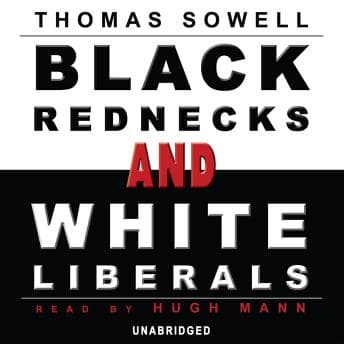

Let me cut to the chase - I've been waiting for someone to hand me Sowell's work in audio format for years. Eleven hours of windshield time with one of the sharpest minds in American social commentary? Sign me up. But here's the thing that's been bugging me since I finished: why isn't this book required reading in every policy discussion about race in America?
Look, I spent 25 years in the Army. I've served alongside men and women of every background you can imagine. We didn't have time for the kind of comfortable narratives that Sowell systematically demolishes here. When you're clearing buildings in Fallujah, nobody cares about your cultural theory - they care whether you can do the job. That same focus on what actually works - not what sounds good - is what makes Atomic Habits so effective. And that's exactly the kind of clear-eyed, results-focused thinking Sowell brings to the table.
The Uncomfortable Facts Nobody Wants to Hear
Sowell's central argument about "cracker culture" originating in the British borderlands and migrating to the American South - regardless of race - is the kind of historical analysis that makes comfortable academics squirm. He's not playing the usual games. He's tracking behaviors, attitudes, and cultural patterns across centuries and continents with the precision of a good intelligence officer.
The essay on slavery alone is worth the listen. I've read plenty of military history, and I thought I understood the global scope of human bondage throughout history. I didn't. Not really. Sowell presents facts that most Americans have never encountered - that the West was actually among the first civilizations to abolish slavery, not the last. That slavery existed on every inhabited continent. That the moral crusade against it was largely a Western phenomenon.
(And honestly, after three combat deployments, I've seen enough of the world to know that American self-flagellation about our history often ignores the brutal realities that still exist elsewhere.)
Hugh Mann Gets the Job Done
Now, about the narration. Hugh Mann - and I couldn't find much about him online beyond this performance - delivers exactly what this material needs. No drama. No emotional manipulation. Just clear, straightforward reading that lets Sowell's arguments stand on their own merits.
This isn't a book that needs a theatrical performance. It needs someone who can handle dense material without making you zone out during the statistical analysis. Mann's pacing is solid. He doesn't rush through the complex parts or drag during the historical sections. Professional work. Mission accomplished.
I listened at 1.25x - my standard speed - and it held up perfectly. The audio quality is clean, no production issues. Ranger slept through most of it, which means the delivery was consistent enough not to startle him with sudden volume changes. (Yes, that's an actual consideration when you're listening in the truck with a 90-pound German Shepherd.)
Where This Book Hits Different
The essay on Germans and Jews might be the most intellectually challenging section. Sowell examines why certain "middleman minorities" - Jews in Europe, Chinese in Southeast Asia, Armenians in the Ottoman Empire - have faced similar patterns of resentment and violence across completely different societies. It's the kind of comparative analysis that exposes the shallow thinking behind most discussions of prejudice.
Here's where it lost me slightly - some sections feel like they could've been tightened up. Sowell occasionally repeats his core points more than necessary. But that's a minor complaint. When you're making arguments this contrary to mainstream thinking, maybe repetition is a tactical choice.
The section on education and black history is where I found myself nodding along most. Sowell documents how black schools in the early 20th century often outperformed their later counterparts despite having fewer resources. The data is there. The question of why gets uncomfortable fast.
The Debrief
This is not a comfortable listen. If you want your existing beliefs confirmed, look elsewhere. Sowell is going to challenge assumptions you didn't even know you had. He's going to present evidence that contradicts narratives you've absorbed from media, academia, and political discourse.
But if you want to actually understand the complex history of race, culture, and economics in America and beyond? This is essential. Sowell's approach is what we'd call in the military "ground truth" - what's actually happening on the ground versus what headquarters thinks is happening.
Best for: Anyone willing to have their assumptions challenged. History buffs who want the real story. People tired of shallow political talking points on race. Long commuters who can handle dense material.
Skip if: You need your narrator to sound emotionally invested. You're looking for a quick, easy listen. You prefer your history pre-filtered through contemporary political lenses.
Ranger approved this one. So do I.