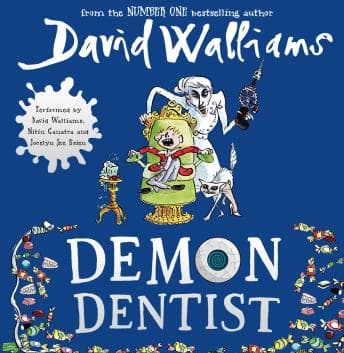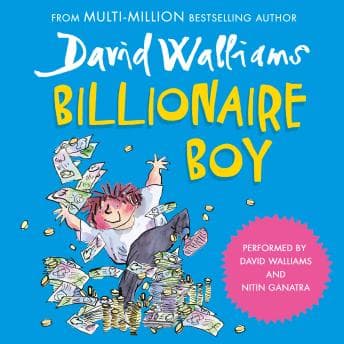

"The best things in life are free" — the book literally tells you its thesis within the first hour, and honestly, I sat there stirring dal at 9 PM thinking: okay, David Walliams, that's a cliché. Prove it.
He kind of does.
A Twelve-Year-Old Billionaire Who's Basically a Case Study in Attachment Theory
Joe Spud has a billion pounds and zero friends. His father, Len, made his fortune selling toilet paper (called "Bumfresh" — yes, really), and the dynamic between them is where this book surprised me. I went in expecting pure slapstick. And there IS slapstick — the school cook serving what's essentially bat sick on a tray, the orangutan butler, a kid literally rolling up to school in a Formula One car. But underneath all that Roald Dahl-adjacent absurdity, there's a father-son relationship that Walliams handles with genuine emotional intelligence.
Len Spud is a fascinating character. He's not a villain — he's a well-meaning parent who confuses material provision with love. The protagonist exhibits classic insecure attachment patterns: Joe can't trust that anyone values him for who he is, because every relationship in his life has been mediated by money. When Bob — the one kid who seems to genuinely like Joe — enters the picture, Joe's inability to just... be normal about it is painfully realistic for a children's book. That tension between authentic selfhood and the identity you perform for others is something I also dissected in my notes on Chosen by Grace: Divine Fate Trilogy, where destiny functions the way money does here — as a thing that defines you before you get to define yourself. He can't stop performing wealth. He doesn't know how to exist without it as a buffer.
I found myself asking: why does Joe keep sabotaging the one real friendship he gets? And the answer Walliams gives — that wealth becomes identity, and stripping it away feels like annihilation — is actually pretty sophisticated for a three-hour kids' audiobook. My therapist would have thoughts about this character, specifically about how Joe mirrors kids who use status markers (money, popularity, grades) as substitutes for authentic connection.
Nitin Ganatra and the Voice Problem That Isn't His
Ganatra's narration is solid. His British accent carries well, his comedic timing lands — particularly during the school scenes where the bullies are circling — and he gives each character enough vocal distinction that you're never confused about who's speaking. The pacing works for the runtime. Three hours is tight, and he doesn't waste any of it.
But here's where I need to be honest about something uncomfortable. Some listeners have flagged the "comedy Indian voice" used for certain characters, and having listened to it as a daughter of Indian immigrants — yeah, I noticed. It's not Ganatra's doing; it's baked into Walliams' writing. The accent-as-punchline thing. It's the kind of humor that was more common in British comedy when this was published (2010), and it lands differently depending on who you are. For me, it produced a small wince rather than outrage, but I can see why other listeners clocked it. Worth knowing if you're picking this for your kids.
Ganatra himself brings warmth to the emotional beats, especially the father-son moments in the final act. His voice softens in exactly the right places. The narration isn't showy — it serves the story, which is what you want.
Where the Psychology Doesn't Quite Track
Here's my gripe: the resolution is too clean. Joe learns that money can't buy friendship, Len learns that love matters more than wealth, and everybody arrives at these conclusions within about twenty minutes of runtime. Psychologically, this doesn't track — not because children's books need to be grim, but because the emotional stakes Walliams builds deserve a messier, harder-won landing. The betrayal scene with Bob is genuinely affecting. Joe's isolation is rendered with real pathos. And then the lesson gets tied up with a bow that feels... earned by the plot but not by the characters' psychology.
That said — this is a book for kids aged 8-12. I'm applying my frameworks to a story about a boy whose butler is an orangutan. I'm aware of what I'm doing here. The research actually shows that children process moral lessons from stories most effectively when they're clear and unambiguous, so maybe Walliams is being smarter than I'm giving him credit for.
(Maybe. I'm still a little annoyed.)
Who Gets the Most Out of This
Families on road trips — this is perfect car listening. It's short enough to finish in one long drive, funny enough to keep kids engaged, and has just enough emotional substance that you might catch your nine-year-old being suspiciously quiet during the last thirty minutes. Adults listening solo? It's charming but light. You'll smile. You probably won't feel transformed.
Skip it if accent-based humor bothers you, or if you need your children's fiction to avoid gross-out jokes entirely. The Bumfresh toilet paper empire is... a lot.
My Clinical Assessment (Don't @ Me)
This is a fascinating case study in how children's literature handles class anxiety — imperfect, occasionally clumsy, but more psychologically honest than it has any right to be given that one of the characters is literally a primate in a waistcoat. Walliams understands something true about loneliness, even if he wraps it in fart jokes. Ganatra delivers it with skill and heart. Three hours well spent, if you know what you're getting into.