
How many times can you encounter a text before it stops being familiar and starts being new again?
I've taught excerpts from Matthew's Gospel in my American Literature survey — the Sermon on the Mount echoes through everything from Steinbeck to Toni Morrison, and you can't teach the Western canon without acknowledging the book that shaped half of it. But I'll be honest: I hadn't sat with the full Gospel of Matthew, uninterrupted, start to finish, in years. Maybe a decade. So when I queued up this LibriVox recording on a Saturday morning walk along the lakefront with Denise, I figured it would feel like visiting an old friend.
It didn't. It felt like meeting someone I'd only heard stories about.
The KJV as Literature — Because It Is
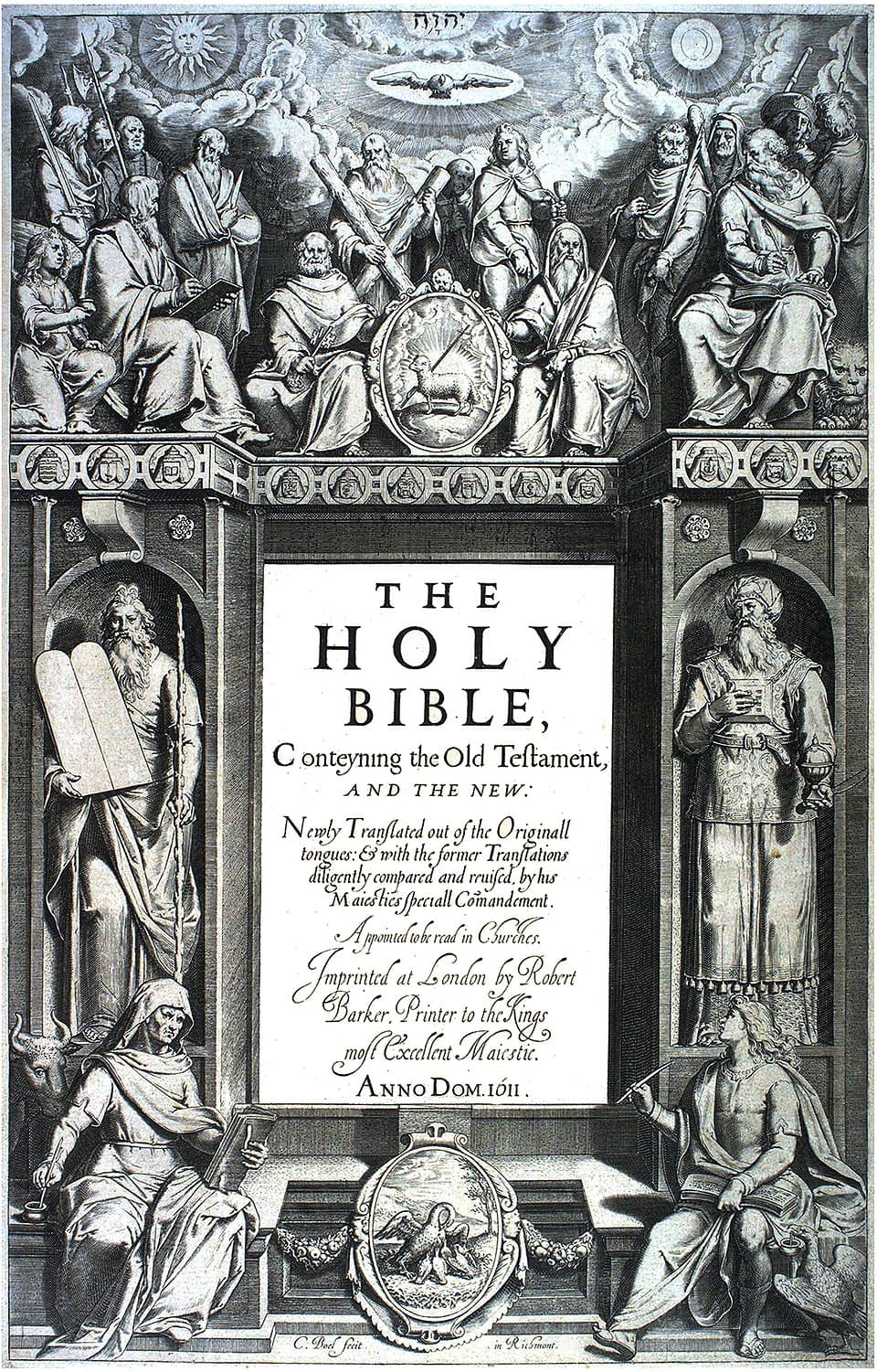
Let me put on my English teacher hat for a second. The King James Version, published in 1611, is one of the most significant achievements in the English language. Period. Not just as scripture — as prose. The translators working under King James I were poets and scholars who understood that rhythm carries meaning. "Blessed are the meek, for they shall inherit the earth" isn't just theology. That's iambic certainty. The cadence tells you it's true before your brain processes the claim.
Listening to Matthew in the KJV — rather than reading it in fragments for Sunday school or pulling out the Beatitudes for a lecture — reminded me why this translation endured for four centuries. The genealogy that opens the book, all those "begats"? On the page, students' eyes glaze over. In audio, spoken aloud, it becomes incantation. It's a drumbeat of lineage connecting Abraham to David to Jesus, and hearing it performed forces you to reckon with what that list is doing rhetorically. It's establishing authority through ancestry. My juniors would recognize that move — it's the same thing hip-hop does.
Michael Packard and the Problem of Reading God
Here's the tricky thing about narrating scripture: what's the right performance? Too dramatic and you're a televangelist. Too flat and you're reading a phone book. Packard takes a measured, reverent approach — steady pacing, clear diction, a voice that stays out of its own way. For a LibriVox volunteer recording, the audio quality is clean enough, though you'll catch the occasional room-tone shift between sessions.
The narrator understands that pause is punctuation. Packard handles the parables — the sower, the mustard seed, the talents — with appropriate weight, letting the language do the heavy lifting. And honestly, with the KJV, that's the right call. You don't need to act out the Sermon on the Mount. The prose deserves to be savored as it was written.
But I'll say this: the performance stays in one register pretty much the whole three hours. When Jesus overturns the tables in the temple, it sounds about the same as when he's blessing children. The Passion narrative — the betrayal, the trial, the crucifixion — could use more vocal differentiation, some shift in urgency. Packard is consistent, which is both his strength and his limitation. At 3 hours and 9 minutes, that consistency can drift toward monotone if you're not actively engaged.
I listened at my usual 1.0x, and I'd recommend the same. This isn't a text you speed through. But I'd also suggest breaking it into two or three sittings rather than one marathon.
Who This Is Actually For
If you want a polished, multi-voice, cinematic Bible experience, this isn't it. Go find a production with a full cast and a budget.
But if you want to hear the Gospel of Matthew as it was meant to sound — one voice, reading aloud, the way scripture was transmitted for centuries before Gutenberg — this scratches an itch that expensive productions don't. It's intimate. It's a person in a room reading you a book that changed the world. There's something honest about that.
This is also quietly useful for anyone studying English literature. I keep telling my students: you cannot understand Milton, you cannot understand Melville, you cannot understand Faulkner, without knowing this text. If you loved the King James Psalms or Ecclesiastes, Matthew is their narrative counterpart — prophecy and poetry woven into biography.
My students would hate this. I love it. Not because it's flashy or innovative, but because sometimes you need to sit with a foundational text and let it wash over you without commentary, without study notes, without someone telling you what it means. I had a similar feeling reading Sarah's Key — a book that also insists on bearing witness to something difficult without flinching, without cushioning, just the story doing what the story needs to do. Just the words. Just the voice.
Worth Pausing the Faculty Meeting For
Denise and I walked an extra mile past our usual turnaround point because I wanted to finish the Olivet Discourse — Jesus on the Mount of Olives, prophesying the end of the age. She didn't complain. She was listening too. A free LibriVox recording of a 400-year-old translation of a 2,000-year-old text, and it still made two middle-aged people walk farther than they planned on a Saturday morning. This is why we still read the classics.