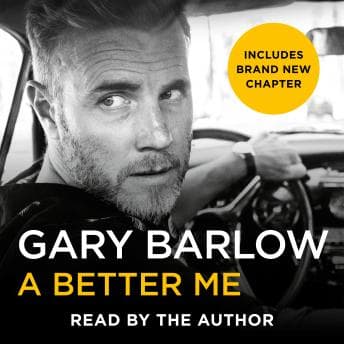

"I was the only one who could take control of my health."
Somewhere around hour three, Gary Barlow says this—and I actually paused my walk to the coffee shop to let it land. Not because it's revolutionary advice. My parents knew this. Every immigrant family knows this. But hearing it from a guy who sold 45 million records, who had everything and then had nothing, who ate himself into oblivion while the British tabloids mocked him daily? Fire and Fury captures that same brutal arc—someone at the peak who can't stop their own unraveling. That hit different.
I finished this one over a weekend consulting gig in Seattle—hotel gym at 6 AM, airport lounge, red-eye home. Jenny texted asking why I was listening to a Take That memoir. Fair question. I'm not exactly the target demo. But strip away the pop star packaging, and this is one of the most brutally honest addiction narratives I've encountered in the business memoir space.
The ROI on Brutal Honesty
Bottom line: Barlow doesn't flinch. He talks about 20 failed diets in nine years. About using food the way other people use alcohol or drugs—not for pleasure, but for numbness. About the shame spiral of a solo career that tanked while his former bandmates thrived. This is what my parents did instinctively—they never talked about their struggles, they just worked through them. Now it has a TED talk. Life of P.T. Barnum does the same—no sanitized success story, just the messy reality of reinvention. Except Barlow actually shows the work, not just the inspirational before-and-after.
The key takeaway is worth the listen. The other 7 hours? Actually, most of them are too. He's efficient with his story—the Take That rise, the solo fall, the tabloid cruelty, the depression, the food addiction, the comeback. At 10 hours, it's longer than I'd normally tolerate for a celebrity memoir, but Barlow earns the runtime because he's not padding with name-drops or industry gossip. He's doing the uncomfortable thing of actually examining his own psychology.
When the Subject IS the Narrator
Gary Barlow reading his own story is the only way this works. That warm British delivery—there's a weariness underneath it that a professional narrator couldn't fake. When he describes hitting rock bottom, you hear it. When he talks about losing a child (and yes, that section is devastating), the pauses tell you more than the words.
My 2.0x speed actually felt wrong here. I dropped to 1.5x about halfway through. The man isn't rushing through his trauma for your convenience, and you shouldn't rush through it either. There's a rhythm to how he processes these memories out loud that deserves the space.
No fancy production—no music clips from his career, no sound effects. Just Gary talking. I appreciated this. It would've been easy to turn this into a nostalgia trip with "Back for Good" playing every time he mentions the 90s. Instead, it's stripped down. Honest. The audiobook equivalent of an unplugged session.
The Comeback Framework (That Actually Works)
I've seen this fail at three different companies—the executive who thinks one big win erases years of decline. What Barlow describes is different. He rebuilt from the ground up. Reforming Take That wasn't a shortcut back to fame; it was a calculated risk that required him to eat humble pie (ironic choice of words, given the subject matter) and share the spotlight he'd once tried to dominate.
The X Factor years, the musical theater pivot, the songwriting for other artists—he maps out a diversification strategy that any business strategist would recognize. But he never frames it that way. He's just telling you what happened. The framework emerges naturally.
Jenny would say I'm being harsh when I note that some of the middle chapters on TV work drag slightly. Jenny is right. But even the slower sections have moments of insight about managing creative teams, handling public criticism, and rebuilding a personal brand after catastrophic failure.
Who Gets Value Here
If you're a Take That superfan, obviously. But that's not who I'm recommending this to.
Listen if: You've ever used work, food, or any other numbing agent to avoid dealing with failure. If you've had a career setback that felt existential. If you're curious how someone rebuilds after public humiliation. If you want a celebrity memoir that actually has substance.
Skip if: You want a light, gossipy entertainment industry tell-all. This isn't that. The content warnings are real—depression, eating disorders, child loss. Barlow doesn't sensationalize, but he doesn't soften either.
Park's Bottom Line
A celebrity memoir that respects your time. Barlow delivers what most business books promise but fail to provide: an honest post-mortem on failure, a practical roadmap for recovery, and the self-awareness to admit he's still a work in progress.
Is it a business book? No. But I've learned more applicable lessons about resilience, reinvention, and managing personal crises from these 10 hours than from the last three leadership books in my Audible queue combined.
My parents never got to read about passive income or four-hour workweeks. They just showed up every day and did the work. Barlow's story—minus the fame, minus the millions—is the same story. You fall down. You figure out why. You get back up. You do the work.
That's a framework that actually scales.



![Steve Jobs [unabridged audiobook] audiobook cover](/_next/image?url=https%3A%2F%2Fcovers.audiobooks.com%2Fimages%2Fcovers%2Ffull%2F9788499923406.jpg&w=1920&q=75)