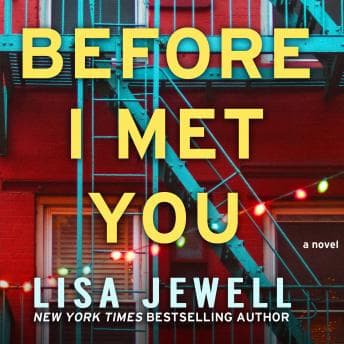

Lisa Jewell writing historical fiction is not what I expected, but honestly? It works.
I know Jewell from her thriller phase - the creepy neighbors, the missing persons, the "wait, WHO did it?" twists. So picking up Before I Met You felt like showing up to book club and realizing everyone's reading a completely different genre than you prepared for. This is Jewell before she became Jewell-the-thriller-queen, and it's a softer, slower, more sentimental animal. Not better or worse. Just different.
Two Women, Two Londons, One Very Long Search
The structure here is dual timeline - Betty in present-day London searching for a mysterious beneficiary from her grandmother Arlette's will, and Arlette in 1920s London living her bright young thing life before everything falls apart. If you've read any dual-timeline novel in the last decade, you know the formula: modern woman uncovers past woman's secrets, past woman's story is way more interesting than present woman's, eventually the threads connect.
And look, Betty's storyline is the weaker half. Her search for this unknown woman meanders through London flatshares and awkward romantic entanglements that feel a little... manufactured? Like Jewell needed Betty to have Problems but couldn't quite commit to what those problems should be. Betty's relationship drama especially felt like it was checking a box rather than earning the emotional weight it wanted.
But Arlette's 1920s chapters? Those I would listen to all day. The jazz clubs, the reckless glamour, the way post-WWI London is simultaneously grieving and partying itself to death - Jewell captures that feverish energy where everyone's dancing because they're terrified of standing still. Arlette is magnetic and a little foolish and exactly the kind of young woman who believes beautiful things can't break. When her world collapses, you feel it because you saw it coming and she didn't.
The character of Godfrey ended up being the emotional anchor I didn't expect. He's the thread connecting both timelines, and by the time Betty finds him - this elderly man carrying seventy years of someone else's secrets - I was sitting in my car in the garage with the engine off, just... not ready to go inside yet. (Lucas was already watching his iPad. He was fine. I needed a minute.)
Helen Duff Carries a Lot of Weight Here
At 15 hours, this is a commitment. That's almost two full weeks of my listening windows, and Helen Duff has to hold your attention across both timelines without the benefit of a full cast or any production tricks. It's just her voice the entire time.
She's good. Not knock-your-socks-off transformative, but solid and warm in a way that serves comfy literary fiction well. Her reading paints pictures - I could see the smoky 1920s club scenes, could feel the cramped modern London flat. Where she's less successful is in making me feel close to the characters. There's a slight remove, like watching people through glass. With Arlette's chapters, the story is vivid enough to overcome that distance. With Betty's slower sections, I noticed it more.
I will say: this book survived the ultimate pause test. Sophie decided nap time was optional on Tuesday, and I came back to the audiobook two days later and picked right up without rewinding. The dual timeline structure actually helps with that - each chapter is its own little world, so you're reorienting anyway.
The Pacing Problem (And Why I Didn't Mind That Much)
Here's where I have to be honest: this book could lose three hours and be better for it. Betty's middle section drags. There are stretches where she's just... living in London, having mediocre experiences, and I'm thinking "girl, ask a QUESTION, follow a LEAD, do SOMETHING." The mystery that's supposed to drive her story forward sometimes feels like it's idling in traffic.
But I kept listening because the Arlette chapters kept pulling me back, and because I trusted Jewell to land the ending. She does. It's satisfying and bittersweet and exactly the kind of conclusion that makes you forgive the slower middle. Not a twist ending - more like a puzzle piece clicking into place.
Satisfying ending - exactly what I needed.
Who Gets the Car Time
If you love Lisa Jewell's thrillers and expect that here, you'll be disappointed. This is her gentler, more literary side - closer to a Jojo Moyes than a Then She Was Gone. If you enjoy dual timelines, 1920s London glamour, and family mysteries that are more emotional than sinister, this is your book.
Skip it if you need tight pacing or if "woman moves to London and finds herself" makes you break out in hives. Also skip if 15 hours feels like too much investment for a story that's more atmospheric than plot-driven.
Not groundbreaking, but sometimes you don't need groundbreaking. Sometimes you need a story about a grandmother's secret life and a granddaughter brave enough to find it. The Lincoln Highway gave me that same feeling - a quieter story about family and the weight of the past that earns its ending without needing to shock you. I finished this across eight days of nap times and drop-offs and garage sits, and I'm glad I stuck with it. My book club will love this (if I ever have time for book club again).