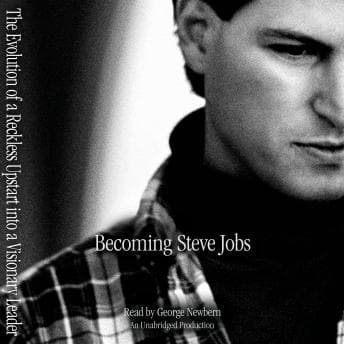

Everybody's got a Steve Jobs book. The Isaacson biography sits on every airport bookshelf between Malcolm Gladwell and whatever Tim Ferriss is selling this quarter. I've recommended that book to students, assigned excerpts from it, and honestly believed it was the definitive account. So when I started Becoming Steve Jobs on a late Sunday walk along the lakefront with Denise - who tolerates my biography phase the way she tolerates my Faulkner phase, which is to say barely - I figured I'd get a warmed-over retread with better PR.
I was wrong. And I don't say that often. (My students would disagree. They think I say it never.)
The Biography That Argues With the Other Biography
Here's what Schlender and Tetzeli are really doing, and it took me a few hours to catch it: they're not just telling Jobs's story differently, they're making a case that the Isaacson version got the arc wrong. The conventional narrative is genius-jerk, genius-jerk, genius-jerk, death. A flat line of brilliance and cruelty. This book says no - the interesting story is the change. The NeXT years, which most accounts treat as an embarrassing intermission, get serious real estate here. And they should. Because Schlender argues that Jobs at NeXT and early Pixar wasn't just failing publicly - he was learning how to stop being the worst version of himself.
There's a passage about Jobs calling Ed Catmull at Pixar, essentially admitting he didn't know how to manage creative people without bulldozing them. That moment - quiet, private, unglamorous - is the kind of thing that Isaacson's book breezes past in favor of another anecdote about Jobs screaming at someone over font kerning. Schlender had 25 years of personal access to Jobs, and you feel it in the details. The off-the-record conversations. The casual dinners. The stuff that doesn't make it into a biography written on deadline.
This reminds me of what Hemingway said about knowing what to leave out. Except here, the authors chose to leave in the unglamorous middle chapters, the wilderness years, and that's where the real story lives.
George Newbern Gets the Assignment
Let's talk about Newbern's narration, because at 16 hours you're spending serious time with this voice. He reads at a pace that I'd describe as - and I mean this as a compliment - unhurried in the way a confident lecturer is unhurried. He trusts the material. He doesn't rush through the business strategy sections to get to the drama, and he doesn't melodramatize the personal stuff. When the book describes Jobs's cancer diagnosis and his disastrous decision to delay surgery, Newbern pulls back rather than pushing forward. The narrator understands that pause is punctuation. Less volume, more weight.
I will say this: it's a single-narrator biography covering dozens of voices - Tim Cook, Jony Ive, Bob Iger, John Lasseter - and Newbern doesn't attempt full character differentiation for each. He's not doing voices. He's doing tone. A slight shift in register when quoting Ed Catmull versus quoting a younger, more volatile Jobs. It works for this kind of book. You're not here for theater; you're here for understanding.
I listened at 1.0x. Obviously. Sixteen hours and change, and I never once felt the urge to speed up, which for a business biography is saying something. (I've sped up plenty of business books. Some of them deserved 3x and a summary.)
Who This Is Actually For
If you've only read the Isaacson biography - or worse, if you've only absorbed Jobs through the cultural osmosis of turtleneck memes and "one more thing" clips - this is the corrective. It's not hagiography. Jobs is still difficult, still capable of cruelty, still maddeningly inconsistent in his personal life. But the book is interested in why and how he changed, not just cataloging his sins and his product launches.
My students would hate this. Too long, too much about corporate governance at Pixar, not enough about the iPhone reveal. I love it. It's a book about a middle-aged man learning - slowly, painfully, incompletely - to be better. And Schlender earns the right to tell that story because he was actually there for it, not reconstructing it from interviews after the fact.
If you loved Shoe Dog by Phil Knight for its honest look at a founder's worst impulses, this is its spiritual successor in the tech biography space. Different man, different era, same brutal honesty about what ambition costs. That same willingness to sit with a complicated, occasionally unlikable subject drives Am I Being Too Subtle? too, though Sam Zell makes Jobs look like a people person.
Skip it if you want a quick hits innovation book. This is a character study that happens to involve computers.
Worth Pausing the Faculty Meeting For
I finished this one at 11 PM on a Tuesday, grading sophomore essays on The Great Gatsby - and I kept thinking about how Jobs and Gatsby share this quality of self-invention, except Schlender's book is interested in what happens after the invention fails. The prose deserves to be savored. Not because it's lyrical - it's journalism, clear and purposeful - but because the argument it builds requires patience. Sixteen hours of patience. And Newbern makes every one of them count.
Principal Martinez, if you're reading this: this is what I was listening to during last week's curriculum alignment meeting. And honestly, the leadership lessons were better.