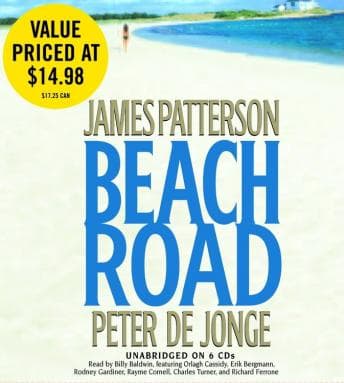

I was halfway through a truly ambitious lamb biryani — the kind where you layer the rice just so and then convince yourself the three hours of prep was worth it — when the twist hit. And I stood there, wooden spoon suspended over the pot, not because I was shocked exactly, but because I was trying to reverse-engineer the psychology of it. Did that character's behavior for the preceding six hours actually support this reveal? I found myself asking: why does Tom Dunleavy really take this case?
The answer Patterson gives us is friendship and gut instinct. The answer a psychologist would give you is something closer to savior complex with a side of professional desperation. And honestly? That's more interesting than what's on the page.
The Class Experiment Nobody in East Hampton Signed Up For
Here's what Beach Road gets right, and it gets it right almost by accident: the social psychology of wealth proximity. Tom Dunleavy is a guy who lives among billionaires but serves their housekeepers. Dante Halleyville is a Black man accused of triple murder in one of the whitest, richest zip codes in America. The protagonist exhibits classic in-group/out-group tension — he's technically local but permanently outside the real power structure. Patterson and de Jonge don't dig into this as deeply as I wanted them to, but the scaffolding is there. The way Tom navigates between the service class and the mansion class, the way the legal system treats Dante before a single piece of evidence is examined — this is a fascinating case study in how geography and race predetermine guilt in the American imagination.
But Patterson is Patterson. He's not here to write a sociological treatise. He's here to move fast and break things. I had a similar takeaway from Four Blind Mice—plot machinery that runs so efficiently you almost don't notice the characters are barely breathing. At seven hours, this audiobook doesn't let you sit with anything. Chapters are bite-sized, perspectives shift constantly, and the pacing has the literary equivalent of a resting heart rate of about 140. Which is fine for a beach read (pun... acknowledged), but it means character motivations sometimes feel sketched rather than built. Kate Costello, Tom's ex-turned-co-counsel, should be the most psychologically rich character in the room — a woman choosing professional entanglement with a man she has unresolved history with. Instead she's mostly a plot device with good courtroom instincts. Psychologically, this doesn't track. Nobody takes that case without a whole suitcase of unexamined feelings, and we barely get to open it.
Seven Narrators Walk Into a Courtroom
The full cast production is ambitious. Billy Baldwin anchors the whole thing as Tom, and credit where it's due — his read has this slightly weathered Long Island quality that sells the character's stuck-between-worlds energy. You believe this guy drives a beat-up car past Ferraris every morning. The research actually shows that multi-narrator productions work best when vocal profiles are distinct enough that you never have to check the chapter heading. Here, it's a mixed bag. Baldwin and Orlagh Cassidy (who handles the female perspectives) are easy to distinguish. But some of the male narrators bleed together — I caught myself rewinding twice because I'd lost track of whose head I was in. And Richard Ferrone, who has one of the most distinctive voices in audiobook narration, is basically reduced to a glorified chapter announcer. That's like hiring a concert pianist to play the doorbell.
The production values are solid — there's some music and sound design that gives it a slightly cinematic feel without going full radio drama. It works for the genre. This is obviously not a low-budget operation. But the confusion issue is real, and in a mystery where perspective matters, losing track of the narrator is losing track of the puzzle.
The Ending Patterson Wants You to Gasp At
Look, I won't spoil it. But I will say this: the twist in the final stretch is the kind that works emotionally in the moment and then falls apart if you think about it for more than forty-five seconds. I finished the last chapter, turned off the burner, and immediately started poking holes. The behavioral evidence doesn't support the reveal if you rewind the character's actions. A good psychological twist should make you rethink everything that came before — you should go "oh, THAT'S why they did that thing in chapter four." This one feels more like a magic trick where the magician shows you the rabbit but you can see the hat has a false bottom. That same twist craving was satisfied for me by Mama Tulu, a story that plays fair with its psychological breadcrumbs.
That said. Did it surprise me? Yes. Did I mutter "oh come on" at my kitchen ceiling? Also yes. Both things can be true. My therapist would have thoughts about this character — specifically about how the psychological profile we're given for the first 90% of the book is essentially incompatible with the last 10%.
Who This Works For (and Who Should Keep Scrolling)
If you want a fast, disposable Hamptons thriller with high production value and a twist that'll hit you even if it won't survive scrutiny — this delivers. If you're a character-psychology person like me, if you need motivations to hold up under examination, you'll be frustrated. Patterson writes plot machinery, not people. The machinery here runs smooth and fast, but the gears are visible.
Perfect for a road trip or a long cleaning session where you want something propulsive in your ears. Not the audiobook for close, analytical listening — the narrator confusion alone makes that a frustrating experience.
The Diagnosis
Beach Road is the literary equivalent of a summer fling — fun, a little reckless, and you probably shouldn't think too hard about it afterward. The full cast elevates it above a standard Patterson read, Billy Baldwin earns his top billing, and the class dynamics are more interesting than the book seems to realize. But the character psychology is surface-level, and that twist... well. I've seen better alibis hold up under cross-examination. Worth streaming on a lazy afternoon. Not worth a credit you could spend on something that respects your intelligence a little more.