
How do you explain to someone who's never been deployed what it's like to come home and realize home moved on without you?
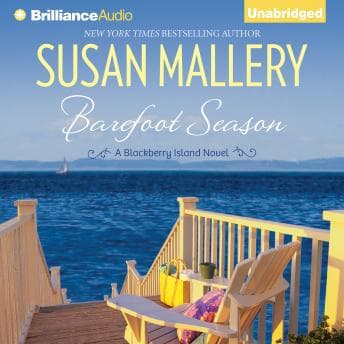
I picked this one up during a stretch of nights off - couldn't sleep, obviously, because my body doesn't know what 2 AM means anymore except "time to chart." Carlos was snoring, the kids were out cold, and I was on the couch with my earbuds in, a cup of chamomile I wasn't really drinking, and Susan Mallery telling me about Michelle Sanderson coming back from war.
The PTSD Representation Hit Different at 3 AM
Look. I work trauma. I've held the hands of veterans in our ER who can't explain why the beeping of a heart monitor sends them somewhere else entirely. So when a book tackles PTSD and military homecoming, I have zero patience for Hollywood-level nonsense.
Mallery doesn't make Michelle's military experience a costume she puts on and takes off when it's convenient for the plot. The way Michelle moves through spaces - hypervigilant, reading exits, unable to just relax into civilian life on Blackberry Island - that felt real enough that I paused and sat with it for a minute. It's not a clinical portrayal, and it's not trying to be. It's filtered through women's fiction, which means the focus stays on relationships and emotional recovery rather than flashbacks and combat scenes. The best women's fiction always finds that angle - I kept thinking about how Where'd You Go, Bernadette does something similar, using a woman's unraveling to say something true about identity and belonging without ever needing to be clinical about it. And honestly? That's the part most people don't write about. The war doesn't end when you get stateside. It follows you into the kitchen, into your friendships, into the way you flinch when someone raises their voice.
Now - is it perfect? No. Some of the emotional breakthroughs happen a little too neatly for a 9-hour-46-minute story. Real PTSD recovery is uglier and longer and involves a lot more therapy than scenic island walks. But for the genre, Mallery's doing more work than she has to, and I respect that.
Two Women, One Inn, and Enough Baggage to Fill Every Room
The core of this book isn't really the romance (though there is some). It's Michelle and Carly - former best friends torn apart by betrayal, now stuck running a failing inn together because life has a sick sense of humor. Carly's the single mom who stayed, weathered the gossip, kept things barely afloat. Michelle's the one who left and built armor out of distance and discipline.
I'm the eldest of five. I know what it's like to carry the weight of being the one who "made it" while also being the one who left. The dynamic between these two women - the resentment layered over love layered over hurt - that's real friendship wreckage. Mallery writes their slow, reluctant thaw with enough specificity that you can feel how much history sits between every conversation. Carly's daughter adds another dimension, this kid who doesn't understand adult grudges but somehow cuts right through them.
The financial peril of the inn grounds the story in something tangible. It's not just "will they be friends again?" It's "will they lose everything if they can't figure this out by summer's end?" Stakes that aren't life-or-death but feel heavy enough to matter.
Sarah Grace - Let's Talk About the Elephant in the Earbuds
Okay. Sarah Grace. She's got solid emotional delivery - when Michelle is struggling, you hear it in the voice, not just the words. Her character differentiation is decent enough that I could tell who was speaking without checking.
But. The pacing. Oh, the pacing.
She reads like she's savoring every single syllable, and I say this as someone who listens to audiobooks to decompress, not to test my patience. At normal speed, it felt like the story was wading through honey. I bumped it to 1.25x and that helped considerably - brought the delivery closer to natural conversation speed without losing the emotional beats. If you're a faster listener, you might even try 1.5x.
The dramatic inflections are the other thing. There are moments where the vocal emphasis lands exactly right - a revelation, a confrontation. But there are also moments where a character is basically ordering coffee and it sounds like a soap opera confession. It's not a dealbreaker, but by hour six I'd noticed the pattern enough that it pulled me out of scenes occasionally.
Who's Going to Love This (and Who Should Keep Scrolling)
If you're a women's fiction reader who wants friendship at the center with romance on the side, this is your book. If you've got someone in your life who served and came home different, Michelle's story might hit you somewhere unexpected. My mom would love this - she's all about the "two women rebuilding their lives" stories (she still thinks I should've been a doctor, but she reads like she's getting a PhD in fiction).
If you need fast pacing or can't handle slow narration even at increased speed, this one might test you. And if you're expecting a straight-up romance with the love interest front and center from page one, recalibrate - this is about Michelle and Carly first, everything else second.
Charting My Final Notes
Carlos found me still on the couch at 5 AM, earbuds in, eyes a little red. I blamed allergies. It wasn't allergies. Mallery wrote a scene near the end between Michelle and Carly that earned every bit of that slow build, and Grace - for all my complaints about pacing - delivered it with the kind of quiet restraint that made it land harder than any dramatic inflection could.
It's not a perfect audiobook. But it's an honest one. Night shift approved - with the speed bumped up.