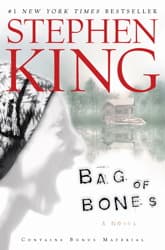

Quick Verdict: Worth your commute if you're a King fan who wants the authentic experience. Skip if unpolished narration makes you twitchy.
Okay, so here's the thing about Stephen King narrating his own audiobook: it's either going to work for you or it's going to drive you absolutely insane. There's no middle ground. I finished this during a particularly brutal two-week stretch of delayed trains and production incidents, and honestly? King's slightly raspy, meandering delivery became weirdly comforting. Like having a creepy uncle tell you ghost stories at Thanksgiving.
The Voice That Haunts Sara Laughs
Let me be real for a second. King is not Ray Porter. He's not even trying to be. He does the same thing in It, which honestly makes that 44-hour monster feel even more personal. His narration has this unpolished quality—occasional hesitancy, moments where you can almost hear him thinking about the next line. And you know what? It works here. This is a first-person grief story about a writer, narrated by the writer who wrote it. The meta-ness of it all actually adds something.
The Maine accents are spot-on (obviously), and King does this thing where he'll emphasize words in ways that feel less like "professional narrator" and more like "guy telling you a story at a bar." He even sings a few times—with actual melody—which caught me completely off guard during my 6 AM commute. Nearly spit out my coffee.
But look, if you're someone who needs crisp, polished delivery, you're going to struggle. Some listeners straight-up hate it, and I get it. His voice takes getting used to. Give it 30 minutes before you decide.
Where the Slow Burn Actually Pays Off
This is a 22-hour audiobook. Twenty-two hours. That's basically my entire commute for two and a half weeks. And yeah, parts of it drag. King loves his scene-setting, his tangents, his "let me tell you about this random thing from my childhood" moments. At 1.5x speed, it's manageable. At 1.0x, I would've lost my mind somewhere around hour 8.
But when this book hits, it hits hard. The grief stuff is genuinely affecting—Mike Noonan losing his wife, the way trauma rewires your brain, the desperate need to feel something again. As someone who's debugged my own share of emotional code (thanks, therapy), the psychological accuracy impressed me. King gets how grief doesn't follow a linear path. It loops, it crashes, it throws exceptions you didn't expect.
The supernatural elements build slowly. Like, really slowly. The Stand does this too, but over an even more ambitious scope. We're talking chapters of atmospheric dread before anything concrete happens. But Sara Laughs as a haunted house works because King takes his time establishing why this place matters, why Mike keeps coming back despite every instinct screaming at him to leave.
The Gut-Punch Moments (And One I Wasn't Ready For)
I need to warn you about something. There's a scene near the end that's brutal. Like, genuinely disturbing. I was on a packed train and had to actively control my facial expressions because—yikes. If you're sensitive to violence or sexual content, this might not be your book. King doesn't shy away from the dark stuff, and this particular sequence felt almost gratuitously harsh.
But the emotional core—Mike's relationship with little Kyra and her mom Mattie—that's where the book shines. The mystery of what happened at Sara Laughs unfolds in layers, and when the pieces finally click together, it's satisfying in that "oh no oh NO" way that good horror delivers.
Who Gets the Best ROI Here
This audiobook pays off if you can handle two things: King's narration style and slow-burn pacing. If both work for you, you're getting a genuinely atmospheric ghost story with emotional depth that most horror doesn't bother with. Skip it if you need professional polish or can't commit to 22 hours of gradual dread.
I finished this in about 15 commutes, and by the end, I'd grown weirdly attached to King's voice in my ears. It's intimate in a way that professional narrators rarely achieve. He knows exactly where the scares are, exactly how to deliver a line for maximum creep factor, because he wrote the damn thing.
Would I listen again? Probably not—it's too long for a re-listen when my backlog is already embarrassing. But I'm glad I experienced it this way. Sometimes the imperfect version is the authentic one.
(And seriously, don't listen before bed. The nightmares Mike has about Sara Laughs will become YOUR nightmares. Ask me how I know.)