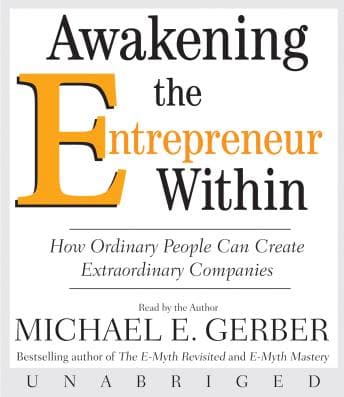

Look, I'll be honest. When I saw Jack Canfield's quote about being "deeply touched" by Michael Gerber, I rolled my eyes so hard I almost missed my stop. Chicken Soup for the Soul energy in a business book? Hard pass, right?
Except... three commutes later, I'm reconsidering my cynicism.
The Gerber Paradox
Here's the thing about author-narrated business books: they're usually either painfully monotone (looking at you, every CEO memoir ever) or so over-caffeinated you need a Xanax. Gerber lands somewhere unexpected. His delivery has this almost... paternal quality? Like your dad explaining why you should start a 401k, but if your dad actually knew what he was talking about and had coached 52,000 businesses.
The man reads his own work with genuine conviction. You can tell he's said these things thousands of times on stages, which means the pacing is polished but not robotic. When he talks about the "dreamer" versus the "doer" inside every entrepreneur, there's this slight pause before "doer" that feels intentional—like he's giving you a second to recognize yourself.
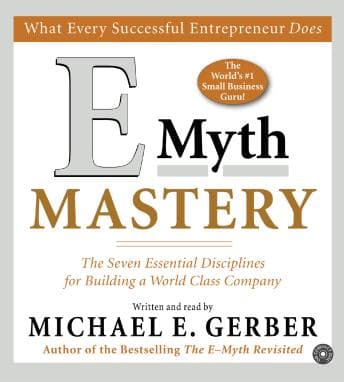
This Isn't E-Myth Revisited (And That's The Point)
If you're coming here expecting systems and checklists and the technician-manager-entrepreneur framework from his other books—pump the brakes. This is the prequel energy. The "before you build the machine, let's talk about why you want to build anything at all" conversation.
At 7 hours 34 minutes, it's actually pretty lean for Gerber. His other stuff tends to sprawl. Here, he's focused on one core argument: most people who think they want to be entrepreneurs actually just want to escape their current situation. And that's not the same thing. (Felt personally attacked during my 6AM BART transfer, honestly.)
The book breaks down entrepreneurship into feeling, thinking, and action components—which sounds like it could be a blog post, but Gerber actually earns the runtime by drilling into each with specific frameworks. There's a section where he walks through how to identify whether your "dream" is actually just resentment toward your boss wearing a costume. Ouch. But useful ouch.
Where It Gets Fuzzy
Some sections feel like you're listening to a motivational speaker who's been doing this for forty years and occasionally forgets you can't see his PowerPoint slides. He'll reference "the four personalities" or "the seven steps" and you're like—wait, did I miss something? Are those written somewhere?
This is very much a "change your mindset" book, not a "here's exactly how to register an LLC" book. For actual tactical frameworks, Principles of Economics delivers more concrete models—though it's about as inspiring as a tax form. If you need tactical execution, this will frustrate you. If you're still at the "should I even do this?" stage, it's weirdly clarifying.
I listened at 1.25x (my usual 1.5x felt disrespectful to his cadence, somehow) and found it worked best during my morning commute when I was still waking up. Afternoon commute? I'd zone out during the more philosophical stretches. Not because it's bad—just because it requires actual engagement, not background noise.
The ROI Calculation
Here's my framework: business audiobooks are worth it if they give you one actionable insight per hour of listening. By that metric, this delivers maybe 4-5 solid ones across 7.5 hours. Not exceptional, but not bad.
The biggest one for me: Gerber's distinction between a "vision" (what you want the world to look like) and a "dream" (what you want your life to look like). Sounds semantic, but it actually helped me understand why some side project ideas excite me and others feel like obligations.
Who Should Queue This Up (And Who Should Skip)
Anyone in the "thinking about starting something" phase who needs permission to dream bigger—or a reality check about whether they're dreaming at all. Also good for people who loved E-Myth Revisited but felt like it jumped too quickly into the "how" without enough "why."
Skip if: You already have a business and need operational help. Or if motivational-adjacent content makes you want to throw your phone out the train window.
End of Stack Trace
Gerber reading his own material works better than it should. The content is more philosophical than tactical, which will disappoint some readers but genuinely helped me think through some stuck points about why I keep not starting that project I've been "planning" for two years. (Kevin pointed out I've bought three domain names this year and built exactly zero websites. This book made me understand why.)
Not his best work, but a solid entry point into the Gerber universe if you haven't read him before. And at 7.5 hours, it respects your time more than most business books.