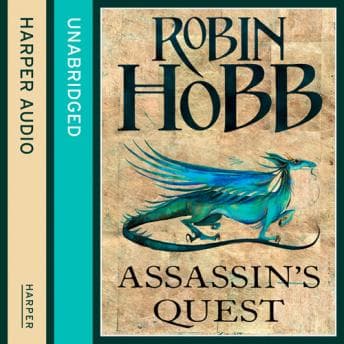

Thirty-seven hours. Thirty-seven hours and thirty-five minutes, to be exact, and I need to talk about how Robin Hobb spent roughly the first ten of them making me want to throw my phone into the Willamette River.
Look. I love a slow burn. I host a horror podcast — I understand the value of dread, of the long creep toward something terrible. But Assassin's Quest opens with Fitz literally relearning how to be human after being resurrected, and while that's narratively fascinating on paper, the execution is this protracted, aching slog through depression, isolation, and Fitz making the worst possible decisions at every conceivable juncture. I was shelving returns at the library, earbuds in, muttering "Fitz, just — STOP" loud enough that a patron asked if I was okay. I was not okay. This book made me feel feral.
And then something shifted. Somewhere around hour twelve, when the quest actually becomes a quest and the world cracks open, I remembered why Robin Hobb is one of the most emotionally devastating fantasy writers alive.
Fitz Deserves Therapy, Not Another Quest
Here's the thing about this trilogy closer — Shirley Jackson walked so Robin Hobb could run, but in a completely different direction. Where Jackson builds dread through architecture and perception, Hobb builds it through the slow erosion of a person. Fitz doesn't face monsters. He faces himself. The Wit-bond with Nighteyes, his wolf, is genuinely one of the most complex human-animal relationships I've encountered in fantasy, and the tension between Fitz's desire to just stay wolf and his obligations to the Six Duchies hit me somewhere uncomfortable. That pull between wildness and duty — between the easy oblivion of instinct and the grinding weight of being a person — this understands that horror isn't about gore, it's about dread. Matt Haig gets at something adjacent in Midnight Library, though he wraps it in considerably more hope than Hobb would ever allow herself. The dread of having to keep going when every part of you wants to stop.
The pacing problems are real, though. Hobb is allergic to efficiency. There are stretches in the middle — the traveling sections, the mountain passages — that feel like padding even by epic fantasy standards. At 37+ hours, this audiobook is asking for a serious commitment, and it doesn't always earn every minute of that runtime.
Paul Boehmer: The Accent Roulette
Okay, Paul Boehmer. I have feelings.
He's an Audie Award winner. He's got AudioFile Earphones Awards. The man has credentials. And when he's locked into Fitz's internal monologue — that bruised, weary first-person narration — he's genuinely good. There's an emotional rawness to how he handles Fitz's grief that I respect. The narrator commits in those moments. That's rare.
But the accents. God, the accents. Boehmer is an American doing British accents, and the seams show. Characters will shift mid-sentence from one register to another like they've had a mild stroke. Kettle sounds different from chapter to chapter. And there's this thing he does — these pauses before section breaks that feel like he's building suspense but actually just break the rhythm of the prose. One listener described it as "previewing upcoming content," and yeah, that tracks. It pulls you out right when you should be sinking deeper in.
I listened to this mostly during late-night shifts processing interlibrary loans, lights low in the back office, and the inconsistency kept yanking me out of the atmosphere Hobb works so hard to build. When Boehmer is on, he's genuinely immersive. When he's off, he's a distraction. It's maddening because you can hear the better performance lurking underneath.
Speed recommendation: bump it to 1.25x. It tightens the pauses, smooths some of the pacing issues, and honestly makes his accent work less noticeable. Trust me on this.
Who Needs This (And Who Should Bail)
If you've already listened to Assassin's Apprentice and Royal Assassin with Boehmer, you're committed. Finish the trilogy. The emotional payoff in the final hours — Fitz finally reaching Verity, the truth about the Elderlings, the Fool's prophecy clicking into place — it earns the suffering. Hobb is brutal but she's not cruel without purpose.
If you're new to the Farseer Trilogy? Honestly, I'd recommend reading the physical books first. The prose is too good to risk a narrator mismatch ruining your first experience. Come back to the audio for a re-read.
If you scare easily — wrong genre, but if you bruise easily? Emotionally? This book will wreck you. Content warnings for abuse, violence, and a protagonist who suffers more than any character reasonably should.
Shelve It Under: Beautiful Wreckage
My podcast listeners are going to have opinions about this one. The book itself? Brilliant, frustrating, too long, and ultimately devastating in the way only Robin Hobb can manage. The audiobook? A compromised vessel for something great. Boehmer gives you maybe 70% of what this story deserves, and that missing 30% matters when you're asking someone to spend 37 hours of their life. Shirley (my cat) slept through the whole thing. I envied her.