
I started this at 2 AM because I couldn't sleep (ironic, given our protagonist's whole deal), and I had every intention of just listening to "one more chapter" before bed. Six hours later, the sun was coming up and I was emotionally compromised about a superhero romance. My thesis advisor would be so disappointed. Worth it.
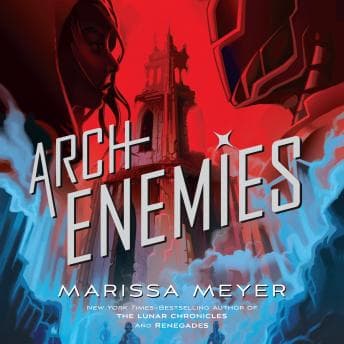
Here's the thing about middle books in trilogies: they're either bridge novels that feel like filler, or they're the Empire Strikes Back of their series. Archenemies lands somewhere in the complicated middle—which, given that the whole book is about moral gray areas, feels weirdly appropriate.
The Dual Identity Problem (And I Don't Mean Nova's)
The split narration is going to be polarizing. Full stop. Rebecca Soler handles all of Nova's POV chapters while Dan Bittner takes Adrian's perspective, and honestly? It works way better than it has any right to. Soler's Nova has this constant undercurrent of tension—you can hear the exhaustion of maintaining a double life in her voice. Bittner gives Adrian this earnest heroic energy that makes his secret identity stuff hit different when you know what's coming.
The secondary character work is where these two really flex. There's a moment where Soler has to voice Adrian *through Nova's perspective*, and it's subtly different from how Bittner plays him directly—like you're hearing Adrian filtered through Nova's complicated feelings. That's some next-level character work. My D&D group would appreciate that kind of attention to perspective.
But I get why some folks bounce off the format. When you're used to one narrator threading everything together, having the voice literally change when the POV shifts can be jarring. Took me about an hour to stop noticing the switches.
The Sanderson Problem (Yes, I'm Making This Comparison)
Marissa Meyer does something here that I both love and want to shake her for—she builds this incredibly detailed superhero world with actual rules and consequences, then spends a LOT of time making sure you understand every corner of it. The power classifications, the Renegade hierarchy, the political tensions between heroes and civilians... it's *chef's kiss* for world-building nerds like me. Silverthorn pulls off that same trick of deep world-building that rewards patient readers—though admittedly with more swords and less spandex.
Here's the rub: some listeners are going to feel like the first ten hours are setup for a two-hour payoff. And they're not entirely wrong? There are scenes that feel like they exist purely to establish character dynamics we already understood from book one. I didn't mind because I'm a sucker for superhero team dynamics (this would make an incredible campaign setting, just saying), but if you're here purely for plot momentum, you might find yourself reaching for that 1.25x button.
When the Mask Slips
The secret identity tension is where this audiobook absolutely sings. Nova attending Renegade meetings while internally cataloging weaknesses to report to the Anarchists. Adrian sneaking off to do vigilante stuff his superhero dads don't know about. The romantic scenes where both of them are lying through their teeth while genuinely falling for each other. It's delicious dramatic irony, and Soler and Bittner milk every drop of it.
There's this one scene—I won't spoil it—where Nova and Adrian are having what seems like a normal conversation, but the subtext is absolutely screaming. Soler's delivery made me actually pause and go "oh NO" out loud. In my apartment. At 4 AM. My neighbor probably thinks I'm unhinged.
The Progression Fantasy Angle
Okay, this isn't technically LitRPG or progression fantasy, but it scratches a similar itch. Watching Nova level up her infiltration skills while Adrian develops his powers in secret? The progression is satisfying. There's a clear sense of both characters getting stronger and more dangerous, which makes the inevitable collision course feel increasingly catastrophic.
The power system has actual rules and limitations. Nova can't sleep, which sounds cool until you realize the psychological toll. Adrian's abilities have creative applications that the book actually explores rather than just handwaving. This is the kind of superhero fiction that asks "but what would that ACTUALLY mean?" and I'm here for it.
Who's Getting Their Cape (And Who Should Sit This One Out)
If you loved Renegades, this is a no-brainer—it's more of what worked, with higher stakes. If you're into superhero fiction that takes its world-building seriously, or if you've ever wanted a YA book that treats the hero/villain dichotomy with actual nuance, jump in.
Skip if: you need constant plot momentum, you hate dual narration, or you're not willing to invest in a trilogy that clearly saves its biggest punches for book three. Also maybe skip if you need to sleep at reasonable hours, because this thing is a time vampire.
My Thesis Can Wait
At 14 and a half hours, this is a commitment—but it's the kind of commitment that pays off if you're invested in the characters. The narration is genuinely excellent, the world-building is Sanderson-level thorough, and the central romantic tension had me stress-eating pretzels at sunrise.
Is it perfect? Nah. The pacing sags in the middle, and some scenes feel like they exist purely to remind you that side characters exist. But when it hits, it HITS. And that cliffhanger? Criminal. I immediately started book three.