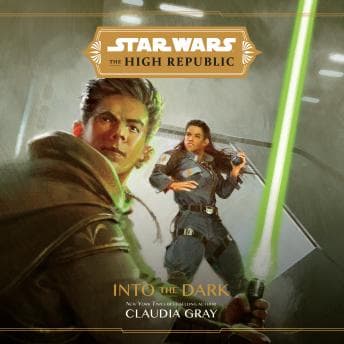

There's this moment early on where Reath Silas—our bookish Padawan protagonist—is basically throwing a tantrum about being shipped off to the frontier instead of staying in the Jedi Temple archives. And I'm sitting there thinking, "This is the most relatable Star Wars character I've encountered in years." A Jedi who just wants to read? My D&D group would absolutely love this guy.
Claudia Gray gets it. She really does. The High Republic era is Sanderson-level world-building for Star Wars, and Into the Dark is a perfect example of why this whole initiative works. We're 200 years before the prequels, the Jedi are at their peak, and there's this whole frontier expansion vibe that feels like the Old West but, you know, in space. With lightsabers.
The Haunted House in Space Thing
Here's where it gets interesting. What starts as a "ship gets knocked out of hyperspace" story quickly becomes something way creepier. The abandoned space station they find refuge on? Not so abandoned. There's this slow-burn horror element that Gray handles really well—the Jedi sensing something wrong, the gradual reveal of what happened there, the ancient evil lurking in the dark. It's giving Alien meets Temple of Doom, and I was here for every second of it.
The Force usage is chef's kiss. Gray clearly understands that Jedi aren't just laser sword fighters. There's meditation, there's sensing, there's that creeping dread when something in the Force feels fundamentally wrong. That same slow-burn tension—where you know something's wrong before the characters do—reminded me of Dark Tower II: The Drawing of the Three, where King builds dread through perspective shifts and mounting wrongness. Reath's journey from reluctant scholar to someone who has to actually use what he's learned? The progression is satisfying in ways that remind me of good LitRPG character development. (Yes, I said it. Fight me.)
Dan Bittner Behind the Mic
Look, I need to address the bantha in the room. If you're coming from Marc Thompson's Star Wars audiobooks, Dan Bittner is... different. Thompson is theatrical, bombastic, practically a full-cast production in one person. Bittner is more subtle. More controlled. Some listeners bounced off this hard, calling it monotone.
I don't entirely agree, but I get it.
Bittner has this clear, steady delivery that works really well for the horror elements. When things get creepy on that station, his restraint actually builds tension. He's not overselling it, which makes the scary moments land harder. His Reath voice captures that bookish reluctance perfectly, and he differentiates the large cast well enough that I never lost track of who was speaking. Is it Steven Pacey? No. Steven Pacey walked so other narrators could run, and Bittner is doing a solid jog here.
The production helps a lot. Star Wars music cues, sound effects, the whole nine parsecs. It genuinely feels like listening to a movie, which covers for any moments where the narration might drag. When you've got John Williams-style scoring underneath a space station horror sequence, you're going to be engaged regardless.
Where It Stumbles
I'm not going to pretend this is perfect. There's a section in the middle—maybe around the 5-6 hour mark—where the momentum dips. We're juggling multiple character perspectives, and some of them are more interesting than others. The non-Jedi characters get their moments, but a few felt like they were there to fill page count rather than drive the story forward.
Also, if you don't like info-dumps, this isn't for you (but you're wrong). Gray does a lot of worldbuilding, explaining High Republic Jedi culture and politics. I ate it up because I'm a lore goblin, but I can see casual listeners checking out during the "here's how the Jedi Order works 200 years before Anakin ruined everything" sections.
The D&D Campaign Energy
Real talk: this would make an incredible tabletop campaign. Ancient evil on a space station, a diverse party of Jedi with different specialties, mysterious artifacts, moral dilemmas about what to do with dangerous knowledge. The hostile environment setup actually shares DNA with Deathworld—both throw characters into spaces actively trying to kill them and force creative problem-solving. My D&D group would love this. I kept pausing to take notes for future campaign ideas, which is always a sign that a story is doing something right.
The ending hits hard. I won't spoil it, but Gray doesn't pull punches with the consequences. Characters make choices, and those choices matter. It's not grimdark—this is still Star Wars—but it's not afraid to let things get tragic.
Who's Rolling Initiative on This One?
Lore goblins, world-building nerds, and anyone who wishes Star Wars leaned harder into horror—this is your jam. Skip it if you need Marc Thompson-level theatrical narration or if extended Jedi philosophy discussions make your eyes glaze over.
Yes, it's 11 hours. Yes, it's worth it. If you're looking for an entry point into the High Republic, this is a solid choice. If you're a completionist who needs to experience everything in order, there are other books that technically come first, but Into the Dark works fine as a standalone.
I listened to this instead of writing my thesis, and I regret nothing. Dr. Patel can wait. The Jedi archives won't explore themselves.