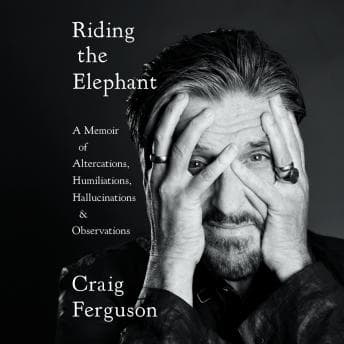

I was grading a stack of junior essays on The Great Gatsby — the eleventh hour, literally, coffee gone cold — when Ferguson started talking about watching American television as a kid in Glasgow, how the glow of those imported sitcoms represented something impossibly bright and distant. And I just stopped marking. Red pen down. Because that's exactly what Fitzgerald was writing about, isn't it? The green light across the water. Except Ferguson's version involves council housing and punk rock instead of West Egg, and the dream he's chasing is citizenship, not Daisy Buchanan.
I wasn't expecting that from a late-night host's memoir. I really wasn't.
Glasgow to Hollywood Is Just Gatsby With Better Jokes
Here's what Craig Ferguson understands that most celebrity autobiographers don't: the American Dream is funniest — and most moving — when told by someone who almost didn't survive it. This isn't a victory lap disguised as a book. It's a drunk's confession that happens to end well, narrated by the drunk himself in a Glaswegian accent so thick it practically has its own weather system. Acid for the Children operates in the same territory — another musician writing his way through the wreckage with enough self-awareness that the chaos reads as earned rather than performed.
The structure is roughly chronological — rough childhood in Scotland, punk band days, the drift into comedy, the catastrophic drinking, the slow climb toward sobriety and success — but Ferguson treats his own timeline the way he treats a Late Late Show monologue. He wanders. He circles back. He drops something devastating between two jokes so you don't realize you've been gut-punched until thirty seconds later. There's a moment where he describes his aborted suicide attempt — he literally forgot to go through with it because someone offered him sherry — and the way he reads that line, there's this pause. Not for drama. For honesty. The narrator understands that pause is punctuation. Except here, the narrator IS the author, so it's not interpretation. It's memory.
Let's talk about what the author is really saying. Because underneath the comedy — and it IS genuinely funny, funnier than any memoir has a right to be — Ferguson is writing about belonging. About choosing a country, choosing sobriety, choosing to stay alive. The citizenship ceremony near the end carries more emotional weight than you'd expect from a guy who once did a cold open about sharks.
Why Author-Narrated Memoirs Are a Different Animal
I've listened to dozens of celebrity memoirs. Most of them sound like someone reading a teleprompter in a nice studio. Ferguson sounds like he's sitting across from you in a pub — the kind of pub where you're three hours in and he's telling you the real story, not the press-kit version.
His Glaswegian accent is the whole performance. When he voices his Scottish relatives, the accent deepens and roughens. When he's doing his Hollywood years, it smooths out just slightly — and that shift IS the story of assimilation, right there in his vocal cords. You don't need him to explain the cultural displacement. You hear it. Compare this to, say, a professional narrator doing the same material. They'd give you Scottish Characters and American Characters as distinct voices. Ferguson gives you one voice slowly changing over decades. That's something only an author-narrator can do.
At seven and a half hours, it's the right length. Long enough to feel like a real life, short enough that his energy never flags. (Grammy nomination for Best Spoken Word Album, by the way — deserved.) I listened at 1.0x because the comedic timing depends on his pacing, and speeding up a comedian is like fast-forwarding through the silences in a Harold Pinter play. You lose the architecture.
Who Gets the Most Out of This
If you loved David Sedaris's memoirs, this is its spiritual successor — but rougher, darker, more working-class. If you're a fan of Ferguson's Late Late Show era, this fills in every gap you wondered about. If you're in recovery or love someone who is, the addiction sections are bracingly honest without being preachy.
Who should skip it: if you need tight structure, linear timelines, or you just don't vibe with thick Scottish accents for seven hours straight, this might test your patience. And if you're looking for Hollywood gossip, Ferguson is surprisingly generous toward the people in his orbit. He saves the sharpest criticism for himself.
My students would hate this. They'd say it's "some old dude talking about the '80s." They're wrong, but I love them anyway.
The Red Pen Stays Down for This One
I finished it on the lakefront the next morning, walking with Denise. She asked why I was laughing and then five minutes later why I looked like I might cry. That's the Ferguson trick — he's so busy being funny you forget he's also being brave. The prose deserves to be savored, even when the prose is just a Scottish comedian talking into a microphone about the worst night of his life.
This is why we still read — still listen to — memoirs. Not for the celebrity. For the human underneath. Worth pausing the faculty meeting for. (Sorry again, Principal Martinez.)