
The Weight of Those Letters
I was grading a stack of junior essays on Their Eyes Were Watching God when I started this one. Seemed fitting, actually - Hurston's exploration of Black love and autonomy, and here's Tayari Jones doing something similar but with a sharper, more contemporary edge. By the third chapter, the essays were forgotten. I just sat there at the kitchen table, red pen down, listening.
Look, here's the thing about An American Marriage - it's not really about whether Roy committed the crime. That's the setup, sure, but Jones is after something deeper. She's asking what happens to love when time and circumstance hollow it out from the inside. What does marriage even mean when one person is frozen in place and the other keeps living? This reminds me of what Hemingway said about writing - you show the iceberg's tip and trust the reader to feel what's underneath. Jones does exactly that. The prose deserves to be savored, and at nine hours, you have time to do it.
Two Voices, Three Hearts
The dual narration here is smart. Sean Crisden takes Roy and Andre, while Eisa Davis handles Celestial. And honestly? They both nail it. Crisden brings this warmth to Roy that makes you ache for him - there's a softness underneath the frustration, the wounded pride of a man watching his life slip away through prison glass. When he shifts to Andre, the voice changes just enough. Andre's cooler, more measured, carrying that guilt of loving your best friend's wife even when you're trying not to.
Davis gives Celestial this independence that crackles. She's not a victim waiting to be rescued. She's a woman making impossible choices and living with them. Davis understands that pause is punctuation - she lets certain lines breathe, especially in the letters between Roy and Celestial. Those epistolary sections? Devastating. The way they read each other's words, you can hear the distance growing with every exchange.
Fair warning - there's some inconsistency. A few listeners (and I noticed it too) get thrown when Crisden reads sections that feel like they should be Celestial's perspective. Some letters caused a moment of confusion where I had to reorient myself. Not a dealbreaker, but it pulled me out of the story once or twice. And Crisden does this thing where his voice shifts oddly when Roy refers to Celestial - almost like he's reaching for something he can't quite grasp. Whether that's intentional character work or just a quirk, I couldn't tell you. (My students would probably say I'm overthinking it. They're probably right.)
What Jones Is Really Saying
This isn't just a love triangle dressed up in literary fiction clothes. Jones is writing about systems - how the criminal justice system doesn't just incarcerate a body, it incarcerates a marriage, a future, a whole constellation of relationships. Roy loses five years. But Celestial loses them too, just differently. And Andre? He's caught in the middle, trying to be loyal to everyone and failing spectacularly.
The thing that got me - really got me - was how Jones refuses to make anyone the villain. Roy isn't wrong for wanting his wife back. Celestial isn't wrong for moving on. Andre isn't wrong for loving her. They're all just... human. Flawed and trying. If you loved Beloved or The Color Purple, this is its spiritual successor - not in plot, but in how it examines Black love under impossible pressure.
That same examination of Southern relationships under strain shows up in Under the Magnolias, though with a lighter touch.
I finished the last chapter on my morning walk along the lakefront. Denise was with me, and I had to take out my earbuds and just stand there for a minute, looking at the water. She asked if I was okay. I said yeah. I wasn't sure I was.
Who This Is For (And Who Should Skip)
This is a book club goldmine. The kind of story that'll spark three-hour discussions about loyalty and love and whether five years is too long to wait. It's also perfect for commutes - the pacing is deliberate but never drags, and the chapters end at natural breaking points.
Skip this if you need tidy resolutions. Jones doesn't give you that. She gives you something messier and more honest. Also, heads up - there's a false rape accusation at the center of this, and the emotional weight of incarceration runs through everything. It's handled with care, but it's heavy.
My students would hate this. Too slow, they'd say. Not enough happens. But that's because they haven't lived long enough to know that sometimes the quietest devastations are the loudest. I love it. Worth pausing the faculty meeting for - and I did, twice, during Principal Martinez's curriculum review. (Sorry, Principal Martinez. I regret nothing.)
The Verdict
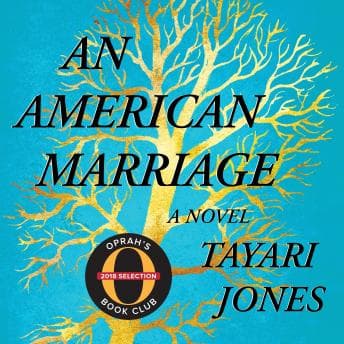
Tayari Jones won the Women's Prize for Fiction with this one, and it earned that Oprah's Book Club sticker. The audiobook production is clean, the performances are strong despite minor hiccups, and the story will sit with you long after the final chapter. Listen at 1.0x. The author chose those words. Hear them properly.