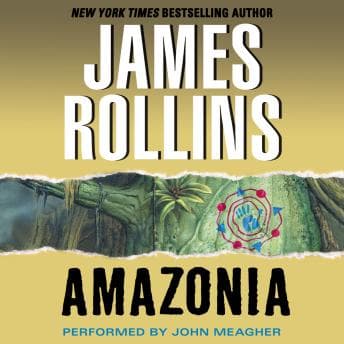

James Rollins writes the kind of books I tell my students are "beach reads" - and I mean that as a compliment. Amazonia is not Hemingway. It's not trying to be. It's a 14-hour injection of pure jungle survival chaos, and sometimes that's exactly what you need while grading forty essays on The Great Gatsby.
I listened to most of this during my lakefront walks with Denise, and I'll admit - there were moments I stopped mid-stride because I genuinely wanted to know what happened next. That's not nothing. Rollins understands momentum. He understands that a good thriller is like a river current: once you're in, you're moving whether you like it or not.
The Amazon as Character
Here's what Rollins does well - and what elevates this above your average airport thriller. The jungle itself becomes this oppressive, breathing presence. You feel the humidity. The danger isn't just the villains or the mysterious plague or whatever corporate conspiracy is unfolding. It's the environment. Every vine could be a snake. Every stream could kill you.
This reminded me of Conrad, actually. (Yes, I'm that teacher who compares everything to Heart of Darkness. My students would groan.) Not in the literary ambition, obviously, but in the way the setting becomes psychological. The Amazon strips away civilization's pretenses. Characters who seemed competent in their labs become vulnerable, desperate, human.
Rollins blends science and adventure in a way that feels researched without becoming a lecture. His background in veterinary medicine shows - the biological elements have weight. When he describes the flora and fauna, you believe him. It's pulp fiction with homework behind it.
John Meagher Behind the Mic
Okay, so here's where things get complicated. John Meagher has a clear, dramatic delivery that works beautifully for the action sequences. When the tension ramps up, he's right there with it. Pacing? Solid. Emotional moments? He lands them.
But - and I couldn't find much about Meagher's other work online - his British accent attempts are... rough. There's a character (I won't spoil who) where every time they spoke, I'd wince a little. It's not deal-breaking. It's just distracting. Like when a student reads Shakespeare aloud and suddenly decides their character is from Australia for some reason.
When Meagher stays in his wheelhouse - American characters, straightforward action narration - he's genuinely good. The production quality is clean, no weird audio artifacts or background noise. It's professional work. Just inconsistent on the accent front.
Who Should Queue This Up (And Who Should Skip)
Look, I'm going to be honest with you. If you need deep character development, if you want to sit with moral ambiguity and complex interior lives - this isn't your book. Skip it. The characters are archetypes. You've got your grizzled military types, your brilliant scientists, your corporate villains. Rollins isn't reinventing wheels here.
But if you want something that moves? Something that makes your commute disappear? Something you can half-listen to during a faculty meeting about budget allocations and still follow? (Principal Martinez, I'm kidding. Mostly.) This is that book.
I've listened to a lot of Rollins over the years - he's consistent. You know what you're getting. Amazonia is early-career Rollins, before the Sigma Force series really took off, and you can feel him figuring out his formula. Some plot beats are predictable. The dialogue occasionally clunks. But the engine runs.
My students would hate this. They'd call it "basic" or whatever dismissive term they're using this semester. But here's what I've learned after twenty years: sometimes basic works. Sometimes you don't want to parse Faulkner's sentences for hidden meaning. Sometimes you want to watch people fight giant caimans in the jungle.
Mr. Williams's Office Hours
I'm giving this a qualified recommendation. If you're already a Rollins fan, you know exactly what you're signing up for. If you're new to him, this is a decent entry point - though his later books are tighter. The narration is serviceable with some hiccups. The story is propulsive even when it's formulaic.
Denise asked me what I was listening to after one of our walks, and I said, "It's like if Michael Crichton wrote a jungle adventure but didn't care about being subtle." She nodded like that explained everything. Actually, Dragon Teeth is actual Crichton doing exactly that—adventure without the scientific restraint—and it scratches a similar itch.
It kind of does.