
"Why should I work when I could steal?"
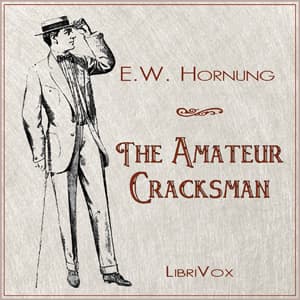
That line hit me about ten minutes in. A.J. Raffles asks it. It's the kind of logic I hear about in threat assessment briefings, usually involving cyber-criminals or desperate folks. But here? It's a guy in a tuxedo who plays cricket for England.
I run a security firm. My day job is literally stopping people who think like Raffles. So listening to The Amateur Cracksman while driving down I-35 felt like studying the opposition. Just... with more top hats and less ransomware.
The Original "Red Team" Operator
Here's the intel: E.W. Hornung was Arthur Conan Doyle's brother-in-law. While Doyle was writing Holmes to catch criminals, Hornung decided to write the anti-Holmes. Raffles is the bad guy. But he's a "gentleman," which makes him the most dangerous type of threat—the insider.
I tell my clients all the time: your biggest risk isn't the guy in the ski mask kicking down the door. It's the guy you invited to the dinner party who knows exactly where you keep the safe key. Raffles exploits social engineering just as much as he picks locks.
(And honestly, seeing the "Bunny" character—Raffles's sidekick—get manipulated into a life of crime is painful. The kid has zero situational awareness. I wanted to reach through the speakers and shake him.)
The tradecraft is obviously dated—1899 isn't exactly high-tech—but the psychology holds up. The arrogance. The thrill-seeking. The rationalization. I've seen it in corporate espionage cases. The methodology changes, but the ego doesn't.
A Smooth Operator on the Mic
I usually prefer a gritty voice for crime novels. Someone who sounds like they've smoked a pack a day and seen some things. Kristin Hughes isn't that. Her voice is... polite. Melodious, even.
At first, I wasn't sure. A female narrator doing the voices for two Victorian men? But she handles it. She doesn't try to force a deep, gravelly baritone that sounds fake. She just reads it clean.
She's got this precise, clear articulation that actually fits the "gentleman" part of the "gentleman thief." No stumbling, no weird pauses. It's smooth. Ranger (my German Shepherd) was asleep in the backseat within five minutes, which is his highest compliment for audio quality. If the narration is jarring, he paces. He didn't pace.
Who's This For (And Who Should Stand Down)
If you're into crime fiction history, heist psychology, or just want to understand how the "gentleman thief" archetype got started—queue it up. If you need explosions and modern pacing, stand down. This is 1890s slow-burn tension, not a tactical thriller.
Mission Debrief
It's short—under six hours. I knocked it out in two days of commuting.
It's about the tension of being in a room you shouldn't be in, wondering if the footman is going to wake up. House of a Thousand Candles has that same creeping tension—someone moving through a place they shouldn't be, every sound a potential threat.
For a guy who spent half his life guarding perimeters, it's a fun change of pace to ride along with the guy breaching them. Just don't expect modern pacing. People in the 1890s had a lot more time to talk about their feelings before robbing a jewelry store.
Is it The Day of the Jackal? No. But it's a solid piece of history. And frankly, it's nice to listen to a crook who at least has some manners.