
Midway through chopping onions on a Tuesday night, I stopped with the knife in the air because June Hayward had just rationalized stealing a dead woman's manuscript by comparing it to "honoring her legacy." The audacity was so perfectly calibrated that I actually laughed out loud in my kitchen. That moment — about three hours in — is when I knew Kuang had me. Not because I liked June, but because her self-delusion was so oily, so specific, that it felt like eavesdropping on someone's worst inner monologue.
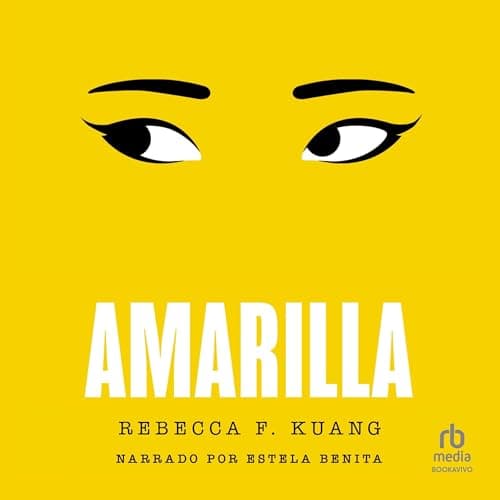
Most people seem to land around 3.5 stars on Amarilla (the Spanish translation of Yellowface), and I get why. But I think the conversation around this book undervalues what Kuang actually pulls off in that first eight hours before focusing too much on where the ending stumbles.
The setup is vicious and efficient: June Hayward, a mediocre white novelist, watches her far more successful Yale classmate Athena Liu choke to death during dinner. Before the grief even sets in, June pockets Athena's finished manuscript — a novel about Chinese laborers in World War I. She polishes it, adopts the pen name Juniper Song (ethnically ambiguous enough to let readers assume what they want), and rides it onto the bestseller list. It's dark comedy with real teeth, and the Spanish translation keeps that bite intact. The prose is direct and unadorned, which actually works to the story's advantage — June isn't the kind of narrator who'd use beautiful language. She'd use whatever language makes her sound reasonable.
Estela Benita narrates this edition, and her performance sits in an interesting space. She nails June's confessional tone — there's a slightly oily quality to how she delivers June's self-justifications, as if June is rehearsing arguments she plans to use when she inevitably gets caught. The self-pity comes through with just the right amount of conviction, like someone who's practiced being the victim in the mirror. Where Benita is less effective is in distinguishing the supporting cast. When June recounts conversations with her agent, her editor, or the online critics circling her, the voices tend to blur together. It didn't wreck the experience — this is fundamentally June's interior monologue — but during scenes with rapid dialogue exchanges, I occasionally lost track of who was speaking. The humor lands better than I expected in audio; Benita's timing on the darker punchlines gives them room to breathe without telegraphing the joke.
What kept me coming back to this over several evenings of cooking and cleaning is Kuang's surgical precision with jealousy. June doesn't just envy Athena's success — she dissects it, catalogs it, resents every award and every glowing review while simultaneously convincing herself that Athena's work wasn't that special anyway. As someone who's seen creative professionals quietly seethe over colleagues' wins, this rang painfully true. The publishing industry satire is sharp without being cartoonish: diversity panels where nobody actually listens, sensitivity readers deployed as marketing insurance, agents who discover a passion for representation right when it starts selling. Kuang clearly knows this world from the inside.
Kuang brings that same insider precision to her fantasy work — The Poppy War has a completely different setting but the same ruthless clarity about how power and ambition corrupt people who were supposed to be the good guys.The thriller mechanics work surprisingly well through the middle stretch. Evidence of June's plagiarism surfaces gradually — an old email here, a suspicious acquaintance there — and watching her scramble to maintain the lie generates genuine dread. It's the specific dread of watching someone dig themselves deeper while insisting they're climbing out.
Now, the problem. That final quarter. The book starts cycling through the same beats: accusation, panic, self-justification, temporary reprieve, repeat. By hour nine, I'd heard variations of June's "but I DESERVE this" speech enough times that I started tuning out during dishwashing instead of pausing to react. One Spanish-language reader described the novel as entertaining but losing strength in its last quarter, becoming repetitive — and that tracks exactly with my experience. Kuang's setup is a Swiss watch, her middle game is sharp, but the ending feels like she wasn't sure whether to commit to full psychological horror or pull back toward satire. She splits the difference, and the result is anticlimactic.
The Spanish translation itself is clean and effective. The humor carries well, the straightforward prose means nothing significant gets garbled in translation, and at just under eleven hours, the pacing works for most of the runtime. This is a book that thrives on accessibility — you don't need to parse complex sentences while multitasking.
Kuang's best trick is making you uncomfortable with your own reactions. June is terrible, but her observations about who gets published and why aren't always wrong. The villain has a point, even when her actions are indefensible. That tension between agreeing with someone's critique and being horrified by their behavior is what makes the satire genuinely effective — at least until the repetition dulls the blade in those final hours.
Who Should Listen (And Who Should Skip)
If you want a sharp, darkly funny look at publishing, race, and creative theft — especially if you already listen in Spanish and like your satire with a mean streak — this one's worth your time. Skip it if narrative repetition drives you up a wall, because that last quarter will test your patience. For the Spanish audiobook specifically, this is a solid listen that doesn't quite justify a full credit. The story is smart and biting, the translation works, and Benita delivers a competent performance. But the narrative repetition in the home stretch and a narration that serves without elevating the material keep it from being something I'd press into people's hands.