
"The most radical thing you can do is question what you've never questioned."
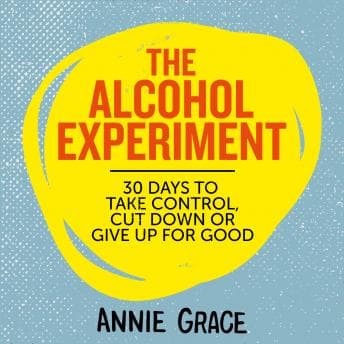
That line hit me around hour three, sitting in my home office at 10 PM, nursing what would've been my second bourbon of the night. Instead, I was listening to Annie Grace explain exactly why that bourbon would've felt so necessary. Jenny had gone to bed. The house was quiet. And I was having one of those uncomfortable moments where a book stops being abstract and starts being personal.
Let me be clear upfront: I don't have a drinking problem. At least not by the metrics most people use. But eight years at McKinsey taught me that "not a problem" and "optimal" are very different things. Grace's 30-day experiment isn't just for people who wake up needing a drink. It's for anyone who's ever wondered why the after-work glass of wine became two, then three, then "who's counting?"
The ROI on Your Relationship with Alcohol
Bottom line: This book delivers genuine value in a space crowded with shame-based recovery content. Grace approaches alcohol the way a good consultant approaches a dysfunctional organization—with data, curiosity, and zero judgment.
The daily structure works. Each day builds on the previous one, unpacking a different aspect of why we drink and what alcohol actually does to our bodies and minds. The scientific explanations are solid without being dry—she explains dopamine cycles and neural pathways in ways that stick. My parents worked 14-hour days and never touched alcohol during the week. Now I understand why that discipline was easier than I thought. They never built the neural pathways that make "I deserve a drink" feel like biological truth.
What surprised me: Grace isn't anti-alcohol in the preachy way I expected. She's anti-unconscious-consumption. She wants you to choose deliberately rather than default to habit. That's management consulting 101 applied to your liver.
When the Author Narrates Her Own Framework
Grace narrating her own work is the right call here. Her voice is warm without being saccharine, patient without being condescending. She sounds like a friend who's been through it and genuinely wants to help—not a guru dispensing wisdom from on high.
The daily journal prompts and reflections are where this audiobook format gets tricky. You'll want to pause, think, maybe actually write things down. This isn't background listening. I tried it on a morning run once and had to restart the chapter because I'd missed half the questions while dodging a cyclist.
At 7 hours 33 minutes, it's appropriately sized. She's not padding. The key takeaway is worth the listen. The other 7 hours? Actually also worth it, which is rare. I kept waiting for the filler chapters and they never came.
The Audience Problem
Here's where I'll be harsh (Jenny would agree): This book tries to speak to too wide an audience. Someone who wakes up needing a drink and someone who just wants to cut back for a dry January are not the same person. Grace acknowledges this, but the content sometimes awkwardly straddles both camps.
If you're in serious trouble, this might feel too gentle. If you're just curious, some sections might feel like they're not for you. Neither is a dealbreaker, but it's worth knowing going in.
Who should listen: Anyone who's ever thought "I should probably drink less" but hasn't examined why they drink in the first place. Entrepreneurs, consultants, anyone in high-pressure work where alcohol is the default social lubricant. People who read This Naked Mind and want the practical follow-up.
Who should skip: Anyone looking for a quick fix or a shame spiral. This is neither. Also skip if you're not ready to actually do the daily exercises—the book works as an experience, not just information transfer.
Net-Net
I finished the 30 days. Didn't quit drinking entirely—that wasn't my goal. But I drink less now, and more importantly, I drink deliberately. The automatic reach for the bourbon at 9 PM is gone. Now it's a choice I make consciously, which means I make it less often.
My parents built a business on discipline they never had to think about. That kind of unconscious discipline is what 7 Eternal Laws of Success tries to systematize, though it lacks the practical framework Grace provides here. This book helped me understand that discipline isn't about willpower—it's about seeing clearly. Once you understand why you're reaching for the glass, the reaching becomes optional.
Grace has done something rare: written a self-help book that actually helps without making you feel broken first. At 2.0x speed, this was still a deliberate, focused listen. The content demands it. And honestly? It was worth slowing down for.